The Ahpra-safe website copy checklist
bdog builds websites for clinics. We are not lawyers and this is not legal advice. Check anything that matters with your indemnity insurer or professional association.
On This Page
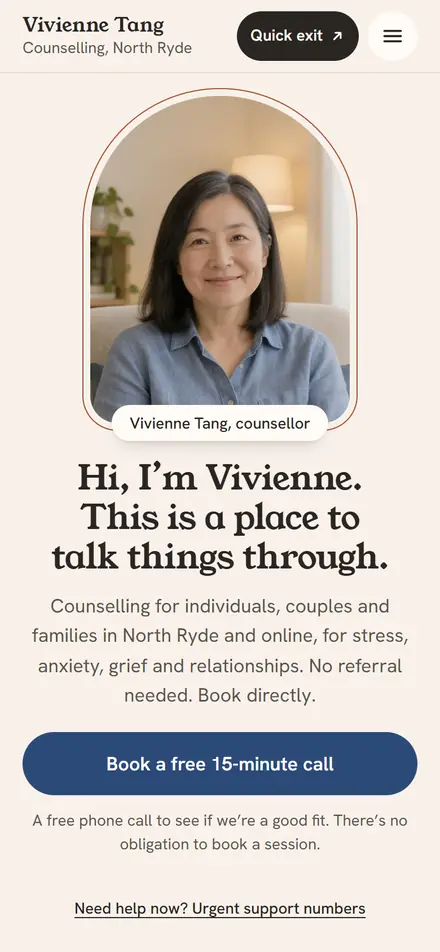
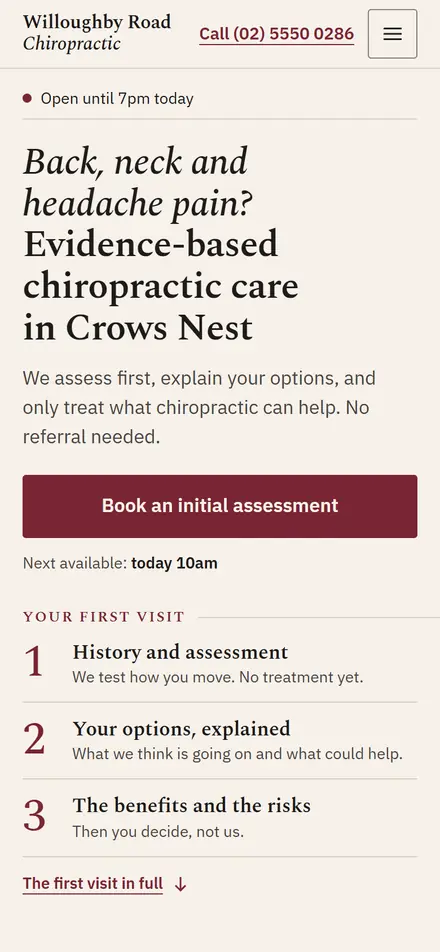
Your website is advertising. All of it. The homepage, the service pages, the bios, the FAQ, the photo of the team. Under the National Law, every word of it has to meet the same rules as a billboard.
Most clinic sites don't. Not because the owner is reckless, but because the site was written by a designer who didn't know the rules, or copied from a competitor who didn't either.
Here are the 22 things we check on every site we build. Run them on yours.
First, the part nobody tells you
If your website breaches the rules, Ahpra writes to you. Not to your designer. Not to your marketing agency.
The guidelines define the advertiser as whoever controls the content. That means whoever publishes it, authorises it, or directs someone else to write it. Ahpra's wording is that advertisers "need to check any content produced by others on their behalf."
So a designer who wrote a breaching bio hasn't committed your offence. You have, by publishing it. That is the whole reason this checklist exists.
What the law actually bans
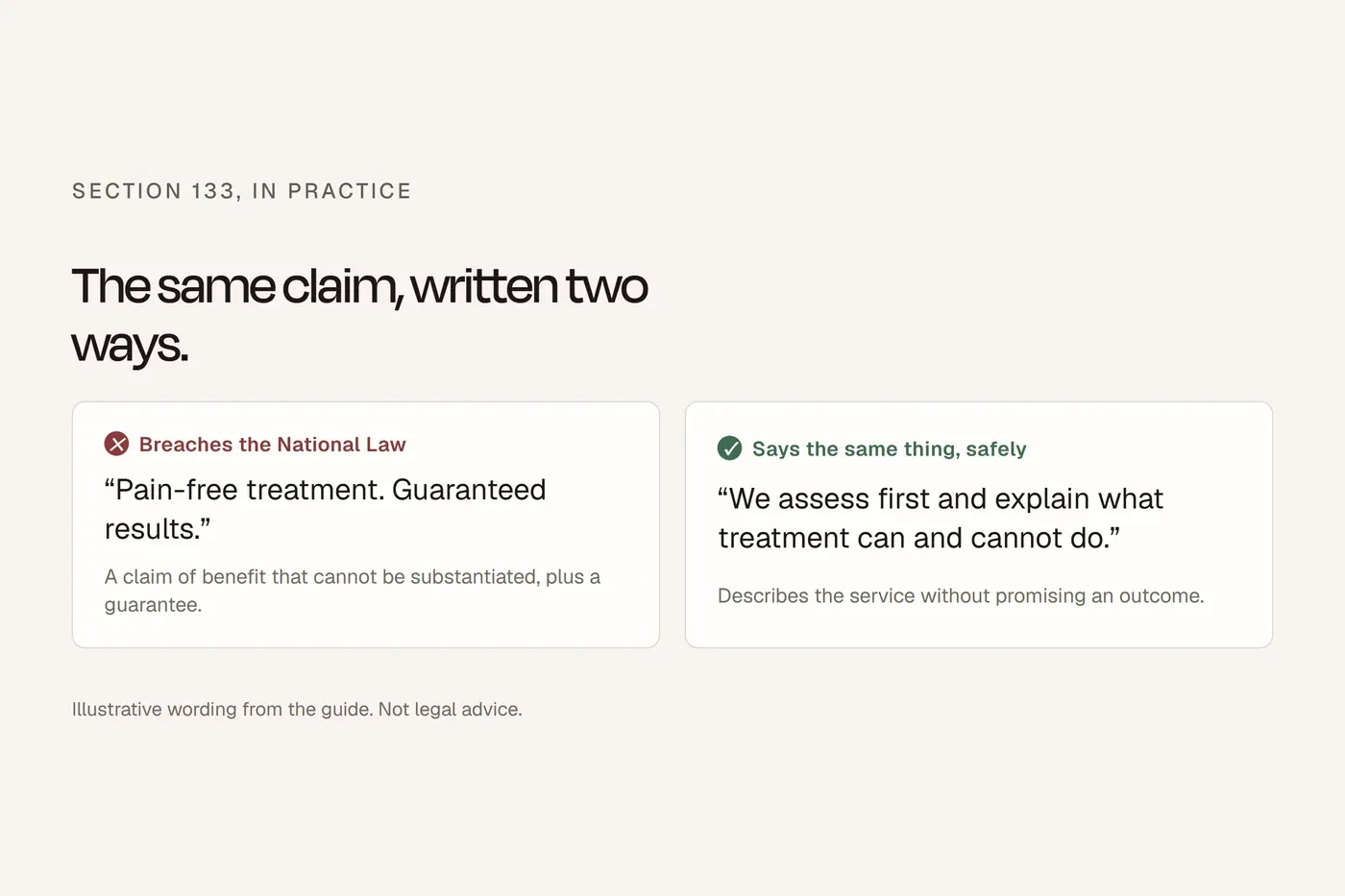
Section 133 of the Health Practitioner Regulation National Law lists five things. Everything on this checklist traces back to one of them.
You must not advertise a regulated health service in a way that:
- is false, misleading or deceptive, or likely to be
- offers a gift, discount or inducement without stating the terms and conditions
- uses testimonials or purported testimonials
- creates an unreasonable expectation of beneficial treatment
- encourages indiscriminate or unnecessary use of health services
Each is a separate offence. The maximum penalty is $60,000 for an individual and $120,000 for a company, per offence. An ongoing breach can be treated as more than one offence. Western Australia is the exception: it didn't adopt the 2022 increase, so lower penalties apply there.
A note on that number. The PDF of Ahpra's advertising guidelines still says $5,000 and $10,000 inside it. Those figures are from 2020. The law changed in 2022 and Ahpra's website flags the new amounts. If you read a blog that says $5,000, or $30,000, it is out of date.
The checklist
Words and claims
1. No "safe", "effective", "risk-free" or "pain-free" without the risks alongside. Ahpra names these four words specifically. On their own they create an unreasonable expectation. Say what the treatment involves and what can go wrong, or drop the word.
2. No guarantees, cures or miracles. "Infallible", "magical", "miraculous", "guaranteed", "sure cure". Ahpra lists them as examples of what not to say. This includes softer versions. "You'll walk out pain free" is a guarantee with a smile on it.
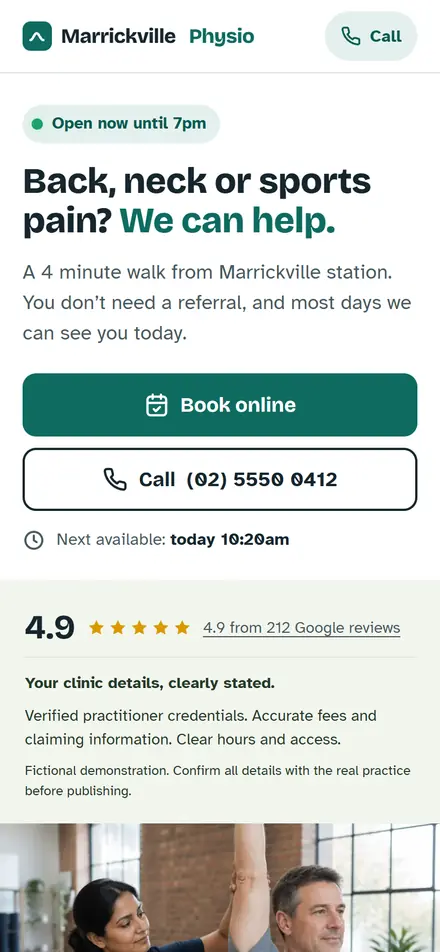
3. No "best", "leading", "world-class" or "number one" without proof. Claims of a superior service are misleading unless you can back them. Nobody can back "best physio in Marrickville".
4. No comparing yourself to other clinics on price or quality without the full picture. Ahpra allows comparison but only with complete information. "Half the price of the clinic down the road" fails unless you show both prices and what each includes.
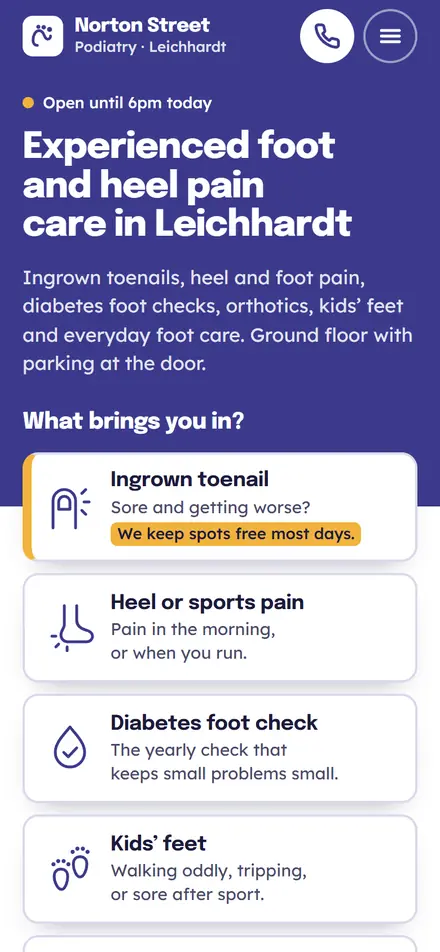
5. No list of conditions your treatment "helps with" or "treats" unless the evidence exists. This is the most common breach we see on allied health sites. A long list of conditions under a service heading is an effectiveness claim for every one of them. Ahpra's example is a chiropractor whose bio says regular adjustments were the only thing that helped their asthma. For advertising, Ahpra wants peer-reviewed research, ideally systematic reviews. Anecdotes, patient audits and studies with no control group don't count. Trim the list to what you can defend.
6. No unique or exclusive skills. "The only clinic in Sydney offering..." is a claim you'd need to prove across every clinic in Sydney. Describe the treatment instead.
Names, titles and bios
7. If anyone uses "Dr" and isn't a medical practitioner, the profession sits right next to it. "Dr" is not a protected title. Anyone can use it. But if a patient could think you're a medical doctor, it's misleading. Ahpra's own example: "Dr Lee" is a breach, "Dr Lee (Osteopath)" is fine. This applies to PhDs too.
8. No "specialist" or "specialises in" unless your profession has registered specialties. Only medicine, dentistry and podiatry have them. Physiotherapy, psychology, chiropractic and osteopathy do not. A chiropractor who "specialises in paediatric care" is breaching. Ahpra suggests "has substantial experience working with" instead. The one exception: physiotherapists with a title awarded by the Australian College of Physiotherapists can use it, with the awarding body and year stated.
9. No "surgeon" unless you're a medical practitioner with specialist registration in surgery, obstetrics and gynaecology, or ophthalmology. Section 115A. "Cosmetic surgeon" is now caught by this. "Dental surgeon" is not.
10. Every qualification and registration mentioned is real, current and yours. Sounds obvious. Check the bios anyway, especially for staff who have left.
Reviews and testimonials
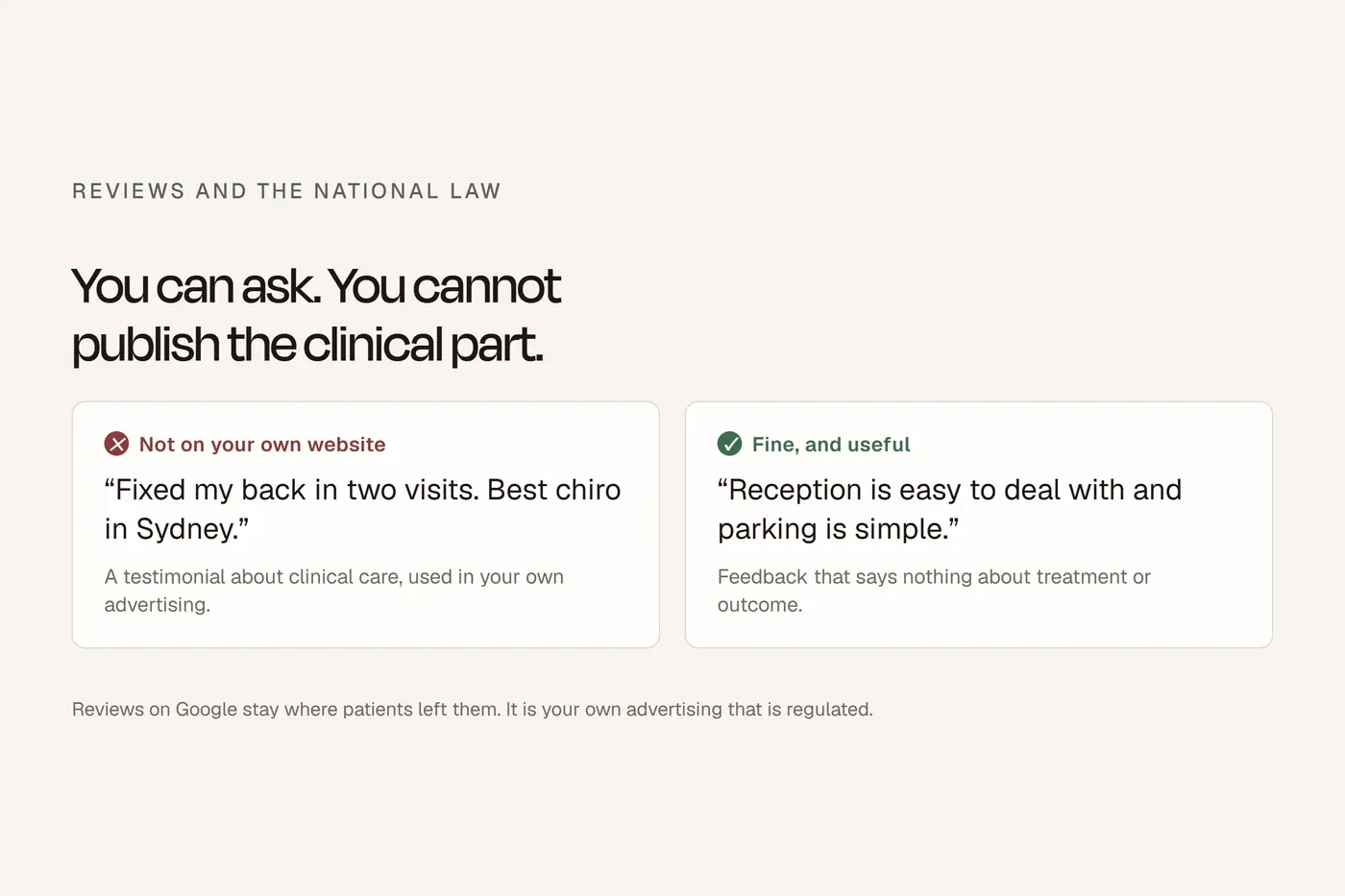
11. No patient reviews on your website that mention symptoms, diagnosis, treatment, results or how good the practitioner is. This is the testimonial ban. Ahpra calls those the clinical aspects. A review that only mentions parking, friendliness or how easy it was to book is fine. One sentence about the treatment makes the whole review a breach. You can't edit the review to fix it either. Remove the lot.
12. No Google review widgets or copied Google reviews. Reviews sitting on Google are Google's problem. Ahpra treats them as outside your control because you can't switch them off. The moment you copy one onto your site, or embed a widget that pulls them in, you're the advertiser. Same rule applies: clinical content, off it comes.
13. Facebook reviews are switched off, or checked. You can disable Facebook reviews. Because you can, Ahpra treats them as within your control. Leave them on and a patient's glowing account of their treatment becomes your testimonial. Easiest fix: turn them off.
14. Nobody at the practice likes, shares or thanks a clinical review. Ahpra says to take care when engaging with reviews on third-party sites because it "may be considered using a testimonial". The cosmetic guidelines go further and say liking or responding counts. Set a practice rule: nobody touches a positive review that mentions treatment.
Images
15. Before-and-after photos match. Same angle, lighting, framing, background, posture, clothing and make-up. No filters, no retouching. Consent that covers advertising use, not just the clinical file. If the site does cosmetic work, the rules are tighter again. See point 21.
16. No stock photos or models presented as results. If it isn't your patient after your treatment, it isn't an "after".
Offers and prices
17. Every discount, gift or offer has its terms and conditions where a patient can find them. A link to the full terms is fine. Price stated clearly. Expiry, eligibility and any exclusions stated. "Make one appointment, get one free" where the first price is inflated is a breach Ahpra names.
18. No urgency tied to health. "Don't delay", "act now before it's too late", "limited time only". Ahpra lists these as encouraging unnecessary use when they're linked to health suffering. A quiet "book online" is fine. A countdown timer on a back pain page is not.
19. No prizes, draws or rewards for treatment. Ahpra's own example is a luxury car draw for repeat cosmetic injections. Smaller versions are still the same problem.
Two more layers most clinics miss
20. No prescription medicine named anywhere on the site. This one is the TGA, not Ahpra. Advertising a Schedule 4 medicine to the public is prohibited. That rules out "Botox", "Dysport", brand-name fillers and, since 7 March 2024, the generic terms too. "Anti-wrinkle injections" and "dermal fillers" are no longer accepted where a reasonable person would understand you're promoting a prescription product. Hashtags and nicknames count. Describe the concern you treat instead. The TGA won't publish a list of safe words, so keep it to the condition, not the product.
21. If you do higher-risk cosmetic work, the September 2025 guidelines apply on top of everything above. Injectables, dermal veneers, thread lifts, PRP, hair transplants and more. Since 2 September 2025 that means no testimonials of any kind including influencers, nothing aimed at under-18s, the "before" image shown first, a prominent results-vary warning, and if you name the practitioner, their registration number next to their name. We've written that up separately.
Housekeeping
22. Someone owns this. Put a date on your last check. Book the next one. Ahpra's guidelines are due for review and the penalty figures already changed once without the PDF changing. The site that was compliant in 2023 may not be now. Check your privacy policy at the same time; those rules changed in 2024 and change again in December 2026 privacy policies.
What you don't have to do
A few things clinics add out of caution that aren't required.
You do not have to display your registration number on your website. There is no general rule requiring it. The one exception is the cosmetic point above, where a named practitioner performing higher-risk procedures must show it.
You do not have to display a professional indemnity statement. Holding insurance is a registration standard. Displaying it is not a website rule.
You can show your qualifications, your registration and your profession. That's recommended. It just isn't mandated.
What happens if you get it wrong
In 2024/25, Ahpra assessed 775 advertising complaints, 356 of which were serious enough to be treated as potential criminal offences. The year before it was 667. It completed 15 criminal prosecutions, a third of them for advertising offences. Most breaches never get that far. The usual path is a letter asking you to fix it, then escalation if you don't.
Anyone can lodge an advertising complaint. It's free and it can be anonymous. You'll read claims online about what proportion come from competitors. Ahpra hasn't published a figure, so neither will we.
Ahpra has also said it trialled software that scans websites and social media for breaches. Assume your site gets read.
Ahpra's own tools
Ahpra publishes a self-assessment tool, a testimonial tool and a titles guide at ahpra.gov.au under the Advertising hub. They're worth twenty minutes. This checklist is our reading of them for a clinic website. Theirs is the source.
The explained version is above. This is the working copy: open your site in another tab and go down the list.
For registered health practices. Current at September 2026. Not legal advice.
Words and claims
- No "safe", "effective", "risk-free" or "pain-free" without the risks alongside
- No guarantees, cures, or "miraculous" anything
- No "best", "leading", "world-class" or "number one"
- No price or quality comparisons without the full picture
- Conditions listed under each service are limited to what peer-reviewed evidence supports
- No "only clinic that..." or "unique" claims
Names, titles and bios
- Every "Dr" who isn't a medical practitioner has their profession beside their name
- No "specialist" or "specialises" unless in medicine, dentistry or podiatry (or an ACP-awarded physio title, stated in full)
- No "surgeon" unless legally entitled
- All qualifications and registrations current and correct
Reviews and testimonials
- No reviews on the site that mention symptoms, diagnosis, treatment, results or the practitioner's skill
- No Google review widgets or copied reviews
- Facebook reviews switched off or checked
- Practice rule in place: nobody likes, shares or thanks a clinical review
Images
- Before-and-afters match on angle, lighting, framing, posture, clothing, make-up; unedited; advertising consent on file
- No stock images or models shown as results
Offers and prices
- Every offer has findable terms and conditions and a clear price
- No "don't delay", "limited time" or countdowns tied to health
- No prizes or rewards for treatment
The other layers
- No prescription medicine named anywhere, including "anti-wrinkle injections" and "dermal fillers" (TGA, since 7 March 2024)
- If higher-risk cosmetic procedures are offered, the 2 September 2025 guidelines have been applied on top
Housekeeping
- Date of this check recorded and next check booked
Penalties: up to $60,000 per offence for an individual, $120,000 for a company, except in Western Australia where lower penalties apply. Source: Ahpra, Guidelines for advertising a regulated health service, and s133 of the National Law.
Questions we get asked
Is my website really "advertising"?
Yes. The guidelines list websites and social media first. Bios, FAQ pages and directory listings are included.
My web designer wrote it. Am I still responsible?
Yes. You published it, so you're the advertiser. Ahpra expects you to check content others produce for you.
Can I have any testimonials at all?
Only ones that say nothing about clinical matters. Booking, parking, the receptionist. In practice most clinics find it easier to leave them off the site entirely.
Can I leave my Google reviews up?
Yes. You can't switch them off, so Ahpra doesn't hold you responsible for them. Just don't copy them onto your site, and don't reply to the clinical ones.
Do I have to turn off Facebook reviews?
Ahpra's position is that because you can turn them off, you're responsible for what's there. Turning them off is the simplest way to comply.
Can a physio or psychologist call themselves a specialist?
No. Those professions don't have registered specialties. The exception is a physiotherapist with a title from the Australian College of Physiotherapists, stated in full.
Can I use "Dr" as a chiropractor or osteopath?
Yes, with your profession next to it. "Dr Patel (Chiropractor)".
Can I list the conditions I treat?
Only if you have acceptable evidence for each one. For most allied health sites, that means a much shorter list.
Can I run a discount?
Yes, with the terms and conditions stated and findable. Don't attach urgency to it.
Can I say "Botox"?
No. That's a TGA rule, not Ahpra. Since March 2024, "anti-wrinkle injections" isn't accepted either.
About this guide
Sources are named in the text; where the rules come from a regulator we link to the regulator, not to a summary of it. This is general information about building a website, not legal advice.