How small architecture practices find clients
Seven in ten clients come by referral. Here’s how to work that, and every other channel, inside your state’s code: free sketches, referral fees, award claims and supplanting, with a cost-per-project calculator and a 90-day plan.
On This Page
Search for marketing for architects and page one is American agencies, the American Institute of Architects and Reddit. Not much of it applies to a small Australian practice, because here the state codes of conduct change what you can do: Victoria bars free concept sketches outright, most states require you to disclose paid referral arrangements, and award claims have to be stated exactly. This guide starts from what the Australian Institute of Architects tells homeowners about choosing an architect, then goes through each channel: what it takes, what it costs where that's published, and what your state's code allows. I build websites for architects, so I've a view on the website part; everything else comes from the codes, the Institute and the platforms, read on 12 October 2026. It's general information, not legal advice. Check anything specific with your state's board.
- Most work comes by referralIn the Institute's own client survey, seven in ten clients came through a referral from a trusted source, and one in ten from marketing material.
- Be findable from your built work, then win the interviewThe Institute tells homeowners to find who designed projects they admire, interview two to four practices and call referees.
- Check your state's code before you offer anything freeVictoria bans sketches without a signed agreement, paid or not. Most states require you to disclose paid referrals.
How clients find and choose an architect
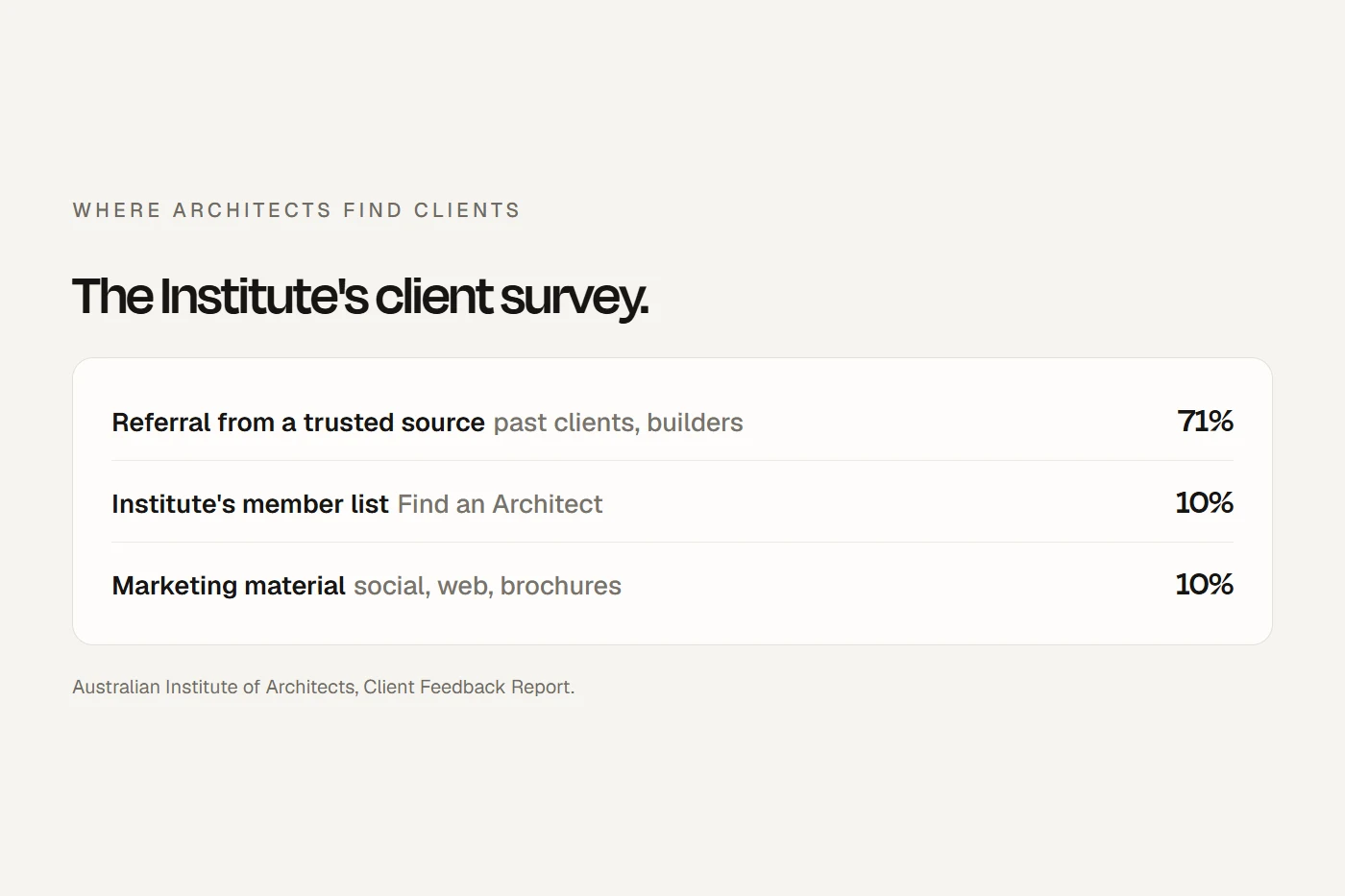
There's almost no Australian data on this. The best is the Institute's own client feedback survey, in which 71% of clients named "referral from a trusted source", 10% used the Institute's list of members and 10% came through marketing material such as social media, websites and brochures. Most of the clients who answered were builders, developers, project managers and government, not homeowners, so treat it as a rough guide. Houzz's survey of its Australian users found about one in ten renovators hired an architect, but not how they found one. I couldn't find any Australian survey of how homeowners find their architect, and I'd be wary of anyone quoting American figures as if they apply here.
What does exist is the Institute's own advice to homeowners, which describes the buying process you're marketing into:
- "If there are projects you admire... find out who designed them."
- Interview "between two and four practices", and review work "similar in type and size" to theirs.
- Call referees: ask past clients about "both the practice and the resulting architecture".
- Decide on "personal confidence in the architect".
So the marketing jobs are clear: make your built work traceable to you, show projects like the one the client is planning, have past clients ready to take a referee call, and get onto the shortlist. Referrals still check your website and your projects before they ring.
The rules that change your tactics
Free sketches and free design
This is the one that catches people. Victoria's Code of Professional Conduct says an architect must not provide architectural services, "including concept designs, sketches or reports", without a written and signed agreement. The Architects Registration Board of Victoria says that applies "regardless of whether any fee is charged or expected". What you can do before an agreement: show your portfolio, talk generally about your capabilities and fees, and have scoping conversations that don't involve producing any design. A short-form agreement is fine for small jobs.
New South Wales, Queensland, South Australia and the Northern Territory also require a written agreement before you start work, and the NSW code defines a client as someone who engages you "whether or not for payment". No board other than Victoria's has spoken about free sketches directly, but my reading is that a free sketch in those states still needs the agreement first. The Institute's own risk advice tells members to avoid design work unless they're paid for it, and lists the reasons: it devalues the expertise, raises unrealistic expectations, creates copyright issues, and doesn't reduce your legal responsibility.
The alternative is a paid first consultation or feasibility study, with the fee credited against the next stage if the client goes ahead. Archicentre Australia sells exactly that, so plenty of homeowners will recognise it.
Competitions and tenders
The Victorian board says the agreement rule ordinarily doesn't apply to entries in open tenders or competitions where the sponsor will only engage the winner. The Institute supports competitions run under its model conditions, which pay honoraria to shortlisted entrants and protect entrants' intellectual property. It opposes tenders that ask for free concept sketches, and its South Australian chapter has written to councils saying they disadvantage small practices. You can answer those tenders; just know what you're giving away.
Paying for referrals
| State | The rule |
|---|---|
| NSW | Disclose the arrangement to the client before accepting the job. |
| Victoria | Disclose any referral arrangement before entering the agreement. |
| Queensland | Disclose the arrangement before accepting the engagement. |
| SA | Disclose at the start of the engagement. |
| WA | Accepting work because of a commission to or from another person is unprofessional conduct. Check with the Board. |
Referral relationships with builders and developers are normal; in most states the client just has to be told first. The same goes for anything you're paid to recommend or endorse: disclose the fee.
Another architect's client
The Institute's code, which binds its members, says not to try to supplant an architect already appointed to a project, and if approached about one, to ask the client to notify the other architect. South Australia's code says the same for every registered architect. That matters if you're tempted by services that send letters to owners who've just lodged a planning application: ask whether they already have an architect before you pitch.
Comparisons and awards
The NSW and SA codes say to avoid misleading or false comparisons with competitors, and the Institute's code bars unfair criticism of other architects. Awards must be stated accurately in NSW, Victoria and Queensland. The Institute's awards have three tiers, a Named Award, an Award and a Commendation, so write "Commendation, Residential Architecture, [chapter] Architecture Awards" rather than "award-winning", and remember a shortlist isn't an award.
Titles and your registration number
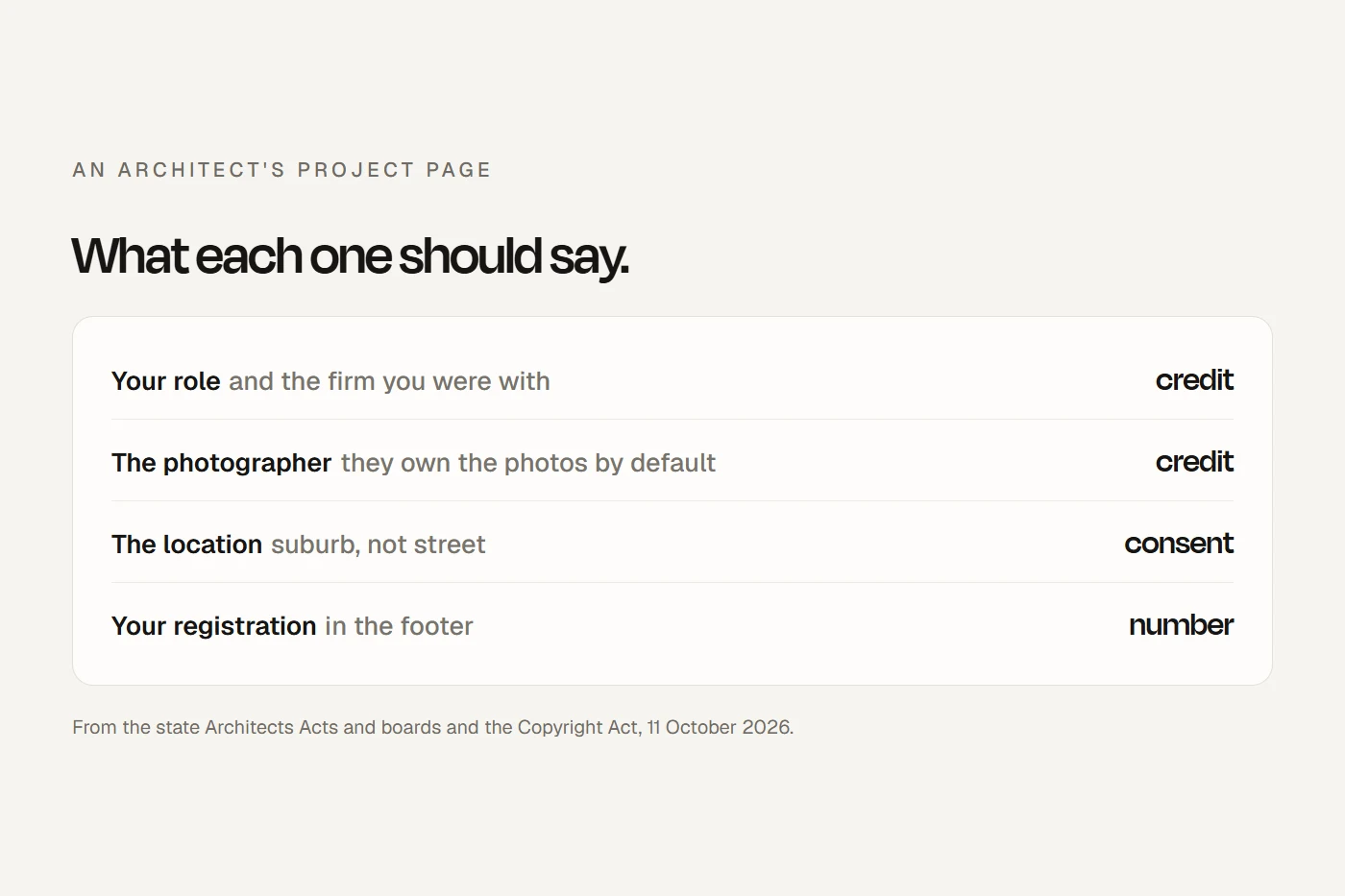
The words "architect" and "architectural" are restricted, and that reaches your Google profile name, Instagram handle and team posts: a graduate isn't an "architect" in a caption. The NSW board says your registration number belongs on public-facing material "including the practice website", the ACT requires it in advertisements, and Victoria's code expects it too. The full state-by-state detail is in what an architect's website must show.
Can I do this?
Tap a card to see the verdict. General information, not legal advice; check your state's board.
The channels, one by one
Referrals: past clients, builders and project managers
This is where most of the work comes from, so treat it as a system rather than luck. Keep a short list of past clients who've agreed to take a referee call, because the Institute tells homeowners to ring them. Tell the builders and project managers you like working with which jobs you want, and credit the builder on your project pages. If anyone is paid for introductions, write the disclosure line into your agreement now.
The Institute: Find an Architect and awards
The Institute's homeowner guide sends people to its Find an Architect directory, but the directory only includes practices enrolled in its A+ practice membership, so the listing comes with a membership fee. The same membership gives you a discount on awards entries. To enter the Institute's awards, the entrant must be a registered architect and an Institute member who owns or licenses the copyright in the work. Each category entered costs several hundred dollars, and there's no extra charge if a project progresses to the national awards. For a small residential practice, an award is a referral from strangers, and the residential and small project categories are where you'd compete.
Publishing your projects
ArchDaily and The Local Project both take project submissions without a stated fee, and both are curated: not everything submitted is published. ArchDaily asks for at least 15 professional images at 2880 pixels wide and focuses on work from the last five years. The Local Project only features professional photography and suggests 10 to 30 images. Both need you to hold the rights to the photos. The Local Project also sells advertorials, labelled "In partnership with", separately from editorial.
Publication and awards both start with the same thing: a professional shoot you're licensed to use everywhere. The photographer owns the copyright unless your agreement says otherwise, so make the licence cover your website, social media, awards and publications, get the client's consent before you shoot their home, and credit the photographer every time.
Houzz and ArchiPro
Houzz Pro's sign-up asks you to choose a plan and enter payment details; I couldn't find Australian prices published. ArchiPro sells 12-month memberships, price on application. Both are worth a quote if your clients are homeowners planning projects, but measure them by signed projects, not profile views.
Google, Instagram and your website
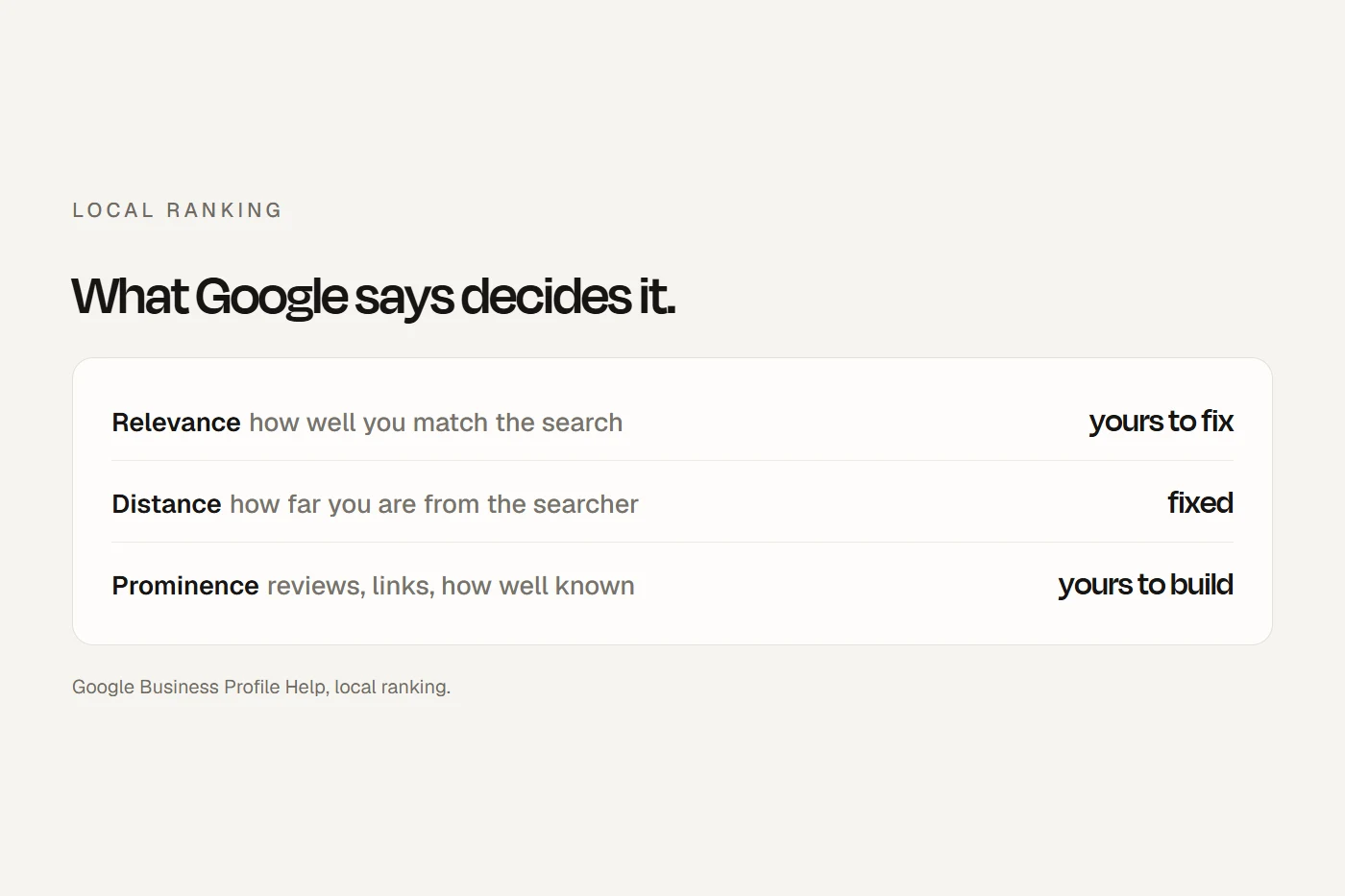
Your Google Business Profile, Instagram and website are where a referral checks you out. Keep the profile name to your registered business name, show projects similar in type and size to the work you want, and count enquiries by where they came from. More in local SEO for small business. On Instagram and Pinterest, credit photographers and builders, get clients' consent before showing their homes, and disclose any paid supplier posts. A website is where your project pages live: the brief, the constraints, what you did, and who built and photographed it.
What a signed project costs you, by channel
Put in one channel's numbers for a year, then the next. Count your own time; for most small practices it's the biggest cost. The starting numbers are an example, not market data.
Run it for referrals too, counting the lunches and follow-ups. For most practices that's the cheapest channel by a distance, which is the argument for spending time on it before money on anything else.
A 90-day plan
Your ticks save in this browser.
- Put your registration number on your website, Google profile and ad templates.
- Check the wording on your site, profiles and Instagram bio, including how graduates are described.
- Write your first-meeting offer: a free conversation about the project and fees, no drawings, or a paid feasibility with a short agreement.
- Build project pages for your three most typical jobs, crediting the builder and photographer, with client consent on file.
- Start counting enquiries by where they came from.
- List past clients willing to take a referee call, with their permission in writing.
- Ask every finished client for a Google review, with nothing offered.
- Meet three builders or project managers you'd work with again, and write a disclosure line if anyone is paid for introductions.
- Send past clients a project update, with their consent and an unsubscribe.
- Decide on A+ membership, weighing the fee against the directory listing and awards eligibility.
- Pick one finished project for publication or awards: book a licensed shoot, get consents, and submit or diary the next awards cycle.
- Run one small paid test on one project type in your area, then compare cost per signed project and drop the worst channel.
My view
The Institute's own advice to homeowners is the best marketing brief a small practice could ask for: be traceable from your built work, show projects like theirs, have referees ready, and win the interview. Spend your hours on referrals and on one or two projects photographed and documented properly, because those feed awards, publication, your website and every referee call. And read your state's code before you offer anything free.
Questions I get asked
How do architects get clients in Australia?
Mostly by referral: in the Institute's client survey, seven in ten came through a trusted referral. The rest come through the Institute's directory, awards, publications, Houzz and similar platforms, and their own websites and social media.
Can architects offer free concept sketches?
Not in Victoria without a signed agreement, whether or not you charge. Other states with written-agreement rules expect one before you start, and the Institute advises against free design work.
Can architects pay referral fees?
In NSW, Victoria, Queensland and SA, yes, if you disclose the arrangement to the client before taking the job. In WA, accepting work because of a commission is unprofessional conduct, so check with the Board.
How do I get listed on Find an Architect?
The directory only includes practices enrolled in the Australian Institute of Architects' A+ practice membership.
Can I call my practice award-winning?
Only if it is, and it's safer to state the award exactly: the tier, the category and the program. A shortlist or Commendation isn't an award.
About this guide
Written by Joseph Alzein, founder of bdog. bdog builds websites for architecture practices. The rules come from the state codes of conduct, the boards and the Australian Institute of Architects, read on 12 October 2026. This is general information, not legal advice; check with your state's board.
Main sources:
- ARBV: Victorian Architects Code of Professional Conduct
- Architects Regulation 2017 (NSW)
- NSW ARB: displaying your registration number
- Australian Institute of Architects: Client Feedback Report
- Australian Institute of Architects: Working with an architect for your home
- Institute: model conditions for architectural competitions
- Institute: Architecture Awards entry handbook
- ArchDaily: guide to publication
- The Local Project: submissions
- Houzz Australia: renovation survey