How to fill childcare vacancies: turning enquiries into enrolments
Where the empty places really are, StartingBlocks vacancy and fee reporting, replying fast and self-booked tours, the written offer and the subsidy paperwork deadlines, what you can and can’t offer families, running the waitlist, and the first weeks. With an enquiry-to-enrolment calculator, a can-I-offer-this sorter and a 30-day plan.
On This Page
- Know exactly where the gaps are
- StartingBlocks: vacancies and fees must match
- Reply fast, and let them book the tour
- The tour
- The offer, and the paperwork deadlines
- Where your enrolments go missing
- Can I offer this?
- Run the waitlist as a list of real families
- The first weeks decide whether it lasts
- A 30-day vacancy plan
- My view
- Questions I get asked
The Department of Education's own figures show more long day care centres and fewer families using them, so empty places are now normal, not a crisis. This guide is for the owner or director of one to three centres with vacancies. It isn't about marketing in general (my childcare marketing guide covers that). It's about the stretch from enquiry to enrolment: knowing exactly which places are empty, replying fast, the tour, the written offer, the paperwork deadlines, what you can and can't offer families, waitlists and the first weeks. I build childcare centre websites. The rules come from the Family Assistance Law, the Department of Education, the National Regulations and the ACCC.
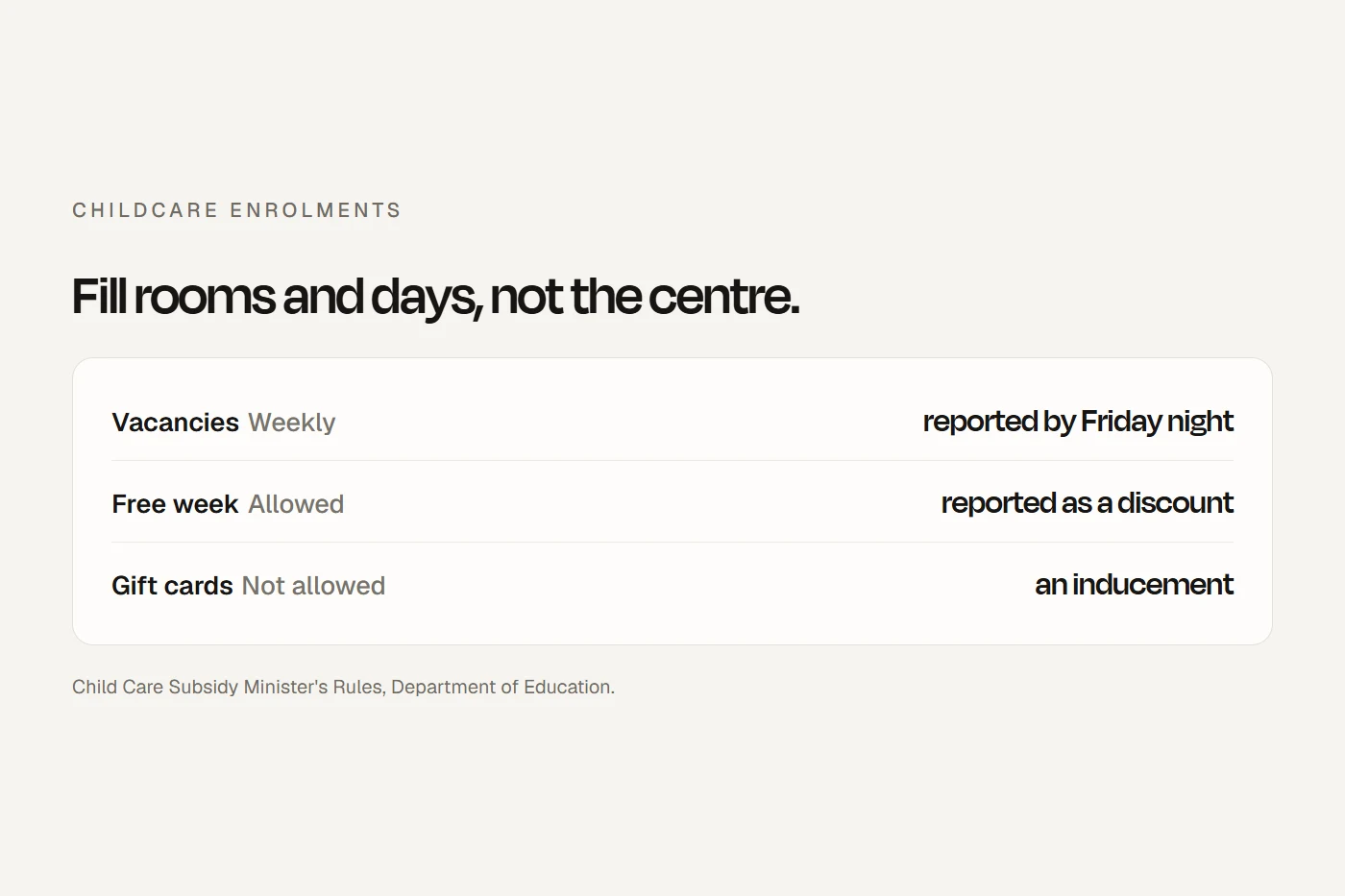
- Fill rooms and days, not "the centre"Waitlists sit in the 0 to 2 rooms, over-3s are hardest to fill, and vacancies are most common on Mondays and Fridays. Know your gaps by room and day.
- Conversion is the lever you controlFamilies enquire at several centres at once. Reply the same day, let them book the tour themselves, and make the offer in writing with the paperwork steps.
- Free weeks yes, gifts noDiscounted or free care is allowed if reported as a reduced fee. Gift cards, vouchers and giveaways to enrol aren't.
Know exactly where the gaps are
The ACCC's childcare inquiry found children aged 0 to 2 are the only age group where waitlisted children outnumber places offered. Places for over-3s are the hardest to fill, because families move to standalone preschool, which is often free or cheaper. The Productivity Commission found vacancies "tend to be more common for Mondays and Fridays". Many services also cap enrolments because of staffing.
So the first step is a list, room by room and day by day, for the next 12 weeks, marking which places you can actually staff. An extra child in a room with spare ratio capacity adds fees with little extra cost; a child who tips a room into needing another educator doesn't. Fill the rooms you can staff first.
StartingBlocks: vacancies and fees must match
- Vacancy reporting is a legal obligation. The Child Care Subsidy Minister's Rules require you to notify each week, by Friday night, whether you have ongoing vacancies for the following week. The Department publishes them on StartingBlocks and may take compliance action if you don't report.
- The fee you advertise is the fee you report. The rules cover fees "published by the service through marketing, advertising or any other promotional material", before any subsidy or discount. Your website, your fee schedule and StartingBlocks should show the same daily fee by room and session.
- Report by age group. If your software only ticks yes or no, update the detail directly. A filled place still showing, or a room you can't staff, makes your centre look wrong next to its own website.
Reply fast, and let them book the tour
The ACCC found families sit on several waitlists at once, often well before they need care. So the first useful reply usually wins. One of the biggest listed operators reports turning about a third of its enquiries into enrolments, and its stated levers are better tours, a faster enrolment process, quicker casual bookings and a target of replying to families within 24 hours. A small centre can do all of that faster.
- Reply the same day, from a person, with tour times. An automatic email alone isn't a reply.
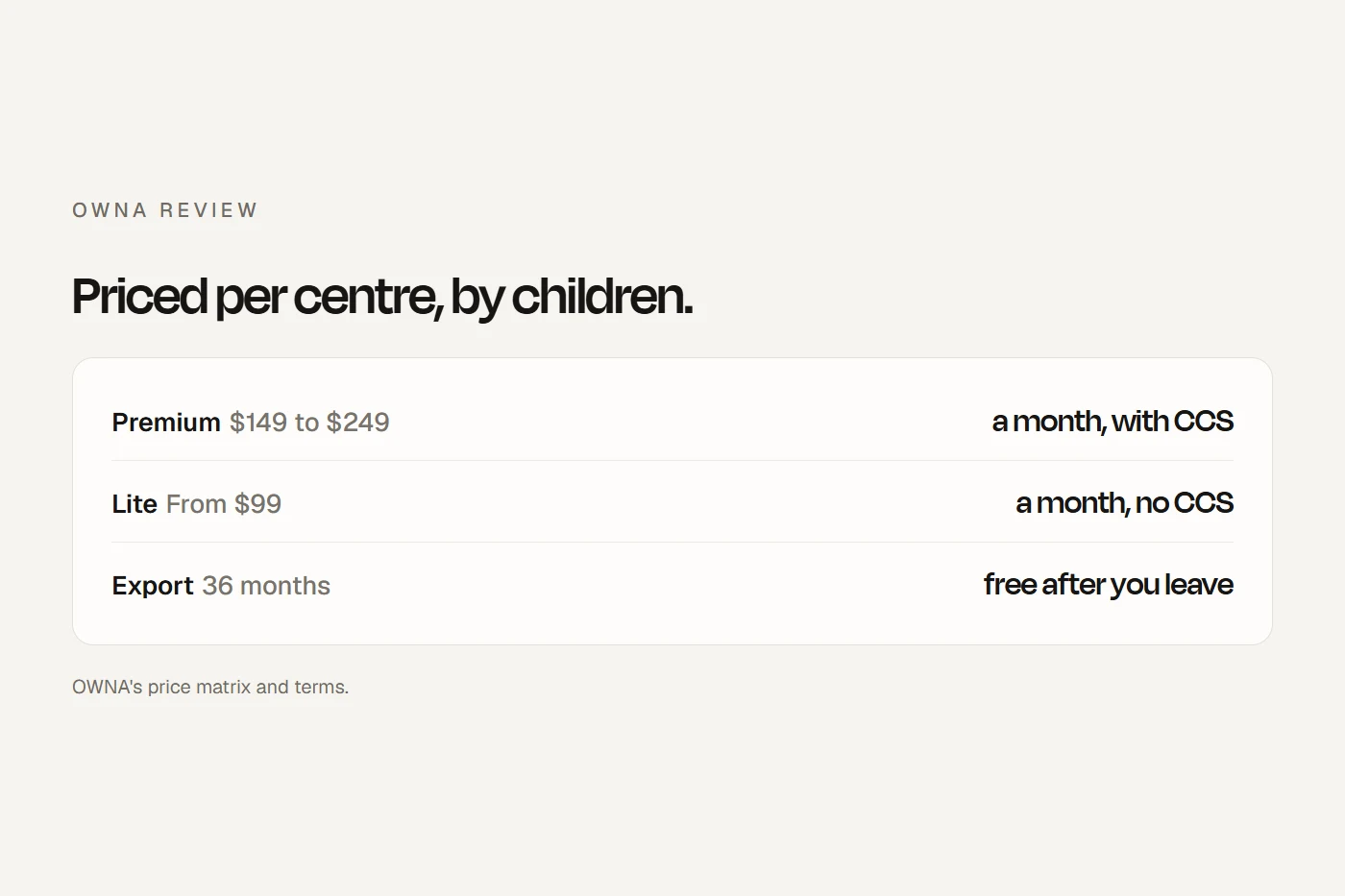
- Put tour booking in the enquiry form. OWNA, Xplor's MyWaitlist and others let families pick a tour slot from your website.
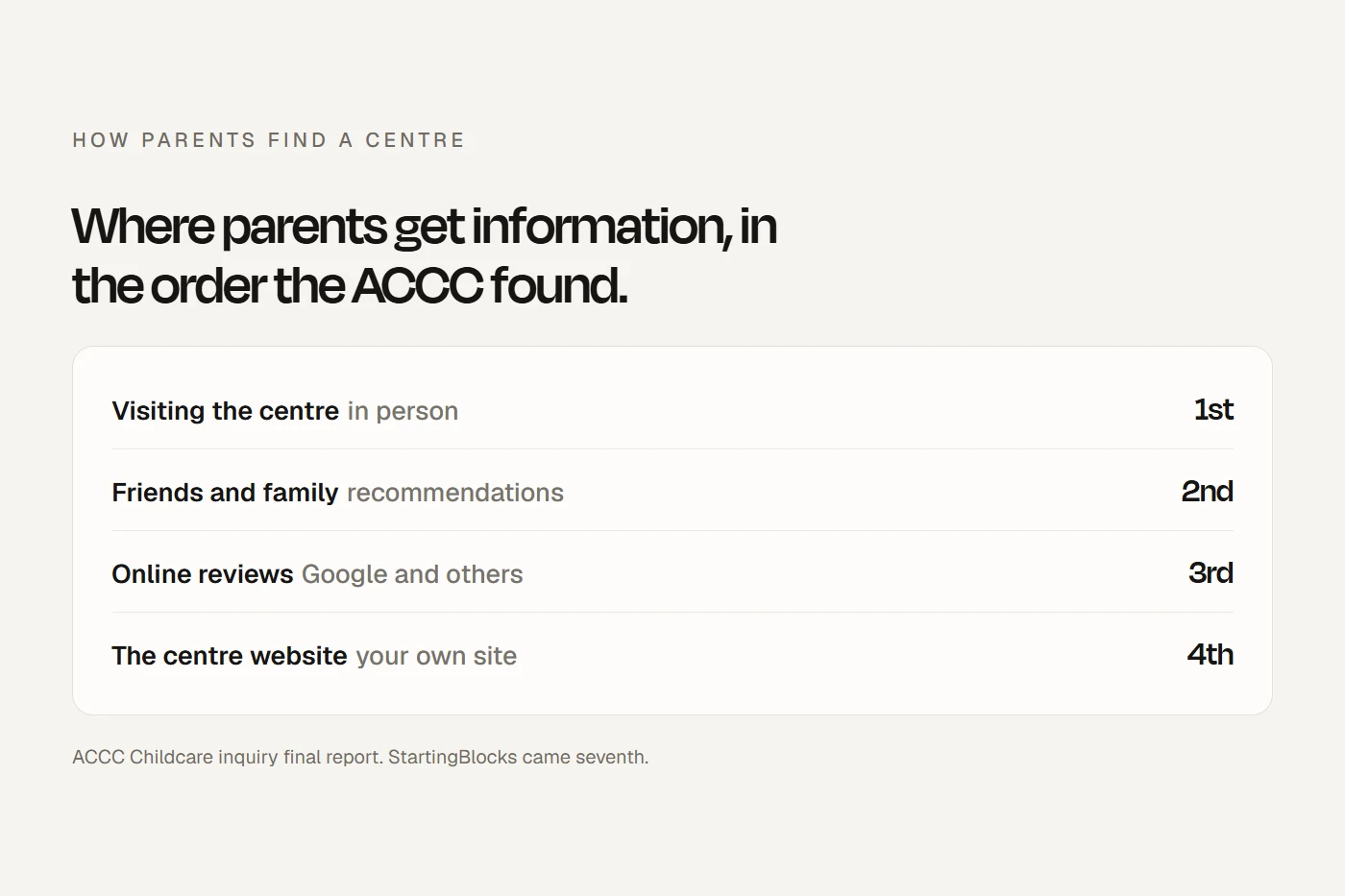
- Make the tour the main button on your website. Families decide on a visit more than anything else.
The tour
There are no rules on how tours run, and free visits are expressly allowed. Build the tour around the questions families are told to ask: how upset children are comforted, daily updates on eating, sleeping and toileting, who the main carer will be, routines, behaviour guidance and the program. Introduce the room's educators. And use a strong, true line: under the National Regulations, a parent may come into the centre any time their child is there.
Tell the fee truth on the day: the full daily fee, that the Child Care Subsidy depends on each family, a link to the StartingBlocks subsidy calculator, and that there's always a gap to pay. The 3 Day Guarantee gives eligible families three subsidised days a week, but it guarantees subsidy, not a place.
The offer, and the paperwork deadlines
Make the offer in writing: the room, the days, the start date, the full fee, any deposit or bond terms, and the next steps. The steps matter because the deadlines are fixed:
- Lodge the CCS claim now. Families must claim before their child starts. If they haven't, the Department says "you must charge the family full fees", and the subsidy can only be backdated a short way. Put this in the offer, not after the start date.
- The written arrangement. You and the family agree the care arrangement in writing, and it can point to the fee schedule on your website.
- The enrolment notice goes in within 7 days after the end of the week you made the arrangement. The family then confirms it in their Centrelink account, and no subsidy is paid until they do.
- Holding a place costs full fee. The subsidy generally isn't paid for absences before a child's first day, except in narrow cases. If you charge to hold a place until a parent returns from leave, say so in writing at offer stage, with the amount.
- Immunisation: check your state's rules before you confirm a start date. In NSW, for example, a centre can't enrol a child without an approved immunisation history statement.
Where your enrolments go missing
Put in last quarter's numbers. The example figures are made up.
The weakest step is usually where the months go, and it's often the days. If families want Tuesday to Thursday and you have Monday and Friday, offer a start on your free days with a written place on their preferred days when one opens.
Can I offer this?
The Minister's Rules ban benefits "reasonably likely to induce" an enrolment, with specific exceptions. Tap each card.
Run the waitlist as a list of real families
The ACCC found waitlists overstate demand: children sit on several lists, join long before they need care, and stay on after getting a place elsewhere. Large providers ring families to clean their lists. Confirm every family each term: are they still interested, when do they need to start, and which days? Offer places in the order your written enrolment policy sets.
The old federal "priority of access" guidelines were written for the Child Care Benefit, and the Department no longer publishes them. If your policy still uses a priority order, that's your policy, and families must be told about it when they enrol. Waitlist fees, deposits and bonds belong in your written fees policy, named for what each is, with when each is refunded.
The first weeks decide whether it lasts
The ACCC found families rarely switch once their child is settled, so an enrolment that survives the first month is often worth years of fees. Every centre must have an enrolment and orientation policy. StartingBlocks tells parents to plan an orientation visit and start with shorter or fewer days. Give each new family visits before day one, shorter first days, a named educator and a check-in call after the first week. Selling extra or casual days to families already enrolled is also one of the cheapest ways to fill Mondays and Fridays.
A 30-day vacancy plan
Your ticks save in this browser.
- Days 1 to 3: list vacancies by room and day for 12 weeks, marking which you can staff.
- Days 1 to 3: check StartingBlocks shows those vacancies and your fees before subsidy.
- Days 1 to 3: put last quarter's numbers through the funnel and find the weakest step.
- Days 4 to 10: website: vacancies by room and day, full fees matching StartingBlocks, the subsidy calculator link, and tour booking as the main button.
- Days 4 to 10: a fee schedule page and a fees policy covering waitlist fees, deposits, bonds and refunds.
- Days 4 to 10: same-day personal replies with tour times, and self-booked tour slots.
- Days 11 to 20: a tour built on the questions parents are told to ask, with the room's educators.
- Days 11 to 20: a written offer template that includes "lodge your CCS claim now" and what holding a place costs.
- Days 11 to 20: follow up every family who toured in the last two months, offering the days you have.
- Days 11 to 20: clean the waitlist.
- Days 21 to 30: offer enrolled families extra or casual Mondays and Fridays.
- Days 21 to 30: an orientation plan for every new start.
- Days 21 to 30: the written arrangement signed and the enrolment notice in within 7 days of the end of that week.
- Day 30: rerun the funnel and compare each step.
My view
Most centres I see don't have an enquiry problem so much as a follow-through problem: slow replies, tours that are hard to book, offers that arrive without the paperwork steps, and days that don't match. Fix those before you spend more on advertising. And make the website do the first part of the job: show which days you have, what they cost, and a button to book a tour.
Questions I get asked
How do I increase enrolments at my childcare centre?
Know your vacancies by room and day, reply to enquiries the same day, let families book a tour from your website, and make the offer in writing with the subsidy steps. Fill the days you have before the days they ask for.
Can childcare centres offer a free week?
Yes. Free or discounted care is allowed if you report it as a reduced fee. No subsidy is paid on the free sessions.
Can a centre charge a waitlist fee?
No childcare rule bans it, but the consumer law applies. Publish it, say whether it's refundable, and keep it fair.
Do centres have to report vacancies?
Yes. Each week, by Friday night, you must notify whether you have ongoing vacancies for the following week. They're published on StartingBlocks.
Can a child start before the family's CCS claim is lodged?
Yes, but you must charge full fees until the claim is lodged, and the subsidy can only be backdated a short way. Ask families to claim when they accept the offer.
About this guide
Written by Joseph Alzein, founder of bdog. bdog builds childcare centre websites. The rules come from the Child Care Subsidy Minister's Rules, the Family Assistance Law, the Department of Education, the Education and Care Services National Regulations and the ACCC; the data from the ACCC's childcare inquiry, the Productivity Commission and the Department. Sources were checked on 13 October 2026. This is general information, not legal advice; for subsidy questions, ask the CCS Provider Helpdesk.
Main sources:
- Department of Education: how to notify us about changes
- Department of Education: how to enrol children
- Department of Education: advertising your service
- Department of Education: managing absences
- Department of Education: 3 Day Guarantee
- Child Care Subsidy Minister's Rules 2017
- Productivity Commission: early childhood inquiry
- StartingBlocks: subsidy calculator