Facebook and Instagram ads for a local service business
How Meta charges, what a small budget can actually do, the setup that matters, and the wording that gets ads rejected, with the Australian rules US guides leave out.
On This Page
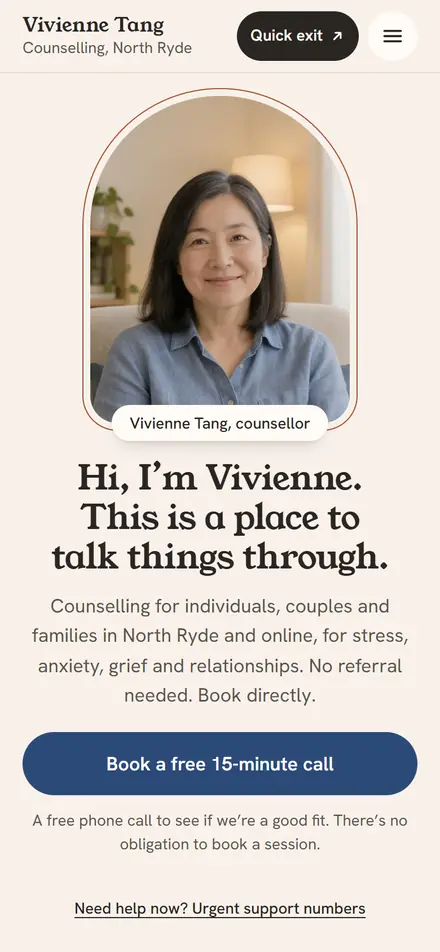
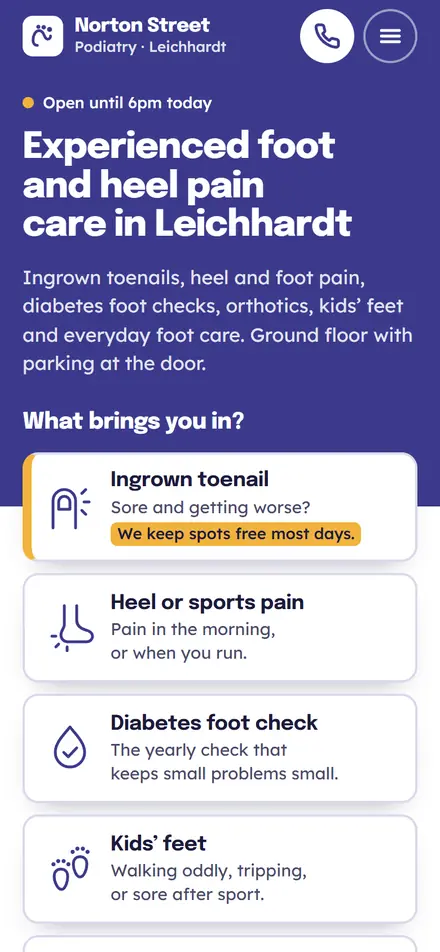
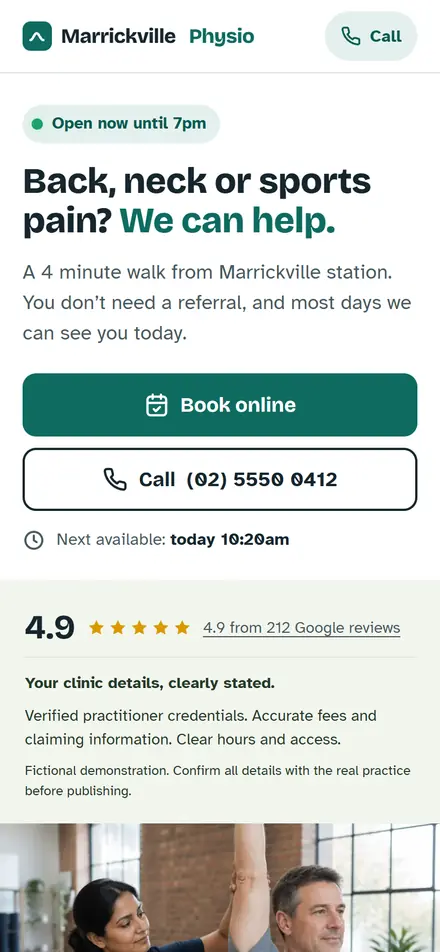
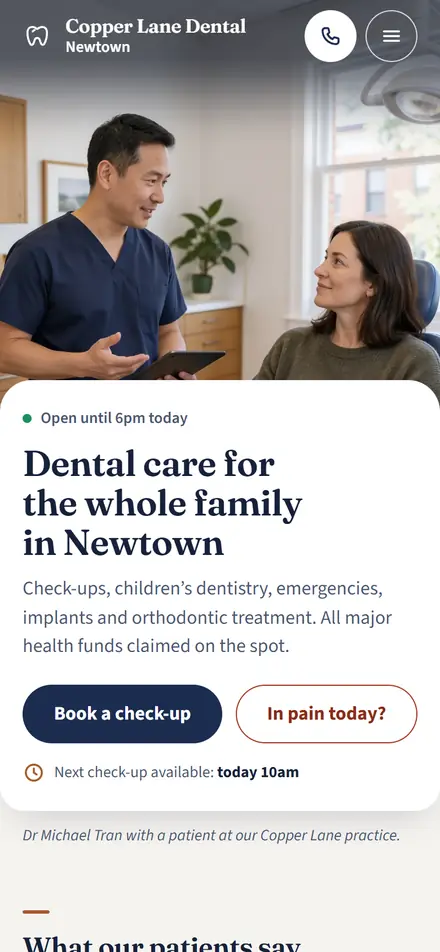
Most guides to Facebook and Instagram ads are written for American online shops. A local service business in Australia is a different problem: you're after a phone call or a booking from people within a few kilometres, the budget is small, and if you're a clinic, a broker or a lawyer, there are Australian rules that US guides never mention. This is the guide I'd want if I were starting: how Meta charges, what a small budget can actually do, the setup that matters, and the wording that gets ads rejected.
- Work out your cost per client firstCost per lead divided by the share of leads who become clients. If that's more than a client is worth to you, more budget won't fix it.
- Keep it simple at small budgetsOne campaign, one ad set, a tight location, and leave it alone for a week. Meta's learning phase needs about 50 results a week, which most local budgets won't reach.
- Follow the Australian rulesAdd your ABN so Meta doesn't add GST. Clinics: no testimonials, terms on any offer, and consent before a tracking pixel feeds ads. Finance ads need verification.
bdog's Marketing plan includes running Meta ads, so I have an interest. Everything here comes from Meta's own help centre and policies, Ahpra, the TGA, the ACCC and the OAIC, read on 11 October 2026. Meta publishes no cost benchmarks, and I've said so where it matters.
How Meta charges
You set the budget. Meta says: "When you advertise on Meta, you decide how much you want to spend." You can put a ceiling on a campaign or on the whole account, and I'd set an account spending limit before anything else.
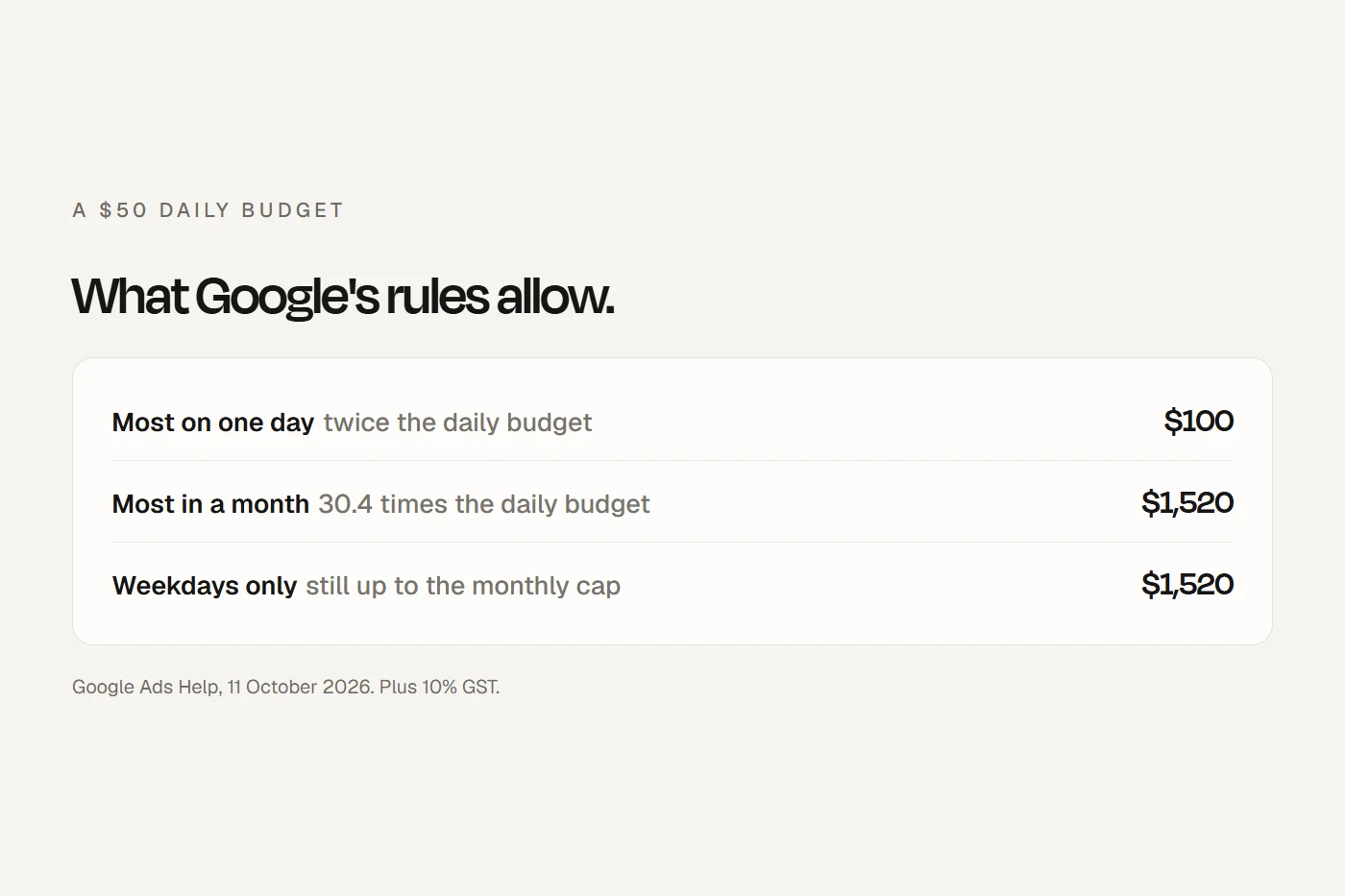
- Daily budgets are a weekly average. Meta may spend up to 75% over your daily budget on a good day, but "spending won't be more than 175% of your daily budget" in a day, or more than 7 times it in a week. Set $20 a day and some days you'll see $35 spent; the week still won't pass $140.
- There's no published Australian minimum. Meta says minimum budgets "may vary by country and objective" and gives only US examples. The "$1 a day" figure you'll see on blogs isn't on Meta's pages.
- You pay as you go. Usually per impression, charged when you reach a payment threshold or on your monthly bill date, or from funds you add in advance. Pausing an ad stops new charges, though a bill can still arrive for what ran before.
- GST. Meta's Australian page says: "If you add your ABN to your account, Meta doesn't add GST to your purchase of Meta ads." Without it, GST is added on top. Add it in Payment settings, and ask your accountant how to record the invoices.
- Review. Meta says most ads are reviewed within 24 hours, mostly automatically, and can be reviewed again after they go live.
What will your budget get you?
People ask whether $500 or $1,000 a month is enough. It depends on two numbers only you can find out: what a lead costs you, and how many leads become clients. Meta doesn't publish benchmarks, and the ones you'll find online are from US ad accounts, so I haven't given you a default cost per lead. Put in a guess, run a small test, then come back with your real number.
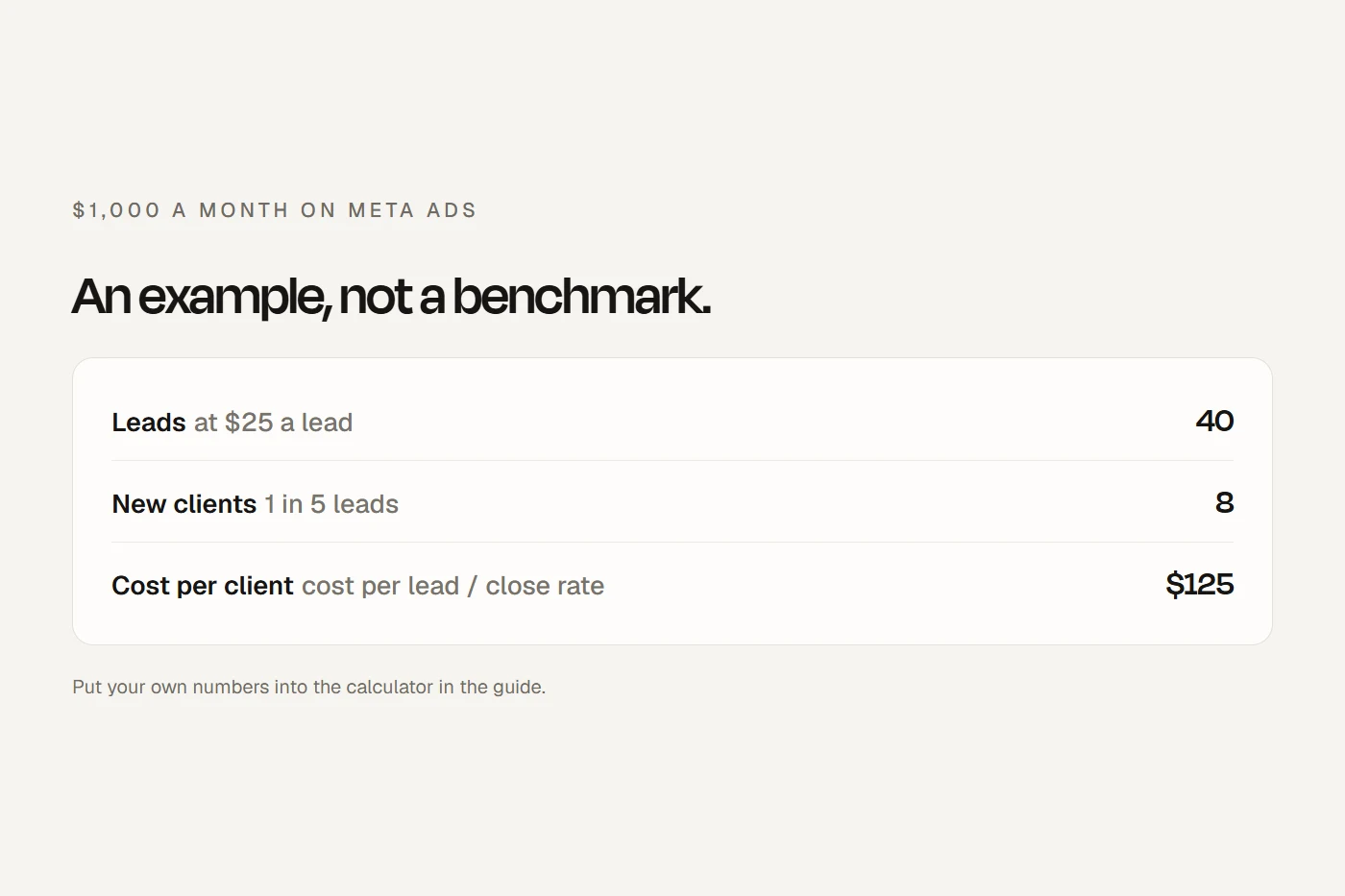
Every input is yours. The starting numbers are an example, not a benchmark. Budget before GST.
With the example numbers, $1,000 a month at $25 a lead is 40 leads; if one in five becomes a client, that's 8 clients at $125 each. At $400 a client and a 60% margin, you clear $920 after the ads, and you'd break even at about $48 a lead. Notice the last two lines, though. That budget gets about 9 results a week, a long way under the 50 Meta's learning phase looks for.
The learning phase, and why small budgets should stay simple
Meta says ad sets "exit the learning phase as soon as they can deliver stably. This usually occurs after about 50 results in the week after the ad set's last significant edit", and that during learning, results "usually have a higher CPA". If an ad set can't get there, Meta labels it "Learning limited". That's a status, not a failure, and it's normal for local businesses. But it tells you how to set up:
- One ad set, not five. Meta: "By combining similar ad sets, you also combine learnings."
- Leave it alone for a week. Changing the targeting, the creative or the optimisation event, adding an ad, or pausing for a week or more all send it back into learning. Small budget tweaks usually don't.
- A realistic budget. Meta warns that "a very small or inflated budget" gives its system a poor signal.
Instant forms or your website?
Meta's lead ads use an instant form inside Facebook or Instagram, often with the person's name, email and phone filled in for them. That's why form leads are cheap, and why many of them barely remember filling it in. Meta offers a "Higher intent" form type for that reason: it adds a review screen so people confirm their details, which Meta says helps "prevent receiving submissions from those people who are only marginally interested". You can also add phone verification.
Sending people to your website's booking page costs more per lead and brings people who chose to book. That needs the Meta pixel or Conversions API set up, and a site that's quick on a phone. My view: for a service where the first step is a booking, send them to the booking page; for anything that needs a conversation first, use a higher-intent form and call back fast.
Three things to know about instant forms:
- You need a privacy policy. Meta says one "is required to run instant forms".
- Some questions aren't allowed. Meta prohibits questions about health conditions, medical treatments, income, debts, insurance details, criminal history and a child's date of birth. A physio form can't ask "What's your injury?"; ask "What would you like to book?" instead.
- Download your leads. Meta keeps them for only 90 days. Better, connect the form to your CRM or a phone alert.
Call them back fast
Meta's own advice: "Capture your leads immediately", and run lead ads "during your business hours so that you can quickly start a conversation". A much-quoted 2011 Harvard Business Review study of US companies, "The Short Life of Online Sales Leads", found firms that tried to contact a web lead within an hour were far more likely to reach a decision-maker than those that waited longer. It's old and American, but the point holds: a lead that waits until tomorrow has often already booked somewhere else.
Targeting a local area
Location is the one setting Meta treats as a hard limit. Its help centre says: "we won't target beyond your locations unless Reach more people likely to respond to your ads is selected." Drop a pin on your business and set a radius, or list postcodes, and leave the rest to Meta's Advantage+ audience. Age and gender are only "suggestions" there; if reaching a specific group matters more than cost, Meta lets you choose "Further limit your audience". Meta also says "Complete accuracy is not guaranteed with location targeting."
If you've read US guides about Special Ad Categories, here's the Australian position. The limits on age, gender and postcode targeting for housing, jobs and financial products apply to advertisers in or reaching the US, Canada and certain European countries. Australia isn't on those lists. Australian financial services ads have their own rule instead (below).
The rules for your industry
Every business: Meta's personal attributes policy
This is the most common reason a local service ad gets rejected. Meta's policy says ads "must not contain content that asserts or implies personal attributes", including physical or mental health, financial status, age and criminal record. Its own examples:
| Not allowed | Allowed |
|---|---|
| "Do you have diabetes?" | "New diabetes treatment available" |
| "Depression getting you down? Get help now." | "Depression counseling" |
| "Are you bankrupt? Check out our services." | |
| "Are you a convicted felon?" | "Services to clean up any previous offenses" |
Scroll the table sideways to see every column.
The rule of thumb: name the service, not the reader. "Got back pain?" becomes "Physio for back pain in your suburb".
Clinics and health services
- No testimonials. Ahpra's guidelines ban testimonials about clinical aspects of a service, and that includes your own Facebook and Instagram: "the clinic business owner or practitioner (whoever has control over the social media) is still responsible". Watch the comments under your ads too.
- Terms on any offer. An offer, gift or discount must state its terms, and Ahpra says the public take "free" to mean absolutely free.
- Careful words. Ahpra lists "safe", "effective", "risk-free" and "pain-free" as words that can minimise risk, along with guarantees and lines suggesting someone's health will suffer if they don't book.
- Before-and-after images. Meta allows them for cosmetic ads shown to over-18s. Ahpra is stricter: identical framing, lighting and posture, no undisclosed edits.
- Prescription medicines. The TGA bans advertising them to the public, and counts hashtags and linked material as part of the ad. Meta only allows prescription drug ads in the US, Canada and New Zealand anyway.
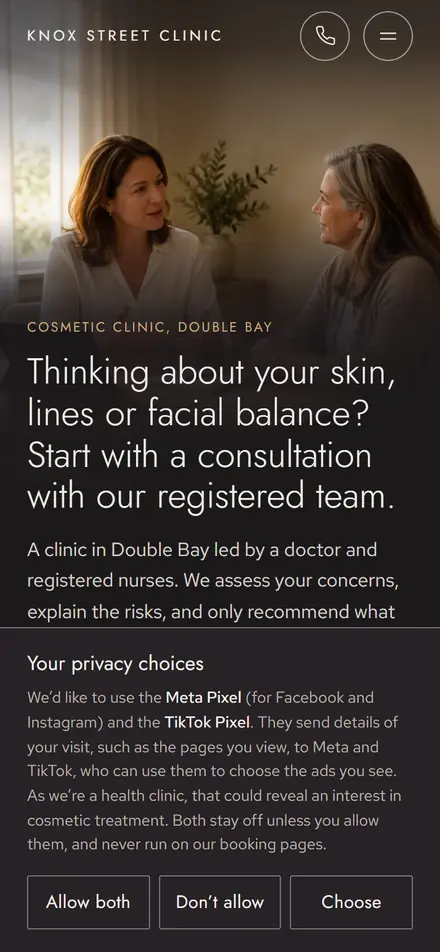
- Your pixel needs consent. The Privacy Commissioner has found that using tracking pixels on health websites to target visitors with social media ads is a collection of sensitive information that needs the visitor's consent. Meta itself prohibits sharing health information through its pixel, and can restrict what a site sends depending on how Meta categorises it.
Mortgage brokers, insurance and lending
Meta requires verification for financial services ads covered by Australia's Online Scams Code, including mortgages, loans and insurance: you verify who the ad is for and who paid, including Australian Financial Services Licence details unless exempt, and the ad carries a "Paid for by" disclaimer that stays in Meta's Ad Library. Credit, loan and insurance ads must also target people 18 or over.
Everyone: comments and claims
The ACCC says businesses are "responsible for comments and posts that others make on their social media pages which are false or likely to mislead", and that it's "usually safer to remove the comment". If you pay influencers, the ACCC's review found undisclosed brand relationships were the most common problem.
Check your ad wording
Paste your ad text. It flags the wording Meta, Ahpra and the ACCC warn about. It runs in your browser and can't tell whether a claim is true; that part's yours.
The setup checklist
- Add your ABN in Payment settings, so Meta doesn't add GST.
- Set an account spending limit.
- Have a privacy policy that mentions ads and tracking. Instant forms need one.
- Set up the pixel or Conversions API if you'll send people to your site. Keep health words out of page addresses and event names, and for a health site, get consent before tracking for ads.
- Choose a higher-intent form or your booking page.
- Check your form questions against Meta's prohibited list.
- Set the location: a pin and radius, or your postcodes.
- One campaign, one ad set, two or three ads. Leave it a week.
- Check the wording with the tool above. Finance ads: finish verification first.
- Send leads to your phone or CRM, and call back within the hour.
- Moderate comments under your ads.
- Follow-up texts and emails: record consent, identify yourself, include an unsubscribe.
Are Facebook ads worth it for a small business?
They can be, if your cost per client comes in under what a client is worth to you, and you can answer leads quickly. Run a small test long enough to get a real cost per lead, put it in the calculator, and decide from that. If the numbers don't work, more budget won't fix them; a better offer, a better landing page or a faster call-back might. And make sure the page people land on, usually your website, does its job: an ad can only send people somewhere.
Questions I get asked
Are Facebook ads worth it for small businesses?
If your cost per new client is less than a client is worth to you, yes. Run a small test, work out your real cost per lead and how many leads become clients, and check the sums.
How much do Facebook ads cost a small business?
You set the budget. Meta publishes no Australian minimum or cost benchmarks, and minimums vary by country and objective. What matters is your cost per lead, which you only learn by testing.
Is $500 a month enough for Facebook ads?
It can get you leads, but at most costs per lead it won't reach the 50 results a week Meta's learning phase looks for. Keep to one ad set, a tight location, and leave it running for a week before judging.
Do I pay GST on Facebook ads in Australia?
Meta says that if you add your ABN to your ad account, it doesn't add GST. Without an ABN, GST is added on top. Ask your accountant how to record it.
Why was my Facebook ad rejected?
For local services, often Meta's personal attributes policy: ads can't imply something about the reader, such as "Do you have back pain?". Name the service instead.
Can a clinic use patient reviews in Facebook ads?
Not reviews about clinical aspects. Ahpra bans testimonials in advertising a regulated health service, including on the clinic's own social media.
About this guide
Written by Joseph Alzein, founder of bdog. bdog's Marketing plan includes running Meta ads. Everything here comes from Meta's help centre and policies, Ahpra, the TGA, the ACCC and the OAIC, read on 11 October 2026. Meta changes its tools often, so check its current help pages. This is general information, not legal or tax advice.
Main sources:
- Meta: how much it costs to advertise
- Meta: about daily budgets
- Meta: minimum budgets
- Meta: how Meta charges for ads
- Meta: Australia's GST
- Meta: the learning phase
- Meta: significant edits
- Meta: lead ads with instant forms
- Meta: instant form types
- Meta: prohibited form questions
- Meta: responding to leads
- Meta: location targeting
- Meta: audiences for special ad categories
- Meta: financial services verification
- Meta: personal attributes policy
- Meta: health and wellness policy
- Meta: prohibited information
- Ahpra: advertising guidelines
- TGA: advertising on social media
- ACCC: social media promotions
- OAIC: tracking pixels
- OAIC: tracking pixel determinations
- ACMA: avoid sending spam
- Harvard Business Review: The Short Life of Online Sales Leads