Marketing an outside school hours care (OSHC) service
For before and after school care and vacation care: why families don’t choose between providers, how operators win and keep schools in each state, what the school lets you advertise, what families need from your website, and where marketing pays. With a ratio-step calculator, a can-I-do-this sorter and a term plan.
On This Page
This guide is about outside school hours care (OSHC): before school care, after school care and vacation care. In NSW many services call it OOSH. Search for OSHC marketing and page one is marketing agencies, a couple of large operators, and an insurance comparison site that thinks you mean Overseas Student Health Cover. None of it explains what makes OSHC different from every other kind of childcare marketing: families mostly don't choose between providers, the school controls most of your channels, and your fees are set in a licence. I build websites for early learning services, and everything below comes from the ACCC, the state education departments' OSHC policies and licences, the Commonwealth Department of Education and the National Regulations.
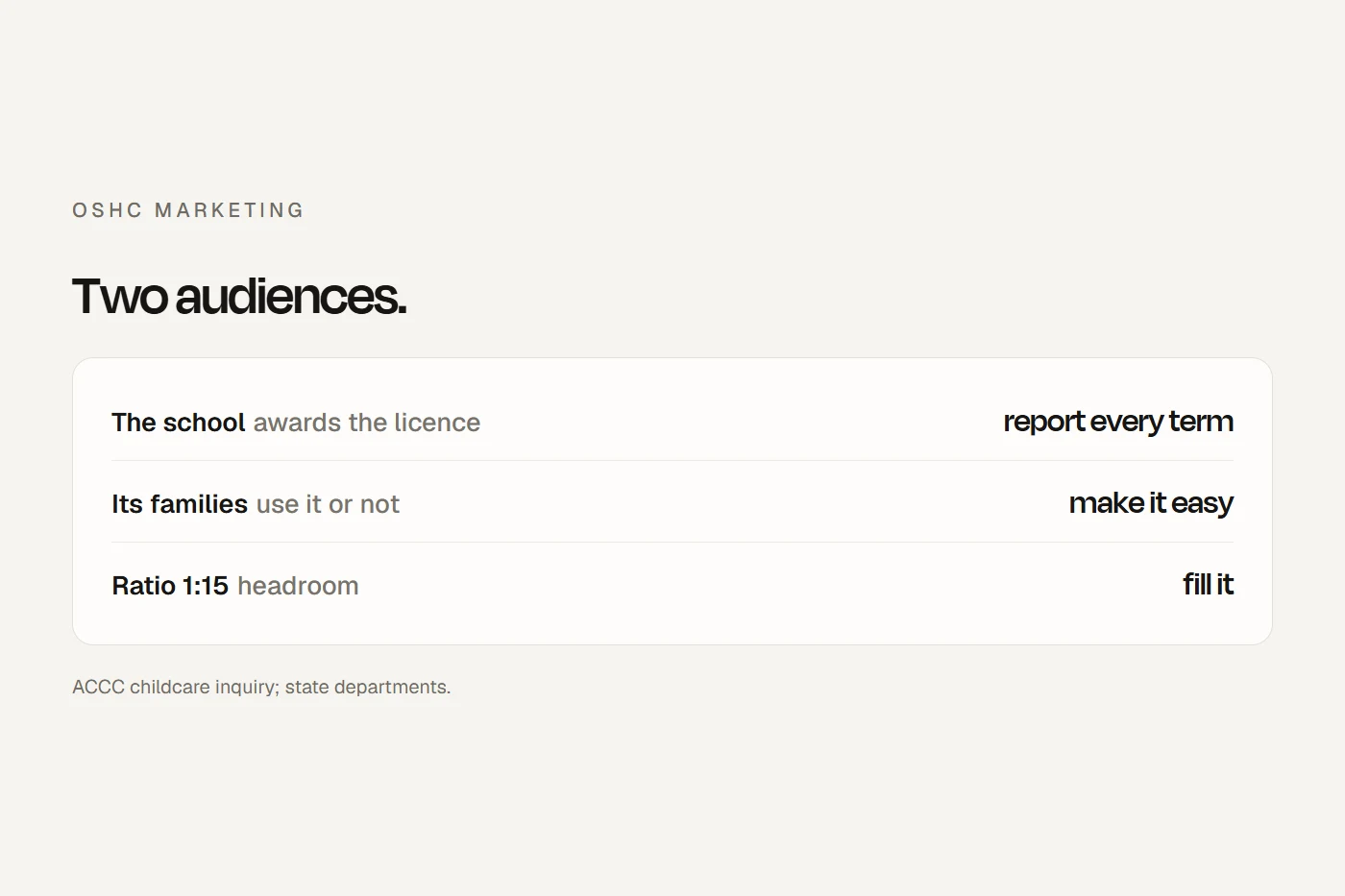
- You have two audiencesThe ACCC found OSHC providers don't compete with each other for children; they compete for the right to run a service. Families decide whether to use the school's service or not. So you market to the school that awards the licence, and you make the service easy for its families.
- The school controls the channelsSigns on school land, media releases and school newsletter items usually need the school's consent, and the school can't be seen to endorse you. Ask before you print anything.
- Marketing pays when it fills a ratio stepSchool-age ratios are 1:15 in most states. The children you can add before needing another educator are almost pure margin.
OSHC is two markets
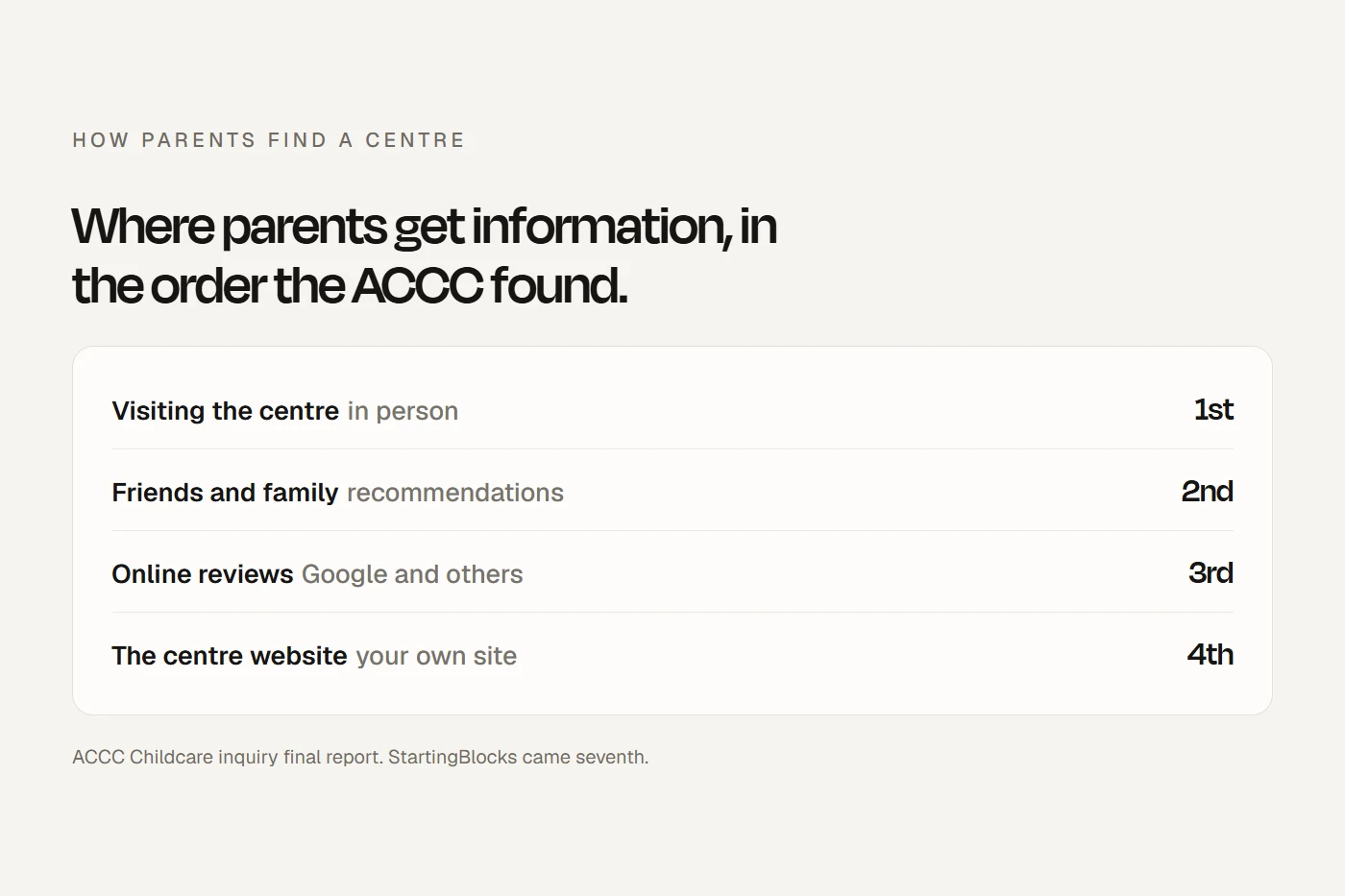
When the ACCC looked at childcare, it found children typically attend the OSHC service attached to their school, so parents usually don't have a choice of provider. "Availability and affordability are the key decisions": families decide between using the service, if there's a place and they're happy with the fee, or finding other care. It also found families put less weight on quality ratings for OSHC than for other childcare, and that demand is mainly driven by price.
That changes the job. For families, marketing means making the service easy to understand and use: hours, how to book, how the Child Care Subsidy works, what the children actually do, and how they get from class to you. For the school, it means being the operator the principal and school council want to keep, because licences are short and go back out to tender. Your website serves both: parents read it to book, and evaluators read it when you bid for the next school.
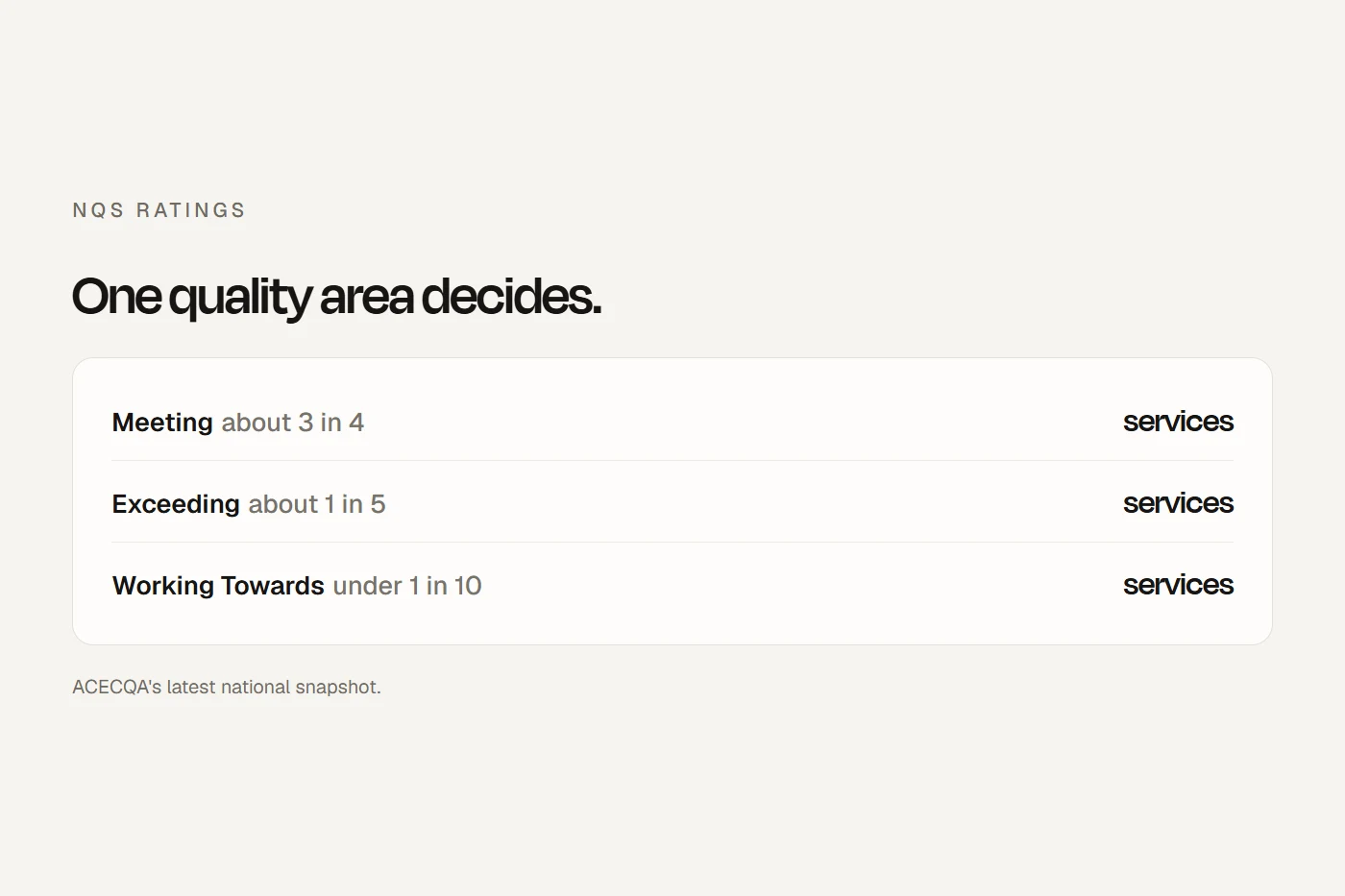
The numbers are big. In the latest government data, about four in ten children in subsidised care were in OSHC, and OSHC was about a third of all approved services. Ratings are tight: about one OSHC service in twenty is rated Exceeding, and most are Meeting. Exceeding is a genuine difference in a tender.
How you win and keep a school
Every state does it differently, and the licence is where your marketing rules live.
NSW public schools
- How operators are chosen
- Open, competitive tenders published on Buy.NSW. Operators get a Notice to Tender before their licence expires.
- Don't
- Approach schools directly offering to run their OOSH. The Department treats these as unsolicited proposals and won't accept them.
- Advertising
- Department policy says schools must not endorse a company's products or services, advertising must not imply endorsement, and advertising in classrooms or aimed at students isn't permitted.
- Do
- Keep your Buy.NSW notification settings up to date.
Victorian government schools
- How operators are chosen
- The school council decides, using the Department's expression of interest and licence templates. Licences run two years, with an option of one more.
- What councils weigh
- Ratings of your other services, experience, references, the program, staffing, how fees are set, cost to families and community fit.
- Publicity
- The licence template needs the school council's written approval before any public announcement or media release about the licence, and if approved, your promotional material must acknowledge the school council.
- Fees
- Increases need school council approval with evidence; decreases need written notice.
Queensland state schools
- How operators are chosen
- A two-step tender: the P&C gets first opportunity, then not-for-profit and commercial providers. Agreements run five years with two possible two-year extensions.
- Fees
- Pricing is competitively bid in your application.
- Enrolment
- Preference goes to children enrolled at the school, and the principal must approve children from other schools.
- Reporting
- You must tell the principal about any change in your quality rating.
SA government schools
- How operators are chosen
- The governing council runs it, or picks a third party from a Department panel. Licences can run up to nine years in three-year terms.
- Promotion
- The example licence has the Department promote the service through the principal, and has the operator hold a parent meeting each year and send newsletters.
- Signs and publicity
- No signs on the land without written consent, except signage the National Law requires. No public announcement or media release about the agreement without consent.
WA, the territories and non-government schools
- WA
- Schools run expressions of interest using Department licence templates; school notices describe short licences with a fixed licence fee. I couldn't read the Department's policy itself, so check it.
- ACT, Tasmania, NT
- Not covered here.
- Catholic and independent schools
- Each runs its own arrangement, and some run their own OSHC.
What wins the next round is the evidence you've built during this one. Victoria tells school councils to expect reports on financial performance, utilisation, assessment and rating reports, parent feedback and complaints. Send a one-page report to the principal every term, keep a file of program samples and parent feedback, and put each service's rating and a sample program on your website where an evaluator can find it.
What the school allows
An OSHC operator on a school site is a licensee, not an ordinary advertiser. Before using any school channel, ask the principal what your licence and the school's policies allow.
- School newsletters and websites: at the school's discretion. Victoria's guidance treats newsletter items and orientation as shared promotion between the operator and the school council. Ask for an OSHC page or link on the school website with your booking link, hours and subsidy steps.
- School apps such as Compass and Seesaw: I found no public guidance on operators posting to them. Treat them as the school's channel and ask.
- Orientation: StartingBlocks says many OSHC services hold an orientation session as part of the school's, which is where new families find you. Get a slot every year.
- Signs and banners: ask first. SA's licence requires written consent for anything beyond the signage the National Law requires.
- No endorsement: nothing that says or implies the school recommends you.
- Children from other schools: on Queensland and Victorian state school sites, the principal or school council approves them. Get that in writing before you advertise vacation care beyond the school.
What families need from your website
The NSW Department publishes a list of questions it tells families to ask an OSHC service. It's the best content brief you'll get. Answer each one on a page for each site:
- Do you run before school, after school and vacation care, and what are your hours?
- What will my child be doing? Can I see your program and menu?
- How will my child get from class to the service, and where do they meet you?
- What is your rating under the National Quality Framework?
- What are your fees, how are they charged, and can you help me understand the Child Care Subsidy?
- What happens if my child is absent, and how do you manage medication and additional needs?
- Who do I speak to with a question or concern, and where can I see your policies?
Explain the subsidy without numbers
Parents' first searches are about cost and whether Centrelink helps. You don't need to print rates to answer:
- OSHC is approved care for the Child Care Subsidy, worked out against an hourly cap for school-age children. Services Australia's estimator shows what a family will get.
- The family lodges a subsidy claim with Services Australia before the first session. Until they do, the service has to charge full fees.
- After you enrol them, the family confirms the enrolment in their Centrelink online account. No subsidy is paid until they do.
- Before and after school care on the same day count as one absence day against the family's yearly allowance.
The vacation care booking page matters most, because that's when new families arrive. Tell them to lodge the claim and confirm the enrolment before the first day, or they'll pay full fees.
Discounts come off before the subsidy
The Department lets you offer sibling and loyalty discounts and free trial sessions, but discounts come off the session fee before the family's subsidy percentage is applied. So a "10% off" offer saves the family 10% of their gap, not 10% of the fee: part of the discount just reduces the subsidy. Describe it as a discount on the session fee. And don't open a new site on a low launch fee if you're on the worker retention payment: your starting fee becomes the baseline for the fee growth cap.
Publish the vacation care program properly
Regulation 102 lists what a parent's written authorisation for an excursion must state: the destination, transport and seatbelt requirements, the activities, how long the children will be away, the expected number of children, the educator ratio, the number of adults going, and that a risk assessment has been prepared. If your program shows those for each excursion, the booking doubles as the authorisation record. State the booking close date and any cancellation and late booking fees in plain words. Excursions directly related to the care are GST-free.
Where marketing pays: the ratio step
School-age children need one educator for every 15 in NSW, Victoria, Queensland, SA, Tasmania and the NT, and one for every 11 in the ACT. Ratios are counted across the whole service. So the children you can add before you need another educator are almost pure margin, and marketing is worth most when it fills that headroom. Put in one session.
Run it for each session. The one with the most headroom under a ratio step is the day to aim your next newsletter item or vacation care push at. Victoria's own guidance to school councils says the same thing from the other side: budget from a break-even fee, and keep income projections conservative.
Can I do this?
Tap a card to see the verdict.
Google and StartingBlocks
For vacation care in particular, Google's map results are where families look, and OSHC services at school addresses do show there with their own profiles and reviews. Google's rules make this fiddly: a business can't have a profile for an ongoing service at a location it doesn't own or have authority to represent, and a business showing its address should have permanent signage there, which on school land needs the school's consent. Use the service's real name as approved, put the pin on the OSHC entrance, and pick a category such as after school program or child care centre, not a school category.
StartingBlocks shows your fees, vacancies and rating, and the NSW Department sends parents there to find OSHC. The fees and vacancies come from what you report through your childcare software, so keep vacancies current every week and make sure the fees match your licence and your website.
Photos
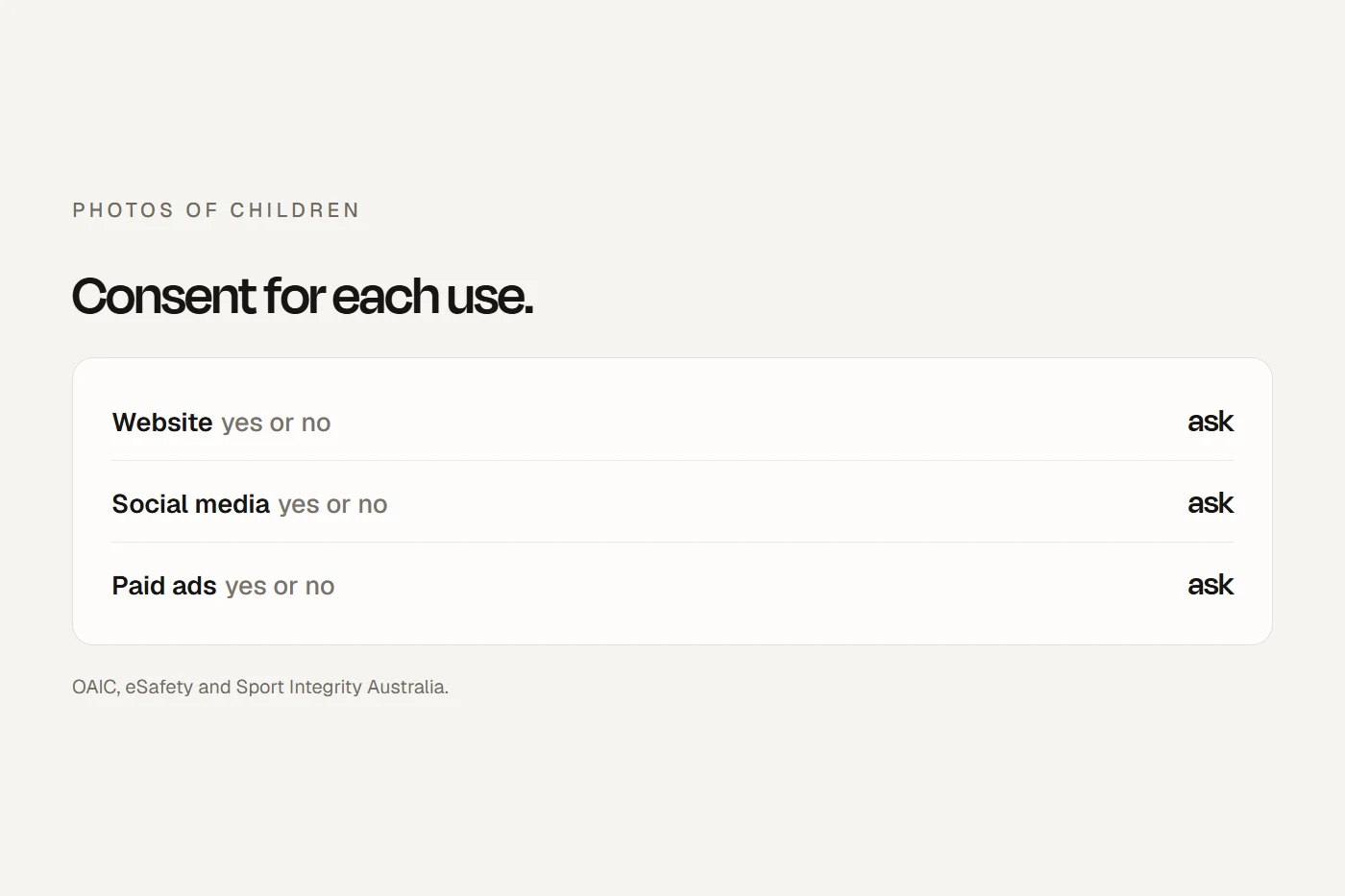
OSHC is centre-based care under the National Law, so the device rules apply: photos of children may only be taken, stored and posted on service-supplied devices, never educators' phones. OSHC is unusually easy to identify, because a uniform or crest names the school. Prefer hands, activities and backs of heads, keep the school name out of captions, and don't tag locations. My guide to photos of children on your website and socials has the consent form wording.
A term-by-term plan
Your ticks save in this browser.
- Weeks 1 to 2: check the fees on your website match your licence schedule and StartingBlocks.
- Weeks 1 to 2: ask the principal what the school will carry this term: a newsletter item, a school website link, an orientation slot.
- Weeks 1 to 2: one page per site answering the NSW family questions, with the subsidy steps and your rating in official words.
- Every week: update vacancies through your software.
- Week 4: ask every family for a Google review with a plain link, and no rewards.
- Weeks 3 to 6: a photo session on service devices with written consent, with no crests or location tags.
- Weeks 3 to 6: run the calculator and aim your marketing at the session with the most headroom.
- Weeks 3 to 6: a one-page term report to the principal or school council.
- Weeks 6 to 8: draft the vacation care program, risk-assess each excursion, and publish the authorisation fields.
- Weeks 6 to 8: open bookings with a stated close date and plain cancellation and late booking fees.
- Weeks 6 to 8: written approval before advertising to other schools' families, if your licence needs it.
- Weeks 9 to 10: email enrolled families the program, and post excursions afterwards without location tags.
- Always: keep term reports, feedback, program samples and your rating on file for the next tender, and update everything within days if your rating changes.
My view
Most OSHC marketing I see is aimed at the wrong audience. Families at the school already know you exist; what they need is a clear page that answers the questions above, a booking link that works on a phone, and plain words about the subsidy. The audience that decides your future is the principal and school council, and they're reading term reports, ratings and your website when the licence comes up. Build for both, fill the session with the most headroom, and treat every term report as a tender document.
Questions I get asked
What does OSHC stand for?
Outside school hours care: before school care, after school care and vacation care for primary school-age children. In NSW, many services call it OOSH, out of school hours care.
Does the Child Care Subsidy cover before and after school care?
Yes, for approved OSHC services. The family lodges a claim with Services Australia before care starts and confirms the enrolment in their Centrelink online account. Services Australia's estimator shows what they'll get.
How do OSHC providers get a school?
Through the school or the state education department: open tenders in NSW, school council expressions of interest in Victoria, a P&C-first tender in Queensland and a Department panel in SA. Licences are for a set term and go back out to tender.
Can an OSHC service advertise in the school newsletter?
Only if the school agrees. Schools decide what goes in their newsletters, and state policies say schools must not endorse an outside provider.
What age does vacation care go up to?
OSHC is for primary school-age children, generally up to about 12. Check each service's own policy.
About this guide
Written by Joseph Alzein, founder of bdog. bdog builds websites for early learning services. The facts come from the ACCC childcare inquiry, the state education departments' OSHC policies and licence documents, the Commonwealth Department of Education, the National Regulations, ACECQA, ACMA and Google. Sources were checked on 12 October 2026. This is general information, not legal advice; your licence and your state's rules come first.
Main sources:
- NSW Department of Education: upcoming OSHC tenders
- NSW Department of Education: before and after school care for parents
- NSW Department of Education: advertising on school sites
- Queensland Department of Education: outside school hours care
- Department of Education: how to enrol children
- Department of Education: absences
- Department of Education: discounts
- Department of Education: advertising and inducements
- Google: Business Profile eligibility
- Google: guidelines for representing your business