Recruitment agency marketing: winning clients and candidates
When employers actually use agencies, where candidates come from, the licences and job ad rules most guides miss, business development within the Spam Act and privacy law, and the job boards’ own rules for agencies. With a job ad checker, a sorter and a fees calculator.
On This Page
- When employers use an agency
- Where candidates come from
- Licences and identity: the part most guides miss
- Job ad rules
- Check your job ad
- The job boards’ rules for agencies
- Business development within the rules
- Can I do this?
- Your website
- How many calls for the fees you want?
- A 90-day plan
- My view
- Questions I get asked
Search for "recruitment agency marketing" in Australia and Google mostly shows you agencies that recruit marketers. Search how to get clients for a recruitment agency and the advice is email-finder tools, scraped lead lists, pitching candidates and mining reference calls, all of it American and none of it mentioning that each of those tactics runs into an Australian rule. This guide is for the owner of a small Australian agency, often a niche desk. It covers when employers actually use agencies, where candidates come from, the licences and job ad rules most guides miss, how to do business development within the Spam Act and privacy law, and the job boards' own rules for agencies. It's from Jobs and Skills Australia, the ABS, the state and federal Acts, and SEEK, LinkedIn and Indeed's terms, read on 12 October 2026. It's general information, not legal advice.
- Be there when a role turns hardEmployers mostly use job boards and word of mouth, and call an agency when a role is hard to fill. Market the hard roles you fill.
- Your ads are your candidate marketingMost job seekers look at ads, and every employer in your niche sees them too. Write them carefully.
- Do the outreach the Australian wayPublished work addresses, washed call lists, and a candidate's OK before you send or pitch their details.
When employers use an agency
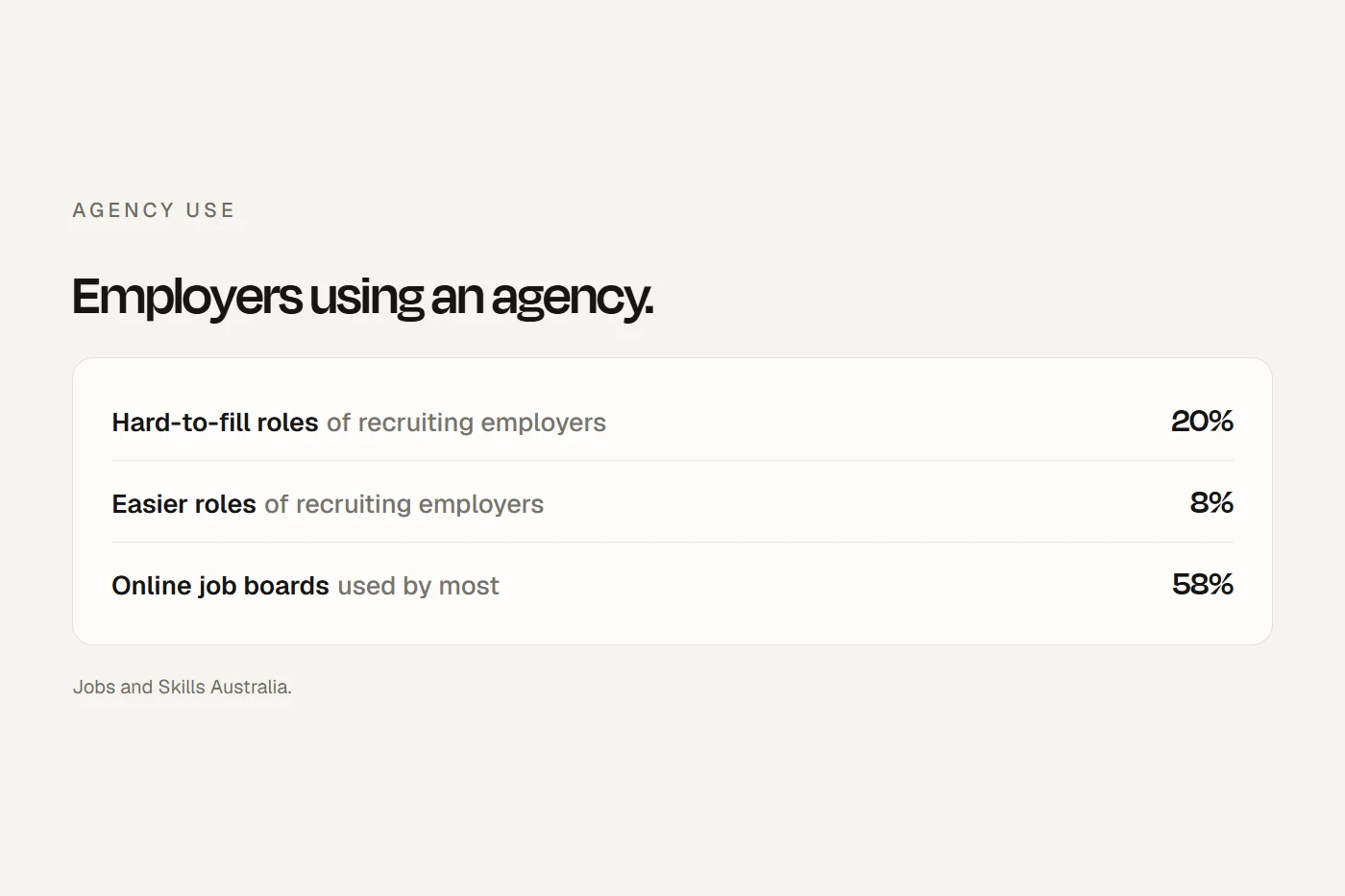
Jobs and Skills Australia surveys about a thousand employers a month. In its latest look at recruitment methods, 58% of recruiting employers used online job boards, 25% word of mouth and 19% social media; 13% used a recruitment agency or government employment service. But agency use more than doubles when a role is hard to fill: 20% for difficult roles against 8% for easy ones. Almost a quarter of professionals hired into hard-to-fill roles came through agencies, and JSA notes employers tend to use agencies "selectively", because they cost more than free methods. Word of mouth had a high success rate for employers.
So most employers don't need you most of the time. They need you at the moment a role turns hard. A niche desk that names the hard roles it fills, and stays in front of the hiring managers who have them, is marketing to that moment.
Where candidates come from
The ABS asked unemployed people what they did to find work. 63% looked at job ads and 52% responded to one; 36% uploaded a resume to a job platform; fewer than one in five (17.5%) checked or registered with an employment agency; 12% posted on professional or social networks. There's no equivalent survey of people already in work. For candidates, your job ads are your marketing, and every employer in your niche reads them too.
Licences and identity: the part most guides miss
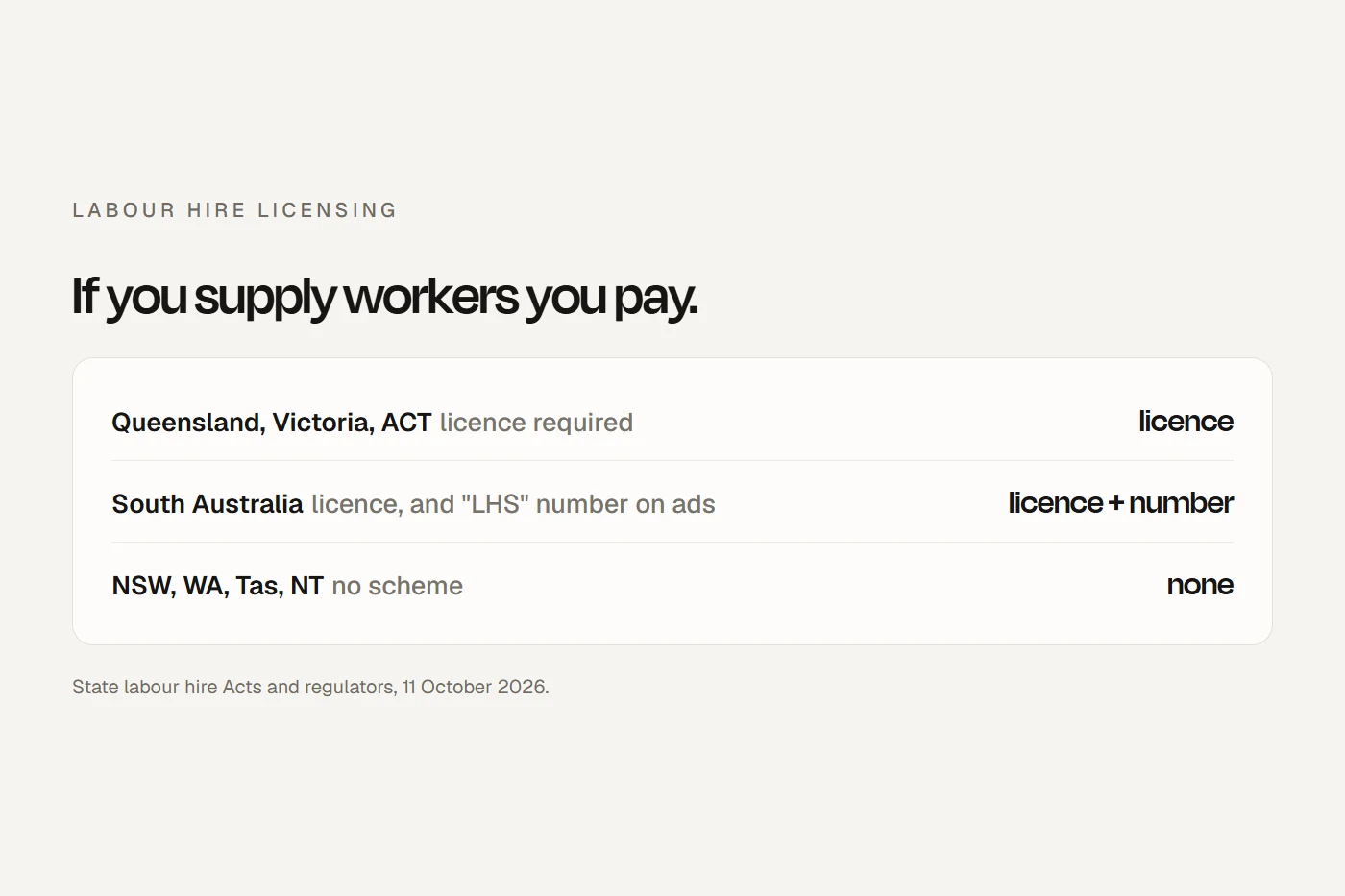
- Labour hire needs a licence in Queensland, Victoria, South Australia and the ACT if you supply workers you pay. In South Australia, every labour hire ad must show your licence number, preceded by "LHS". NSW has no scheme yet.
- Western Australia requires an employment agent licence to recruit for a fee, and even to advertise that you do. Labour hire businesses are exempt from that licence.
- South Australia still licenses employment agents; a law to replace the licence with a code of conduct has passed but hasn't started, so check SafeWork SA.
- Queensland's code of conduct for private employment agents requires your business name, address and phone number in each publication, the candidate's written permission before you disclose their identity or details to an employer, and written notice of your fee before you provide the service.
- The ACT no longer licenses recruiters, but agents can only take a fee from the employer.
Job ad rules
The federal discrimination Acts make it unlawful, and for age and disability an offence, to publish an ad that indicates an intention to discriminate, and the age, race and disability provisions reach anyone who "causes or permits" the ad, which includes the agency that writes it. The Human Rights Commission's own examples: "join a dynamic team" and "seeking mature, experienced professional" suggest an age preference, and an agency that follows a client's "no accents" request can be liable for helping. Instead of "Australian citizens only", say "You must have the right to work in Australia", check it, and if a role genuinely needs citizenship, say why.
No law requires the pay in an ad, but the Fair Work Act bans advertising pay below the award, enterprise agreement or minimum wage, and piece-rate ads must state the periodic rate. The Australian Consumer Law bans misleading job seekers about whether a job exists or its terms, including a job offered by someone else, which covers ads for clients' roles and "talent pool" ads posing as vacancies.
Check your job ad
Paste an ad, and I'll flag the patterns above.
It catches common patterns, not everything. State Acts add their own rules.
The job boards' rules for agencies
- SEEK sells Basic, Advanced and Premium ads, with prices shown when you post. Every ad must carry a pay range that candidates can't see but that decides whether you appear in salary-filtered searches; to show pay, use the free-text field, which takes up to 50 characters. Agency ads must carry your brand (or yours with the client's), can't contain external links or ask candidates for fees, must be for a genuine current role, and SEEK's tools can't be used to market to candidates. Your SEEK Recruiter Profile is free and collects reviews from placed candidates.
- LinkedIn's terms require agencies to post under their own name and logo, one role per post, with an active contract with the client before advertising its job, and no copying jobs from company websites. You can only contact applicants about that job. Sales Navigator is for finding clients, never candidates.
- Indeed says agencies aren't eligible for free accounts; staffing firms must sponsor their jobs.
- Google for Jobs still isn't available in Australia.
Business development within the rules
Most of the American advice works here with an Australian adjustment:
- Email: the Spam Act infers consent for a work email address that's conspicuously published, such as on the company's own website, as long as your message is relevant to that person's role. Emailing a hiring manager about the roles they hire for fits. A guessed or enriched address from an email-finder tool isn't "published" by them, a bought list needs proof of consent, and address-harvesting tools and lists are banned. Every email names you and has an unsubscribe.
- Calls: business numbers can't be on the Do Not Call Register, but private mobiles can, so wash any list of mobiles before calling.
- Pitching a candidate: sending an anonymised profile of a strong candidate to target clients works, with the candidate's OK first. In Queensland, disclosing their identity or other details needs their written permission, and elsewhere privacy law points the same way. Never send a resume to an employer the candidate hasn't agreed to.
- Reference calls: details collected for a reference check are collected for that purpose. Using them to pitch the referee's company is a different purpose under privacy law.
- Referrals: word of mouth works for employers. Thank placed candidates and clients for referrals, but never take a fee from a work seeker.
- Terms of business: send them in writing before the first CV. Most of your clients are small businesses, so unfair contract terms law reaches your standard terms: keep introduction periods, guarantees and fees plain and fair.
Can I do this?
Tap a card to see the verdict.
Your website
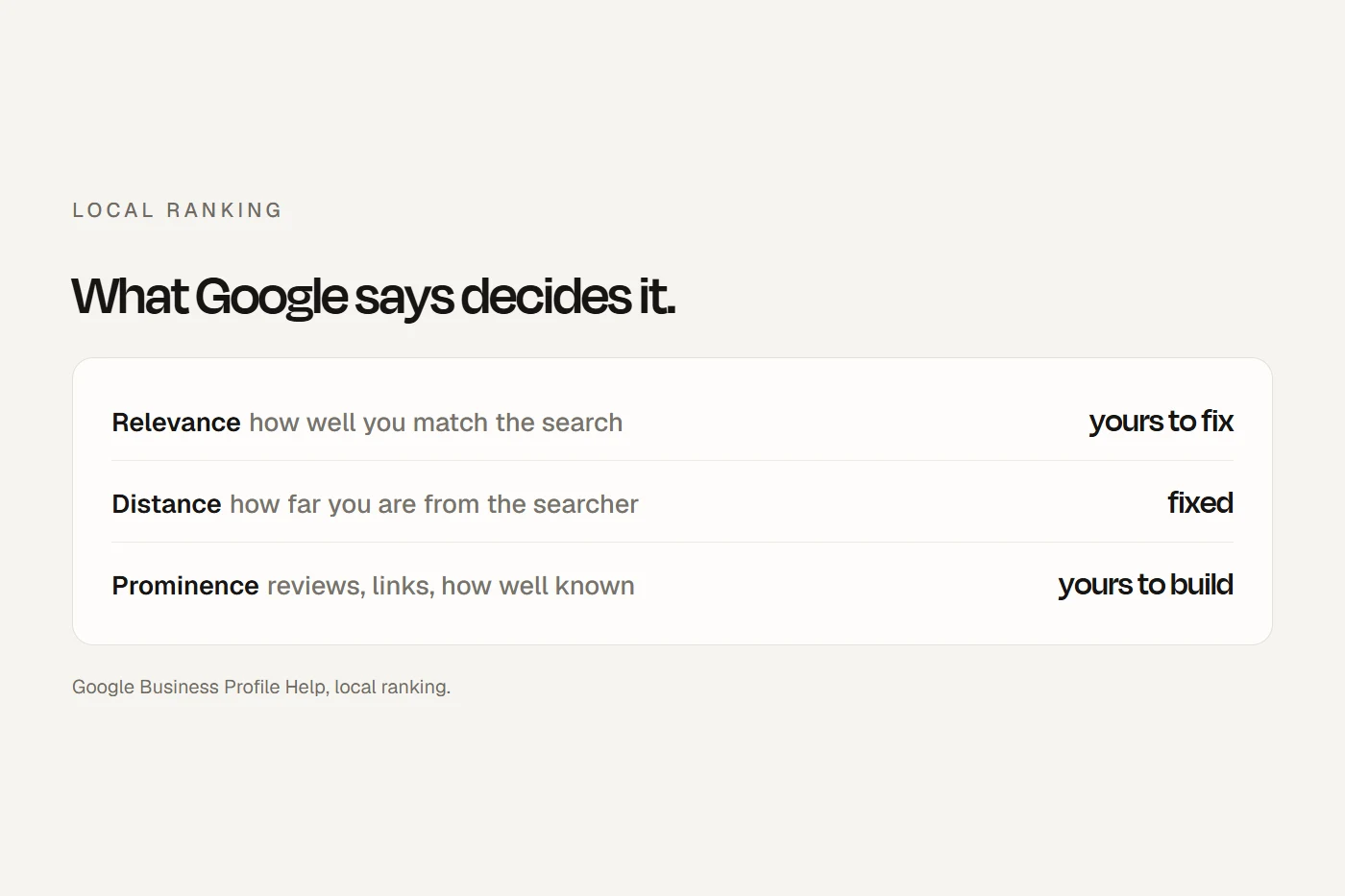
Two paths, one for clients and one for candidates. Give each hard-to-fill role type you work its own page, and each job its own page on your domain rather than only an off-site careers widget. Candidate registration needs a collection notice and a separate tick for sending their resume to clients they approve; job alerts need express consent. A salary snapshot from your own placements, sourced and with no client names, makes a fair lead magnet if the download form has an unticked consent box. Put your licence and contact details in the footer, which is the natural place for Queensland's identity rule and South Australia's licence number. If you meet clients in person, a Google Business Profile helps; a fully remote desk may not be eligible.
How many calls for the fees you want?
The rates below are example numbers, not benchmarks, and the fee is only an example; put in your own. It excludes GST, job ad spend and software.
Raising the brief rate is the cheapest lever, and the data says the briefs worth chasing are the hard-to-fill roles.
A 90-day plan
Your ticks save in this browser.
- Days 1 to 30: check your licences: labour hire where you pay workers, and employment agent licences in WA and South Australia.
- Days 1 to 30: write plain terms of business, and send them before the first CV.
- Days 1 to 30: add a collection notice and a "send my resume to clients I approve" tick to candidate registration.
- Days 1 to 30: build niche pages for the hard roles you fill, with job pages on your own domain.
- Days 1 to 30: claim your SEEK Recruiter Profile, and a Google Business Profile if you meet clients.
- Days 31 to 60: run every job ad through the checker, and show pay in SEEK's description where you can.
- Days 31 to 60: build a client list from published work addresses, and email about roles they hire for.
- Days 31 to 60: call work numbers, and wash any mobiles against the Do Not Call Register.
- Days 31 to 60: pitch anonymised candidate profiles, only with each candidate's OK.
- Days 61 to 90: track calls, conversations, briefs and fills in the calculator with your real rates.
- Days 61 to 90: ask placed candidates and clients for referrals and reviews.
- Days 61 to 90: take down filled and stale jobs everywhere they appear.
- Days 61 to 90: check every claim on your site, like fill rates, against your records.
My view
A small agency wins by being specific: the hard roles it fills, the hiring managers who have them, and job ads good enough that both candidates and employers notice. The tactics in the American playbooks mostly work here, but each needs the Australian version: published addresses rather than scraped ones, a candidate's OK before you pitch them, and a licence before you advertise in the states that need one. Get those right and the compliance becomes part of why clients trust you.
Questions I get asked
How do recruitment agencies get clients?
By specialising in hard-to-fill roles, staying in front of the hiring managers who have them through calls and relevant emails to published work addresses, anonymised candidate pitches with consent, and referrals from placed candidates and clients.
What is a recruitment marketing agency?
Usually either an agency that recruits marketing staff, or a firm that markets employers' jobs to candidates. This guide is about marketing your own recruitment agency.
Do you need a licence to run a recruitment agency in Australia?
Labour hire needs a licence in Queensland, Victoria, South Australia and the ACT. Recruiting for a fee needs an employment agent licence in WA, and currently in South Australia.
Can a recruitment agency send my resume without permission?
It shouldn't. Queensland requires written permission, and privacy law elsewhere means an agency needs your consent or a purpose you'd expect.
Do job ads have to show the salary?
No law requires it, but you can't advertise pay below the award, and SEEK asks for a hidden pay range on every ad.
About this guide
Written by Joseph Alzein, founder of bdog. bdog builds websites for recruitment agencies. The data comes from Jobs and Skills Australia's Recruitment Experiences and Outlook Survey and the ABS; the rules from the state labour hire and employment agent laws, the federal discrimination Acts, the Fair Work Ombudsman, the Australian Consumer Law, the Spam Act and the job boards' own terms, read on 12 October 2026. This is general information, not legal advice.
Main sources:
- Jobs and Skills Australia: recruitment methods
- ABS: Participation, Job Search and Mobility
- WA: employment agent's licence
- Queensland: private employment agents code of conduct
- Fair Work Ombudsman: protected pay rates for labour hire
- Human Rights Commission: preventing discrimination in recruitment
- SEEK: salary on job ads
- Indeed: pricing
- Do Not Call Register