How specialists get more GP referrals
What actually drives a GP’s referral, what your website and front desk should do about it, the Medicare referral rules reception should know, and what the National Law says about rewarding referrers. With a sorter, a GP-ready checklist and a referral calculator.
On This Page
- What drives a GP’s referral
- The “For GPs” page
- Medicare referral rules your front desk should know
- What you can’t do: rewarding referrers
- Can I do this to win referrals?
- Is your website ready for referring GPs?
- What a bigger share is worth
- Directories, secure messaging and Google
- A 90-day plan
- My view
- Questions I get asked
Search for how to get more GP referrals and you get a hospital group's notes for its doctors, an allied health booking blog, Reddit threads and marketing agencies. Most of the advice is about being liked. The research says something more useful: GPs refer to specialists they know, they keep referring to the ones who write back, and when they look a specialist up they want three things. This guide is for a specialist in private practice in Australia. It covers what drives GP referral decisions, what your website and front desk should do about it, the Medicare referral rules your reception should know, and what the National Law says about rewarding referrers. It's from Avant's GP referral research, the MBS referrals factsheet, the National Law, the Medical Board's code, the RACGP's referral guide and the Department of Health, read on 12 October 2026. Built with Ahpra's advertising guidelines in mind; it's general information, not legal advice.
- GPs refer to people they knowTwo in three referrals go to a specialist the GP has used before. Letters back and being reachable keep them coming.
- When they look you up, show three thingsYour sub-specialty, how soon you can see someone, and what it will cost the patient. Then how to send the referral.
- Never reward a referrerGifts, vouchers or payments for referrals are unprofessional conduct under the National Law, for both of you.
What drives a GP's referral
Avant's GP Referral Drivers Survey looked at nearly 700 recent private referrals from 357 GPs, plus 503 patients. It's the best Australian evidence there is:
- 87% of referrals were influenced by clinical factors, 86% by access (wait times and availability), 77% by the GP's relationship with the specialist, and 64% by cost. Cost mostly decided public or private, not which specialist.
- In 67% of referrals, the GP sent the patient to someone they'd used before. Only 13% mentioned finding the specialist through practice software, and 7% through a directory.
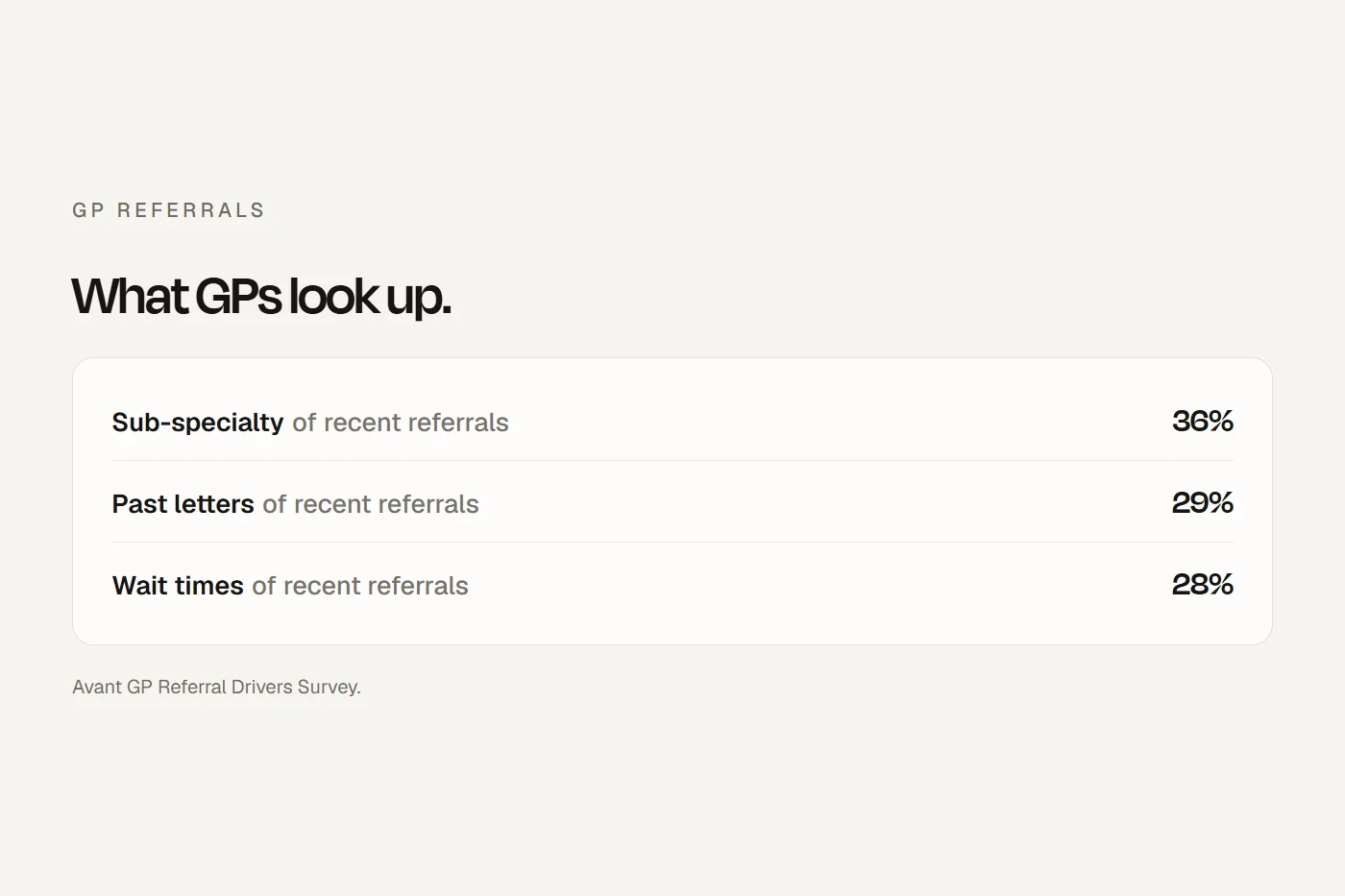
- When GPs did look something up, it was most often the sub-specialty (36%), previous letters (29%) and wait times (28%).
- 87% of GPs think explaining costs to the patient is the specialist's job, not theirs.
- In interviews, GPs said the letter back is what keeps them referring, and that fitting in urgent patients or taking a call for advice builds loyalty. One said a ridiculous wait list sends them to someone else who's competent.
Patients mostly follow their GP: 93% trust the GP's advice on referrals, and their top factors were location, the GP's recommendation and how soon they could be seen. A private hospital group's earlier survey of GPs found the thing most likely to change who they refer to was a specialist who "takes time to visit your practice and get to know you".
So your website's job isn't really to be discovered by GPs. It's to confirm, in half a minute, what a GP or patient needs to know before the referral is written: what you focus on, how soon, how much, and how to send it.
The "For GPs" page
- Your sub-specialty, worded within your registered specialty: "Specialist orthopaedic surgeon with a practice focused on hip and knee surgery", not "hip specialist".
- The current wait for a routine new patient, and how urgent referrals are handled. Keep it true; a stale number misleads.
- Fees: the initial consult fee or range, your bulk billing policy, known-gap or no-gap arrangements with health funds, and telehealth fees.
- How to refer: your secure messaging addresses on each network you use, the e-referral template, a fax fallback, and what to include.
- What the GP gets back, and when. Only promise a turnaround you already meet.
- A GP-only phone line or email for advice.
- Locations, consulting days, hospitals and telehealth, languages spoken, and whether you're taking new patients.
The patient pages need what to bring (the referral, Medicare card, health fund details), how fees work, and how to prepare. Like everything else, they're advertising: no testimonials, no outcome promises, no fear lines.
Why publish your fees now
The Medical Board's code expects patients to be told about fees in time to decide whether to go ahead, and GPs think that's your job. There's also a new reason: a law has passed that lets the government publish individual specialists' fees, bulk billing, languages and locations on its Medical Costs Finder site, using Medicare and insurer data, without asking you. The government says very few eligible specialists had listed their fees voluntarily. Publishing your own fees and gap arrangements first, with the context of what's included, is better than letting a government average speak for you.
Medicare referral rules your front desk should know
The MBS referrals factsheet clears up things many GPs and clinics get wrong:
- A referral doesn't need your name. For private specialist clinics, a referral doesn't have to be made out to a specific specialist; "Dear Cardiologist" is valid.
- A patient can bring you a referral made out to someone else in the same specialty, as long as they haven't started seeing that specialist. They don't need to go back to their GP.
- Validity starts at the first consultation, not the date the referral was written. A GP referral lasts 12 months unless the GP says otherwise, including indefinitely; a specialist-to-specialist referral lasts 3 months.
- Don't ask GPs to re-address a referral with your name. The RACGP says it causes inconvenience and unnecessary costs, and that backdated referrals are illegal. Honour indefinite referrals unless there's a new condition.
The government has consulted on longer referrals, but nothing has changed yet. Check the MBS factsheet before you rely on any of this.
What you can't do: rewarding referrers
The National Law's definition of unprofessional conduct includes "offering or giving a person a benefit, consideration or reward in return for the person referring another person to the practitioner", and the GP who accepts it is caught too. NSW has the same rule and defines a benefit as "money, property or anything else of value". The Medical Board's code adds that doctors shouldn't offer inducements, or accept gifts or hospitality of more than trivial value that could affect how they refer. It also covers patients: a discount for recommending you to friends is a benefit for a recommendation.
There's no dollar threshold for a GP education evening. Make education the point, keep any meal modest, give no gifts, and if you want it to count for CPD, run it through an accredited provider that's independent of any sponsor. And remember that GP packs, directory profiles and newsletters to GPs are advertising under Ahpra's definition, so the testimonial and outcome rules apply to them too.
Can I do this to win referrals?
Tap a card to see the verdict.
Is your website ready for referring GPs?
Weighted by what the research says GPs look for. Your ticks save in this browser.
- Your title exactly as registered, with your sub-specialty focus in careful words.
- The current wait for a routine new patient, and how urgent referrals are handled.
- Fees: initial consult, bulk billing policy, gap arrangements, telehealth.
- How to refer: secure messaging addresses, template, fax fallback, what to include.
- What the GP gets back, and when, if you meet it.
- A GP-only phone line or email.
- Locations, consulting days, hospitals and telehealth.
- Languages spoken and the gender of your doctors.
- Whether you're taking new patients, and who you do and don't see.
Also check you have none of these anywhere: patient testimonials or review quotes, outcome promises, "specialist" outside your registered specialty, or any offer to referrers.
What a bigger share is worth
Use your own numbers. The only published figure here is Avant's: most GPs write between 5 and 14 specialist referrals a week.
Directories, secure messaging and Google
- healthdirect's National Health Services Directory: list or update through Provider Connect Australia, which is free. Hospitals use it to route discharge summaries, so out-of-date details cost you letters as well as patients.
- Secure messaging: GPs send referrals from inside their clinical software through networks such as HealthLink and Medical-Objects. Be on the networks your top referring practices use, and publish your addresses.
- HealthShare and hospital "find a specialist" pages: GPs use them to check someone they've already chosen more than to find someone new. Keep the wording the same as your site, within your registered specialty.
- Google Business Profile: patients search for specialists by name and by "specialty near me", and many do some research before booking. Never republish reviews on your site.
A 90-day plan
Your ticks save in this browser.
- Days 1 to 30: check your title everywhere it appears matches your registration, and reword sub-specialty claims.
- Days 1 to 30: update your healthdirect listing through Provider Connect Australia, and your secure messaging addresses.
- Days 1 to 30: build the "For GPs" page, and publish fees and informed financial consent information for patients.
- Days 1 to 30: brief reception: accept "Dear [specialty]" referrals, never ask for re-addressing or backdating, honour indefinite referrals.
- Days 31 to 60: set a letter turnaround you can meet, and measure it before publishing it.
- Days 31 to 60: start a GP advice line with a named person and a response time.
- Days 31 to 60: look at last quarter's referrals: who refers, who stopped, how long their patients waited.
- Days 31 to 60: make your directory profiles match your website.
- Days 61 to 90: visit your top and lapsed referring practices with a one-page profile and how-to-refer sheet.
- Days 61 to 90: run or co-present one education session on when and how to refer in your area.
- Days 61 to 90: send a short GP update to published work addresses, with an unsubscribe and no testimonials.
- Days 61 to 90: re-run the checklist and the calculator with your real share.
My view
Referrals follow relationships, and relationships follow the letter back, the phone answered and the wait kept short. A website can't build that on its own, but it can stop it leaking: make your sub-specialty, wait, fees and how to refer findable in thirty seconds, keep your front desk from making GPs redo referrals, and publish your fees before the government does it for you. Keep anything that looks like a reward for referring well away from your practice.
Questions I get asked
How do GPs choose which specialist to refer to?
Mostly on clinical fit, access and their relationship with the specialist. In Avant's research, two in three referrals went to someone the GP had used before, and the letter back kept them referring.
Does a referral have to be addressed to a specific specialist?
Not for private specialist clinics. A referral can be addressed to the specialty, and a patient can take a named referral to another specialist in the same field before their first visit.
How long does a specialist referral last?
A GP referral lasts 12 months from the first consultation unless the GP says otherwise, including indefinitely. A specialist-to-specialist referral lasts 3 months.
Can specialists give gifts to referring GPs?
No. Offering a benefit in return for referrals is unprofessional conduct under the National Law, and accepting one is too.
Should specialists publish their fees online?
Yes. Patients and GPs expect it, the Medical Board's code expects patients to know fees in time to decide, and the government can now publish individual specialists' fees.
About this guide
Written by Joseph Alzein, founder of bdog. bdog builds websites for specialist practices. The research comes from Avant's GP Referral Drivers Survey and a private hospital group's GP survey; the rules from the MBS referrals factsheet, Services Australia, the National Law, the Medical Board's code, the RACGP and the Department of Health, read on 12 October 2026. Built with Ahpra's advertising guidelines in mind. This is general information, not legal advice; check with your medical defence organisation.
Main sources: