How GP clinics get new patients
What patients choose a GP on, how bulk billing made healthdirect a marketing channel, the title rules that catch GP profiles, where recalls end and marketing begins, and what you can say about vaccines and telehealth. With a wording checker and a capacity calculator.
On This Page
Search for medical practice marketing and you get agencies, a couple of software vendors and one article from a medical defence organisation written for specialists. What's missing is the GP version: what patients say they choose a GP on, how the bulk billing changes turned a government map into a marketing channel, the title rules that catch GP profiles, where recalls end and marketing begins, and what the TGA lets you say about vaccines and telehealth. This guide is for the owner or practice manager of an Australian general practice, from a solo GP to a multi-doctor medical centre, whether you bulk bill, mix bill or bill privately. It's from the Ahpra guidelines, the Medical Board's code, the RACGP Standards, the Department of Health, the OAIC, the TGA and two bank surveys of patients, read on 12 October 2026. Built with Ahpra's advertising guidelines in mind; it's general information, not legal advice.
- Patients choose on three factsLocation, bulk billing and how soon they can get an appointment. Make those three findable and true everywhere.
- Recalls aren't marketing; flu blasts areClinical reminders rest on implied consent. Messages to your whole database need patients who opted in.
- Titles and medicines are the traps"Specialist" only with specialist registration, never "surgeon", and no prescription medicine names in anything public.
What patients choose a GP on
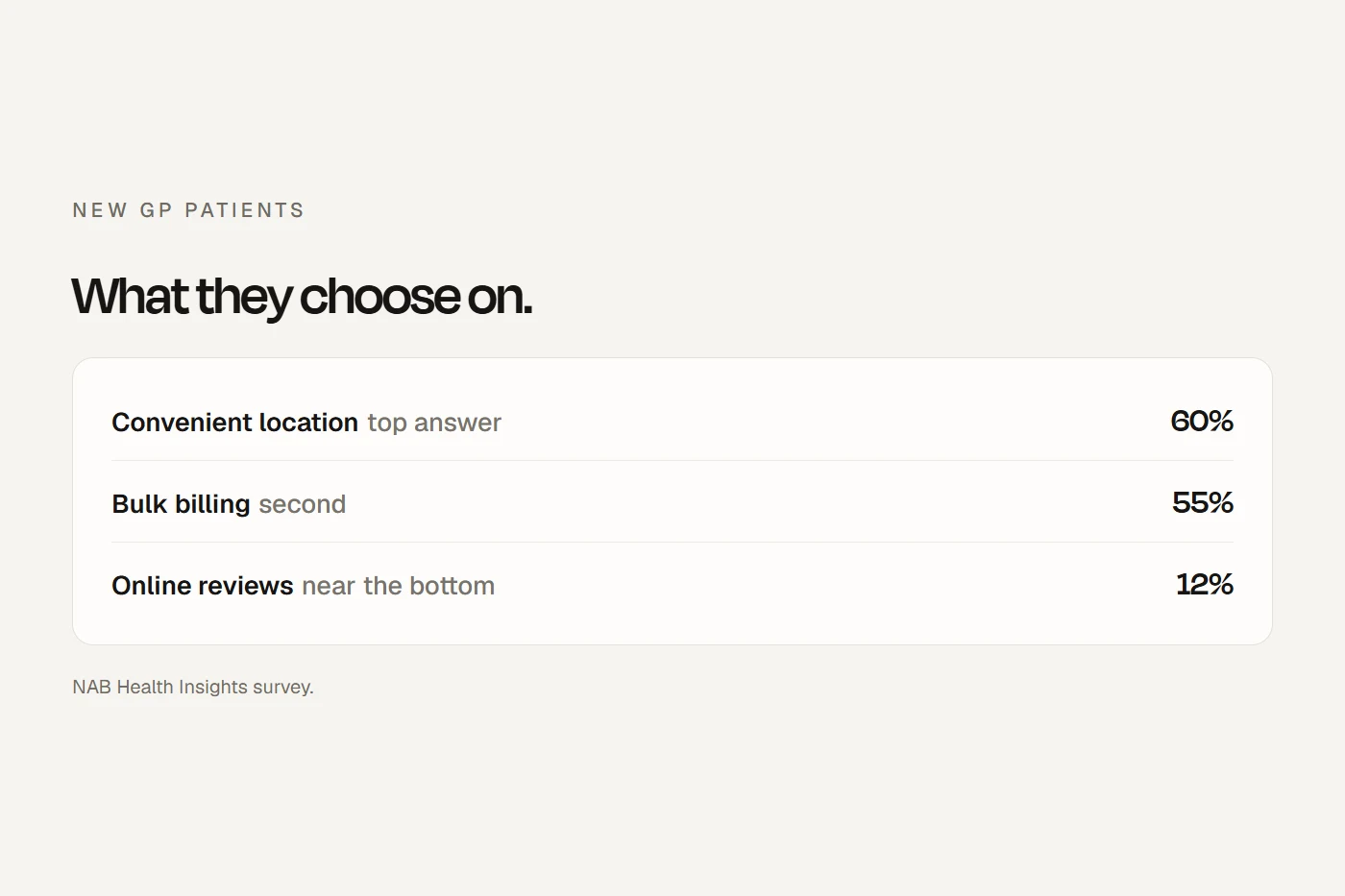
The ABS asks Australians about their GP every year, but not how they found one. The best data on that comes from two bank surveys, so treat them as industry research. NAB asked what matters most when looking for a new doctor or health professional: a convenient location came first (60%), then bulk billing (55%) and ease of getting an appointment (54%), then convenient hours and out-of-pocket cost. A friend's recommendation was 31%. Online reviews came near the bottom, at 12%. GPs are also the practitioners people switch most, and younger adults switch far more than older ones.
CommBank's survey asked where patients look. About half use practice websites, about half search engines, and about four in ten online booking directories, and GP patients were the heaviest users of all three. From the ABS: about a quarter of people waited longer than they felt was acceptable for a GP appointment, and most can usually see their preferred GP.
So a GP clinic's marketing job is mostly accuracy, not persuasion: say where you are, who you bulk bill and when, and how soon someone can be seen, and make those facts the same on your website, your Google profile and healthdirect. It also suits the rules, which limit quality claims and reviews anyway.
Bulk billing is now a search
The government is advertising bulk billing to the public and sending patients to a map of Bulk Billing Practices and to healthdirect's Service Finder, which filters by billing type. That makes the healthdirect listing a marketing channel in its own right.
- Fully bulk billing practices in the incentive program must list on healthdirect's National Health Services Directory as "bulk billing only" and keep their address, contact details and hours accurate "at all times". The Department encourages the optional details too: languages, gender of doctors, accessibility, a booking link and your website. They're the same facts patients rank highest.
- The Medicare Bulk Billing Practice web tile can only be used for locations in the program, never for a whole group with some locations outside it, and never in a branded header. The Medicare logo can only be used in the Department's own materials. You can still promote bulk billing in your own words.
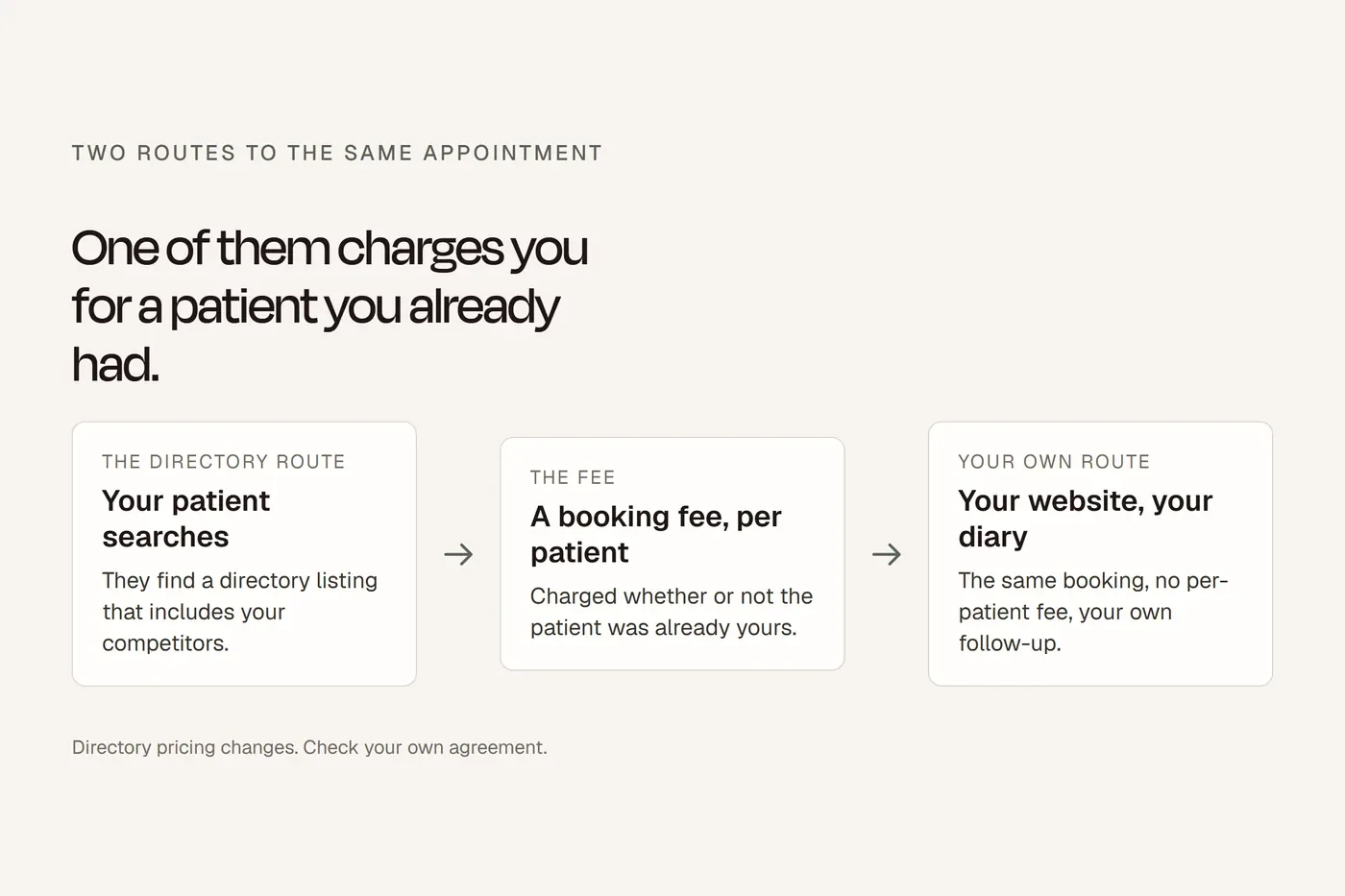
- No extra fees on a bulk billed service. The Department says booking fees, admin fees, record-keeping fees and annual registration or membership fees can't be charged on a bulk billed service, however they're described. A website that says "bulk billed" and shows a booking or membership fee for the same appointment is advertising something you can't do.
- Mixed billing clinics should say exactly who is bulk billed and for what, in one sentence used everywhere, and leave out dollar figures, which change.
Titles on GP profiles
General practice is a specialty, so "Specialist general practitioner" is the title for a GP with specialist registration in general practice, and only for them. Ahpra's own example: "Dr Chan, Specialist paediatric general practitioner" is a potential breach, because it suggests specialist registration in paediatrics; "Dr Chan, Specialist general practitioner with substantial experience working with children" is correct. "Specialises in" causes the same problem; "has substantial experience in" or "works primarily in" are less likely to mislead.
- "Surgeon" is only for doctors with specialist registration in surgery, obstetrics and gynaecology or ophthalmology. A GP who does skin excisions can describe the procedure, but can't be a "skin cancer surgeon".
- Registrars should be listed as general practice registrars, and doctors without specialist registration as GPs, with no "specialist" anywhere.
- Rural generalist is becoming a protected title for doctors with specialist registration in that field.
- Post-nominals such as FRACGP only if current and accurate.
- Allied health staff with doctorates need the profession after "Dr", such as "Dr Sam Lee (Psychologist)".
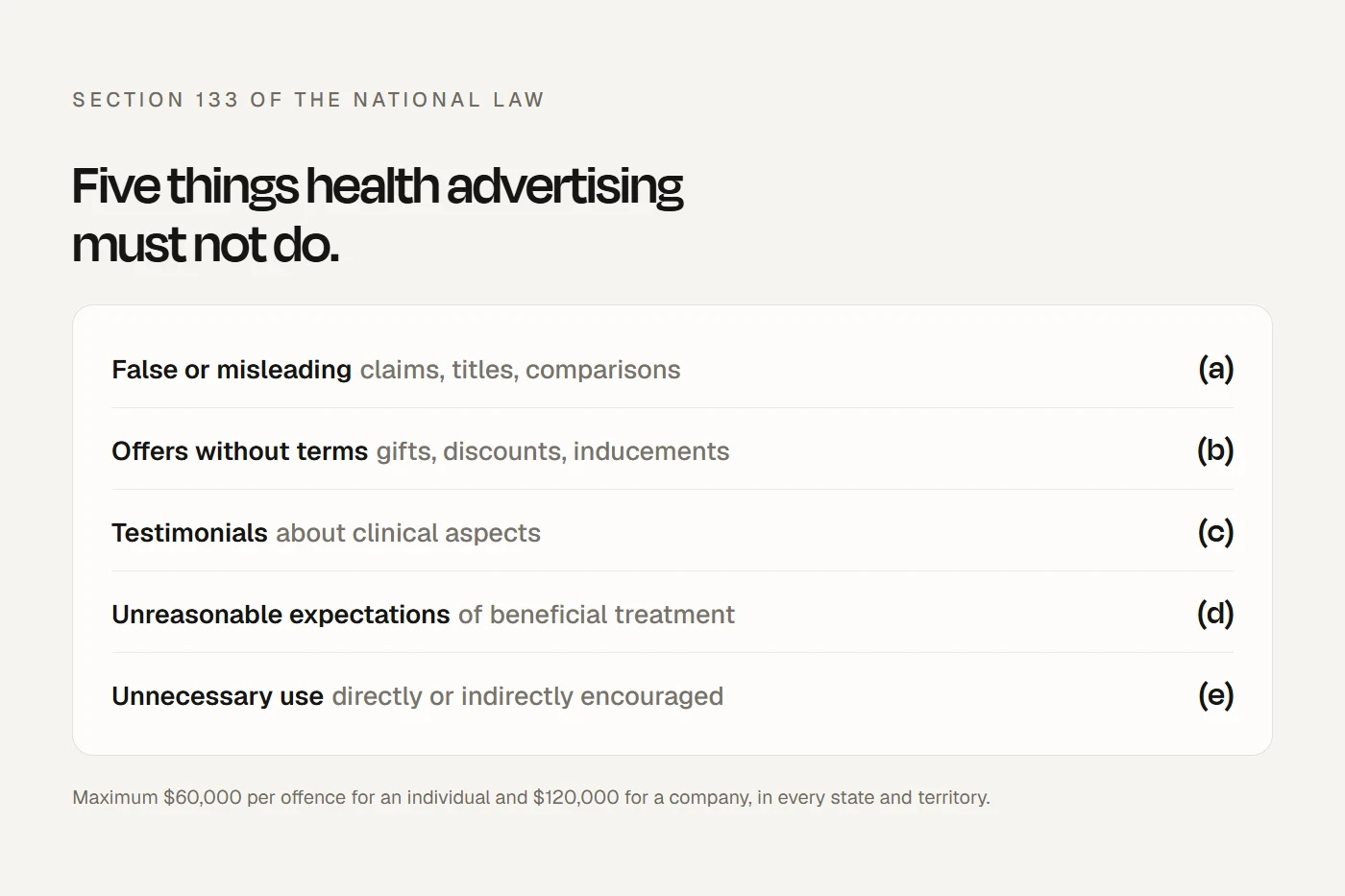
The Medical Board's code adds the rest: information about your services must be "factual and verifiable", with no guaranteed cures, no exploiting "fears about their future health", no inducements or testimonials, and no unfair comparisons with colleagues.
Recalls, reminders and marketing messages
This is where most GP clinics get tangled. The OAIC's guidance for health providers is clear:
- Implied consent usually covers results notifications, recalls after screening and tests, reminders for a scheduled procedure or longer appointment, care plan communications, and a parent's reminder about their child's next scheduled immunisation.
- Express consent is generally needed for messages "sent in a more indiscriminate manner to a practice's entire database". The OAIC's own examples are a letter to the whole database about flu vaccination, and one promoting a new physiotherapist joining the practice.
The RACGP's privacy guidance says the same, warns that flu vaccination letters "could be considered direct marketing", and suggests an unsubscribe even on text reminders. The Spam Act adds consent, sender identification and an unsubscribe for promotional messages. And Ahpra's guidelines count patient recall notices as advertising, so recalls can't use fear lines or push regular visits without a clinical reason.
The workable pattern: a tick-list on your registration form for the kinds of messages a patient wants (appointment reminders, results and recalls, reminders for care they're due for, practice news and new services), recorded in your software. Clinical reminders go to the patients who are due. Promotions such as flu clinics, a new doctor or extended hours go only to patients who ticked "practice news", with your name and an unsubscribe.
Vaccines, telehealth and prescription medicines
The TGA's rule for health services is simple: "you must not directly or indirectly refer to prescription medicines" in advertising. Vaccines are prescription medicines, but a TGA permission lets approved providers say they offer vaccines, such as "influenza vaccines available", as long as you don't name a brand or ingredient, say or imply the vaccine is safe or free of side effects, contradict government health messaging, or mislead. The TGA's own non-compliant example names a brand and offers a discount. Class terms count too: "weight-loss injections" is the TGA's example of an indirect reference, and medicinal cannabis can't be advertised. Promote the consult, not the medicine: "weight management consults", "skin checks", "travel health consults".
Telehealth has two extra rules. The TGA says promoting telehealth as a way to get a particular prescription medicine is likely to be prohibited advertising. And the Medical Board says prescribing without a real-time consult, including from a questionnaire, is not good practice. "Telehealth consults by video or phone with our GPs" is fine; "get your script online, no consult needed" isn't. Google also doesn't allow prescription drug terms in Australian ads or their landing pages.
Check your wording
Paste a page, your Google profile, a doctor's profile, an ad or an SMS, and I'll flag the patterns above.
It catches common patterns, not everything.
The channels
healthdirect and your Google profile
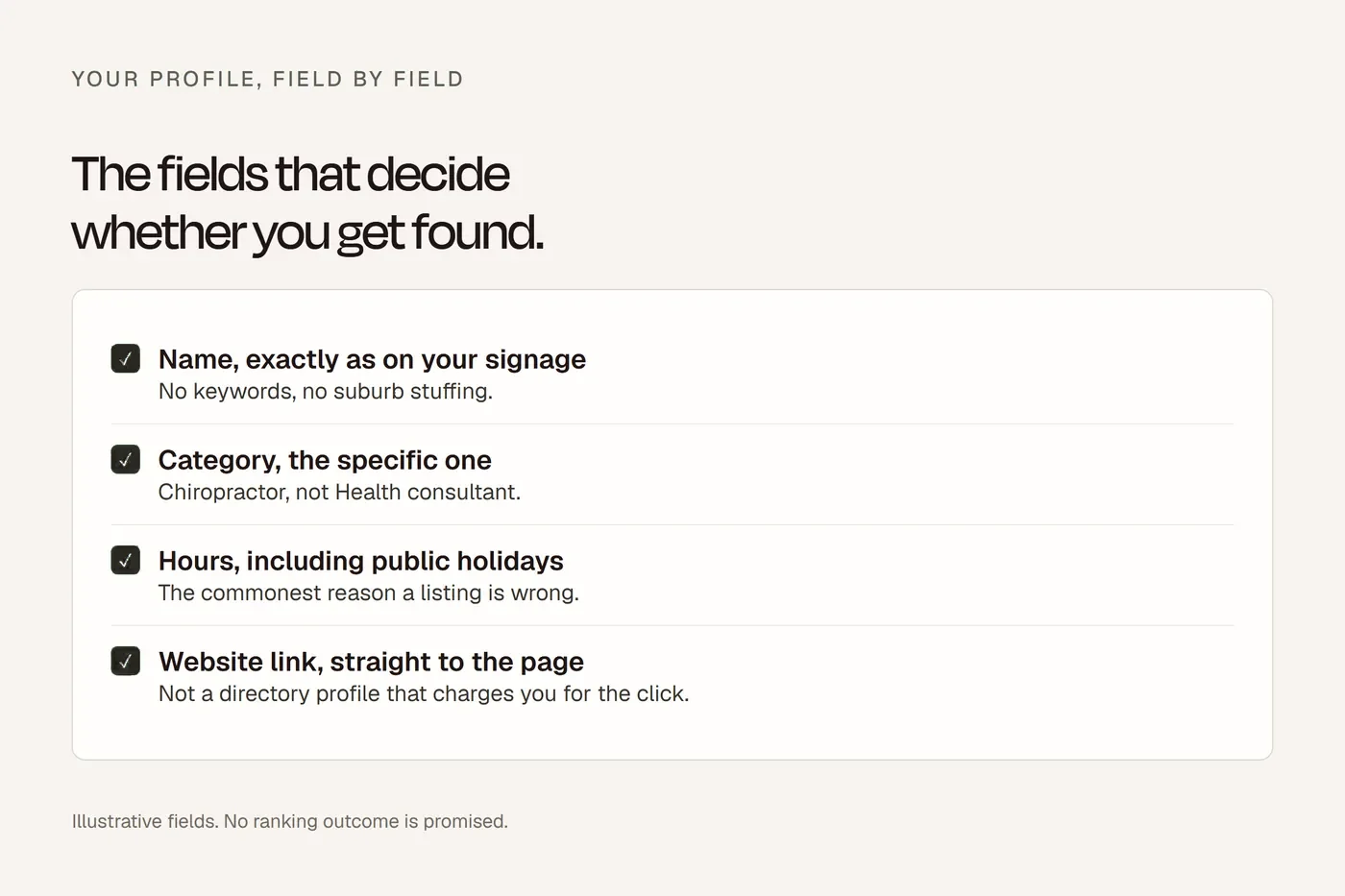
List on healthdirect's directory whether or not you're in the incentive program; it's free, and the government sends patients there. Fill in the optional fields. Then make your Google Business Profile say the same: hours, after-hours arrangements, billing in one sentence, booking link. My Google Business Profile checklist for clinics covers the setup, and asking for Google reviews covers reviews: ask every patient the same way, with no incentive.
Your website and online booking
The website is the one channel you control completely, and about half of patients look at practice websites. What it needs, from the RACGP Standards down, is in my guide to what a GP clinic website needs. For booking, check what your practice software supports: Best Practice has its own website booking, MedicalDirector lists HotDoc, HealthEngine and others, and Zedmed's cloud version supports its own online appointments but not HotDoc or HealthEngine. HotDoc, HealthEngine or your own booking compares them. The RACGP suggests offering online booking for routine, non-urgent appointments.
Google Ads
Search ads on "GP [suburb]" and consult types work within the rules: keyword targeting is fine, Ahpra applies to the text, and Google bans prescription drug terms in Australian ads. Advertise availability facts that are true: after-hours, female GPs, languages, bulk billing as it actually applies. Don't remarket to past visitors based on a health condition.
Meta
Useful for local awareness of a new clinic, a new doctor or longer hours. "Skin checks in [suburb], book online" is fine; "Worried about that mole?" asserts a health condition, which Meta doesn't allow, and edges into a fear line.
New doctors
Patients complain about not being told when a GP leaves. Announce arrivals and departures on your website, Google profile and healthdirect on the same day, with titles exactly as registered. Email or text the announcement only to patients who opted in to practice news.
Can I do this?
Tap a card to see the verdict.
Can you take more patients?
Before you spend on new patients, check you can see them. If you're full, marketing just lengthens your waits. Use your own numbers; the defaults are only examples.
If there's little spare room, work on recalls, hours or another GP before you buy ads.
A 90-day plan
Your ticks save in this browser.
- Days 1 to 30: write your bulk billing position in one sentence and use it everywhere.
- Days 1 to 30: complete your healthdirect listing, with the optional fields, and match your Google profile to it.
- Days 1 to 30: check every doctor's title on the Ahpra register; remove "specialist" where it doesn't belong, and every "surgeon".
- Days 1 to 30: remove testimonials and review widgets from your site and ads.
- Days 1 to 30: if you're in the incentive program, use the web tile only on participating locations, not in the header.
- Days 31 to 60: link online booking from your site and Google profile, for routine appointments.
- Days 31 to 60: count calls and bookings from each.
- Days 31 to 60: add a message-type tick-list to your registration form.
- Days 31 to 60: rewrite recall and reminder templates without fear lines, with your name and an opt-out.
- Days 31 to 60: run the capacity calculator. If you're near full, fix access before buying ads.
- Days 61 to 90: run search ads on "GP [suburb]" and consult types, with no drug terms.
- Days 61 to 90: announce new doctors or hours to opted-in patients, and on your site, Google and healthdirect the same day.
- Days 61 to 90: in flu season, "influenza vaccines available" with no brand, sent only to opted-in patients.
- Days 61 to 90: review new patients booked by source, and re-run the calculator.
My view
For a GP clinic, being findable and accurate beats being persuasive. Patients choose on location, bulk billing and availability, the government is pointing them at healthdirect, and the rules leave little room for quality claims anyway. Get those facts right in every listing, keep recalls clinical and promotions opt-in, keep titles exact and medicine names out, and check you have room before you advertise.
Questions I get asked
How do GP clinics get new patients?
By making location, billing and appointment availability easy to find and accurate on healthdirect, Google and the practice website, with online booking, and by advertising consult types and availability within Ahpra's guidelines.
Can a GP practice text patients about flu vaccines?
A reminder to a patient who is clinically due can rest on implied consent. A message to the whole database about flu clinics needs patients who opted in, with your name and an unsubscribe.
Can a GP call themselves a specialist?
A GP with specialist registration in general practice can use "Specialist general practitioner". No GP should claim to be a specialist in another field, or a surgeon.
Can a medical centre advertise vaccines?
Yes, in the form the TGA permits, such as "influenza vaccines available", without brand names, safety claims or discounts.
Can a bulk billing clinic charge a booking fee?
Not on a bulk billed service. The Department says booking, admin and membership fees can't be charged on bulk billed services, however they're described.
About this guide
Written by Joseph Alzein, founder of bdog. bdog builds websites for GP clinics and medical centres. The rules come from the Ahpra advertising guidelines and titles guidance, the Medical Board's code of conduct and telehealth guidelines, the RACGP Standards and privacy guidance, the Department of Health's bulk billing materials, the OAIC and the TGA, and the data from the ABS and surveys by NAB and CommBank, read on 12 October 2026. Built with Ahpra's advertising guidelines in mind. This is general information, not legal advice; check with your medical defence organisation.
Main sources: