Veterinary marketing: how independent clinics win clients
What owners say about their vets, the channels that bring clients who stay, and each state’s rules on offers, comparisons, ‘specialist’, prescription medicines and pet insurance. With a wording checker, a cost per new client calculator and a 90-day plan.
On This Page
Search for veterinary marketing and page one is agencies and software vendors, most of them American. Their tactics are fine as far as they go: a Google profile, reviews, reminders, social media. What they don't cover is the set of Australian rules that vet marketing actually trips on, and those rules are not Ahpra's. Vets are regulated state by state, each with its own Act and board, and the rules on offers, comparisons, "specialist", prescription medicines and pet insurance differ in ways that matter. This guide is for an independent clinic with one to three vets. It covers what owners say about their vets, which channels bring clients who stay, and what each state allows, with a wording checker and a cost per new client calculator. It's from the eight vet Acts, codes and board guidelines, the AVA, the Spam Act and Animal Medicines Australia's latest Pets in Australia survey, read on 12 October 2026. It's general information, not legal advice.
- Win on what owners rateCaring vets, the same vet each visit, clear costs and short waits. Say those things plainly and prove them.
- Fill the gaps you already haveFewer pets are vaccinated each year than have ever been vaccinated. Reminders that reach current clients are the cheapest growth there is.
- Know your state's rulesOffer terms in Victoria, no superiority claims in WA, no "specialist" anywhere unless registered, no promoting prescription medicines, and no insurer commissions.
What owners say about their vets
I couldn't find an Australian survey on how owners choose a clinic. The best national data is Animal Medicines Australia's Pets in Australia survey, and it's useful:
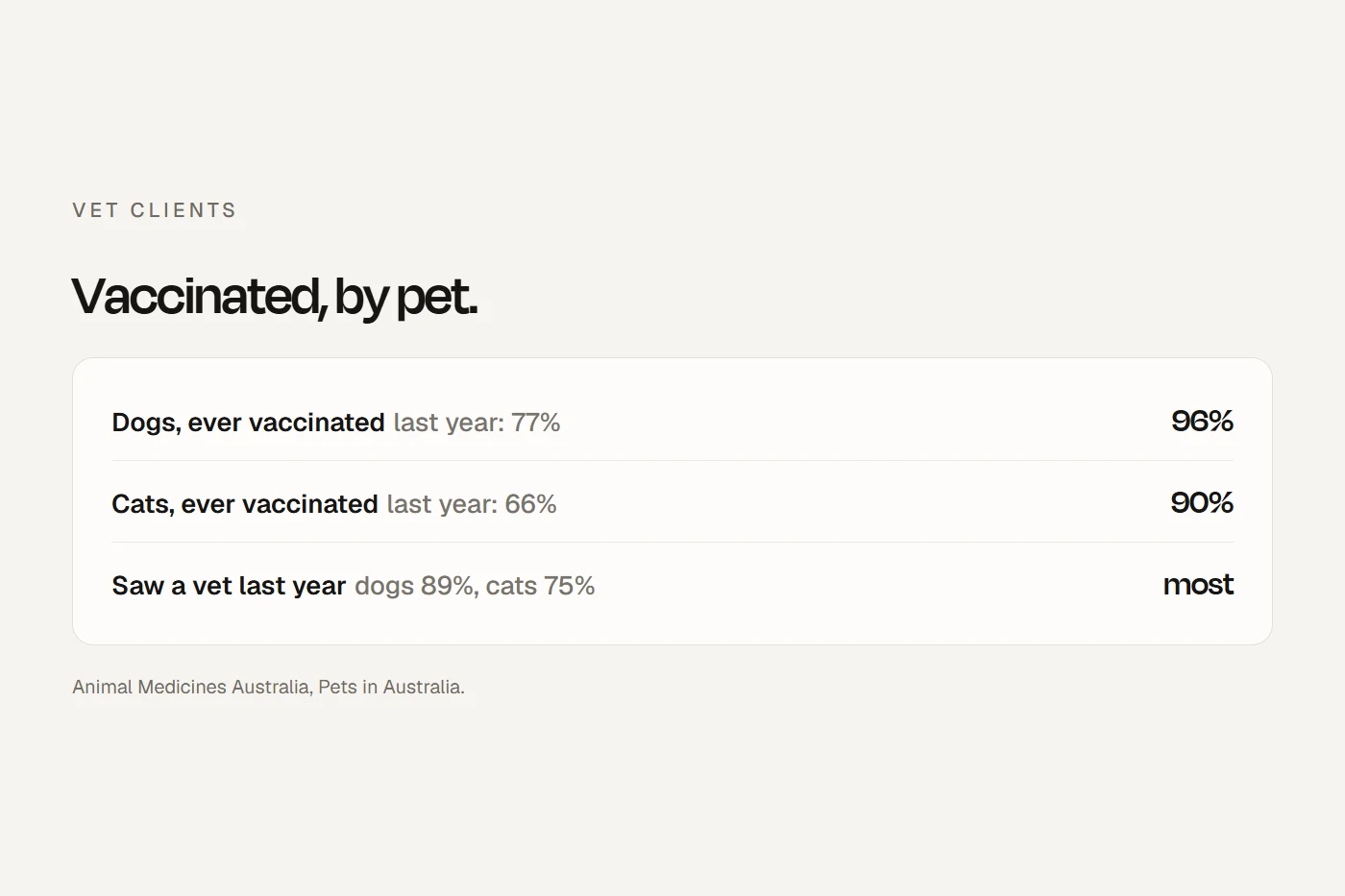
- Most pets see a vet. 89% of dogs and 75% of cats saw one in the last year, mostly for check-ups and vaccinations.
- Vets are owners' first source of information (52%), and search engines second (35%).
- 87% rated their last visit 7 out of 10 or higher. High scores came from caring, thorough teams and good service. Low scores came from cost, long waits, poor communication and care that varied between visits or between vets at the same clinic.
- Annual vaccination trails lifetime vaccination. 96% of dog owners and 90% of cat owners have vaccinated at least once, but only 77% of dogs and 66% of cats were vaccinated in the last year. Cost and a sense it isn't needed were the common reasons.
- About one in four owners get most of their pet health products from their vet.
Read together, that's a plan for an independent clinic. The complaints are cost, waiting and inconsistency, so show your prices, make booking easy, and point out that clients see the same vet. Continuity is a real advantage for a small clinic, and you can say it as a fact about yourself.
Who sets the rules
Ahpra doesn't regulate vets, so its advertising guidelines and testimonial ban don't apply. Each state and territory has its own Act and board, and the Australian Consumer Law applies to every clinic on top. On advertising, the states fall into three groups:
| Where | Advertising rule | What it means in practice |
|---|---|---|
| Victoria | Veterinary Practice Act s 59 | No false, misleading or deceptive ads. An offer of "a discount, gift or other inducement" must set out its terms and conditions in the ad. No ad that "unfavourably contrasts" your services with another vet's. |
| WA | Code of Practice cl 8 | Not false, misleading, vulgar or sensational, and no claim of superiority over other vets, express or implied. |
| South Australia | Code of Professional Conduct 1(d) and 1(e) | Public notices must not compare the competence of vets. No deal for a directory or publication entry that promotes your clinic to the exclusion of others. |
| NSW, ACT, NT | Codes of professional conduct | Don't mislead or deceive, or harm the standing of another vet or the profession. |
| Queensland, Tasmania | No advertising clause | The consumer law, title rules and general conduct rules still apply. Queensland's code asks clinics to tell clients their hours, after-hours arrangements, who's on and estimated costs. |
Scroll the table sideways to see every column.
If your ads reach more than one state, as most online ads do, write to the strictest: terms with every offer, and no comparisons with other clinics.
"Specialist", "special interest" and "Dr"
Every state and territory restricts "specialist" to vets registered as specialists, and most also catch anything that implies it. Victoria's board says "-ist" words such as dermatologist or oncologist, and scope labels like "skin vet" or "dachshund vet", could mislead. WA and South Australia say a non-specialist shouldn't use "special interest"; "particular interest" is accepted. South Australia accepts "cat vet" for a vet who only sees cats, while Victoria flags species words, so pair them there with a line saying the vet isn't a specialist. "Dr" is a courtesy title for vets; write "Dr Sam Lee, veterinarian" so nobody reads it as a medical doctor.
Testimonials and reviews
None of the eight vet Acts, codes or board guidelines bans testimonials, and Victoria's board has said "you can use testimonials but you cannot unfavourably contrast another vet's services with yours". So a review that says your clinic is "much better than the one down the road" is the problem, not the review itself. Reviews must be genuine, Google doesn't allow incentives for reviews, and anything that identifies a client or their pet needs the owner's consent. Queensland's code names "the client's animal" in its confidentiality rule. When you reply to a review, don't confirm any clinical detail.
Prescription medicines
Promote the service, not the product. NSW's Stock Medicines Regulation bans advertising S3, S4 and S8 animal medicines except to vets, pharmacists and wholesalers. Queensland's medicines regulation bans advertising S3, S4 and S8 medicines generally. Victoria's board has warned vets it saw promoting a prescription flea and tick injection "through social media and waiting room materials", and said "it is illegal to promote S3s, S4s, S8s to the public". Google Ads doesn't allow prescription drug terms in Australian ads at all. So "Ask us about year-round flea and tick protection at your next check-up" works; a post or poster naming a prescription product doesn't. Check a product's label for "Prescription Animal Remedy" before you name it anywhere public.
Pet insurance
Pet insurance is a financial product. The AVA's guide says vets and staff may give factual information and refer clients to insurers' contact details, but shouldn't recommend a specific policy or insurer. Commissions from insurers breach the inducement rules in NSW, the ACT, the NT, Victoria and Tasmania, and the AVA notes that disclosing the commission is no defence. If you display brochures, offer a range of brands. "We offer on-the-spot claiming for eligible policies" is a fact you can state.
Names, emergencies and "independent"
- NSW names: the board's policy reserves "veterinary hospital", "animal hospital", "veterinary clinic" and similar words for licensed hospital premises, prefers place-based names, and says comparative terms shouldn't be used.
- Emergency claims: Victoria's guidelines say to advertise emergency services only where a vet is actually available, and to state the hours. "24/7 emergency" on a clinic whose calls divert elsewhere is the classic mistake.
- "Independent" and "locally owned": fine if true, and worth saying. The ACCC acted against two funeral homes that kept "independently owned" claims on their websites after a listed group bought them. If you ever sell, take the claim down that day.
Check your wording
Paste a page, your Google profile, an ad or a post, and I'll flag the patterns above.
It catches common patterns, not everything.
The channels that work
Reminders to current clients
The gap between lifetime and annual vaccination is the cheapest growth most clinics have. A few owners in the survey said they skipped a visit because no reminder came. Set annual vaccination and check-up reminders in your practice software for every active patient. Under the Spam Act, a message made up only of factual information, such as "Bella is due for her vaccination, book at this link", is treated differently from marketing; once it adds "20% off dental this month", it's commercial and needs consent and an unsubscribe. I found no regulator guidance on vet reminders specifically, so the safe course is two separate consent ticks on your registration form, one for reminders and one for news and offers. Register your SMS sender ID with the ACMA so messages don't show as unverified. Keep reminders factual and kind; whether a pet needs a vaccine every year is a clinical decision, so don't turn the reminder into a warning.
Your Google profile and reviews
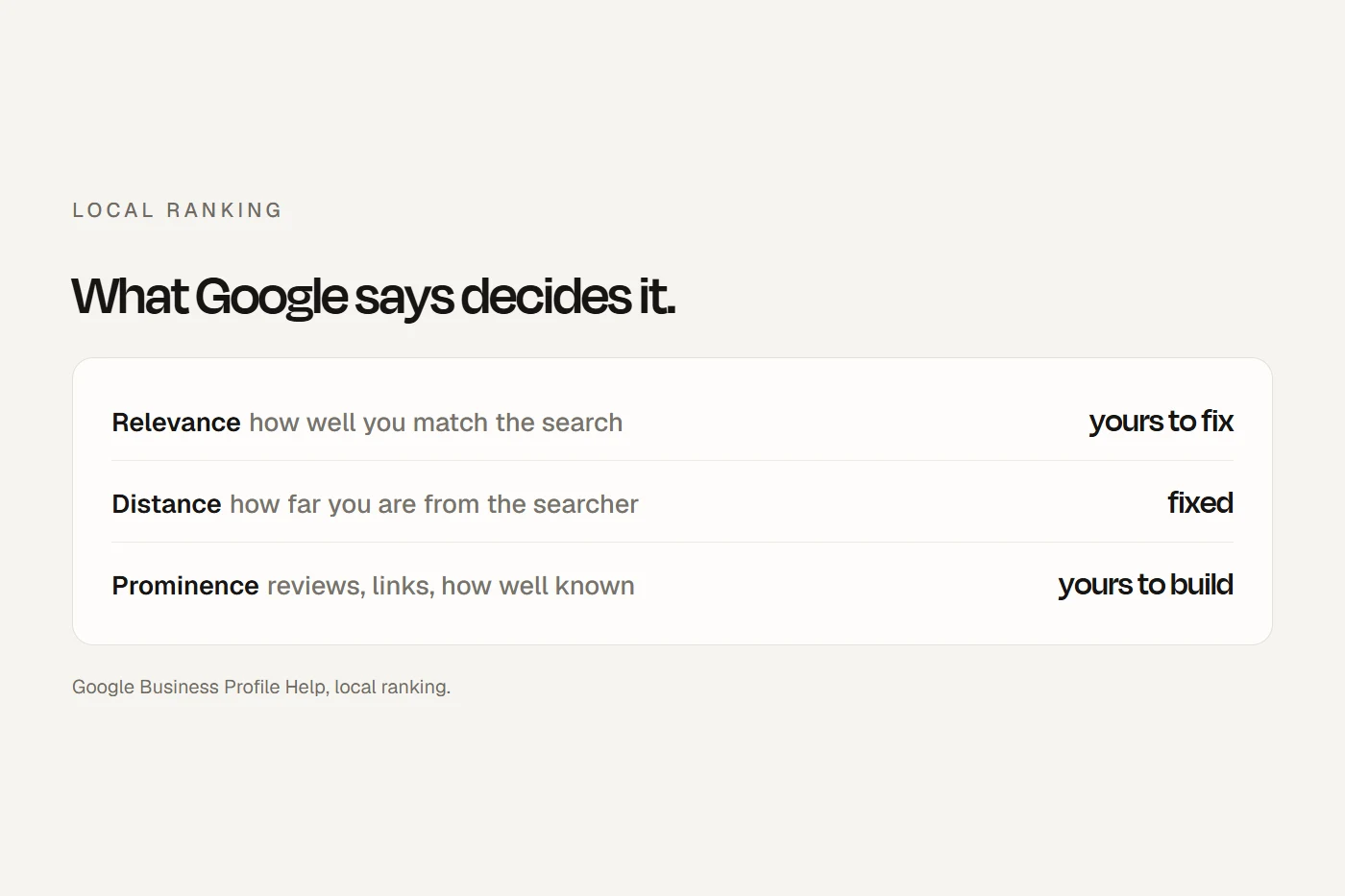
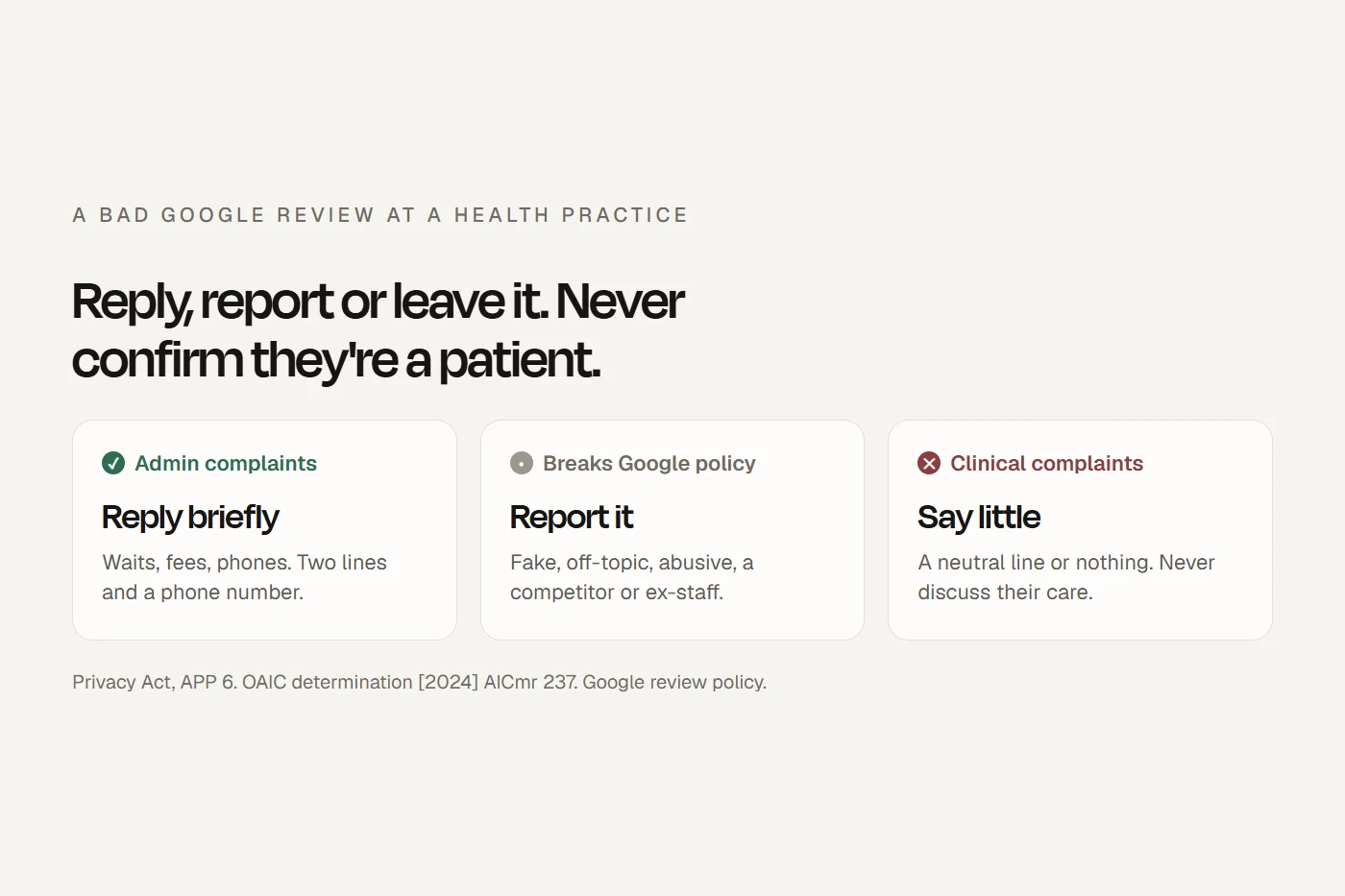
Search engines are owners' second source of information. Set the right category, your real hours and after-hours arrangements, a booking link and current photos. Ask every client for a review in the same neutral way, without incentives. My guide to local SEO covers the profile in detail, and replying to a bad review covers the replies.
Your website and online booking
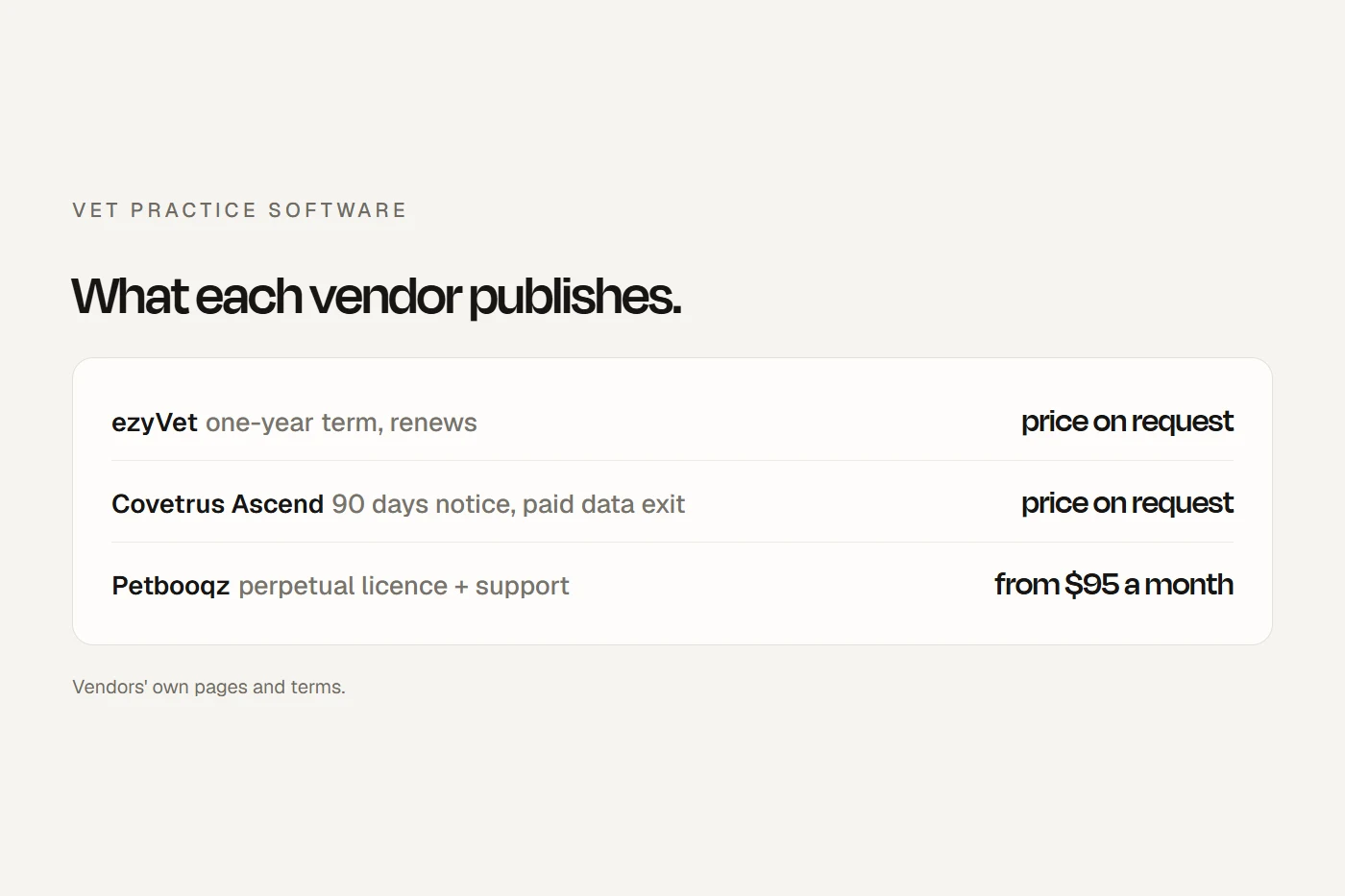
What the rules and the survey point to, on one site: hours and where to go after hours; each vet's name with "veterinarian" and any particular interests; typical prices for vaccinations, desexing and a standard consult as single prices including GST; service pages that sell the service, not a medicine brand; factual pet insurance information; and a booking button that shows live times without a login. My guide to vet practice software covers which systems can do that.
Puppy preschool and kitten kindy
A new puppy or kitten is the start of a client relationship that can last the pet's life. The AVA suggests general pet insurance information in new puppy and kitten packs; keep prescription products out of the pack.
Wellness plans
Corporate groups sell monthly wellness plans, and an independent clinic can too. CHOICE's review found plans are a budgeting tool rather than insurance, and owners are most likely to come out ahead in a puppy's or kitten's first year. If you run one, state the total price, what's in and out, the terms of any discount, and make it easy to cancel online. New consumer laws banning subscription traps are coming, and designing to them now is simpler than changing later.
Social media and ads
Client pets are your best content, with the owner's written consent and no clinical details unless they agree. Ads follow the same rules as the rest of your marketing: terms with offers, no comparisons, no "specialist", no prescription product names. On Meta, an ad about the pet ("Is your dog scratching?") is safer than one about the owner's circumstances ("Struggling with vet bills?"); test it in Meta's review before spending.
Can I do this?
Tap a card to see the verdict. Not legal advice; check your state board's rules.
Cost per new client, and what they're worth
Use your own numbers for one channel at a time. Enquiries are counted calls, forms and online bookings from that channel.
The example numbers are made up to show how it works. Compare channels by cost per new client and by how long those clients stay, not by clicks.
A 90-day plan
Your ticks save in this browser.
- Days 1 to 30: run your website, Google profile, ads, posts and posters through the wording check above.
- Days 1 to 30: list each vet as "Dr Name, veterinarian", with "particular interest" lines and "not a registered specialist" where relevant.
- Days 1 to 30: check your practice name and premises words against your state's rules.
- Days 1 to 30: make hours, after-hours arrangements and any emergency claims accurate on your site and Google.
- Days 1 to 30: publish typical prices for common services, including GST.
- Days 1 to 30: count calls, forms and online bookings by channel.
- Days 31 to 60: add two separate consent ticks to registration, one for reminders and one for offers.
- Days 31 to 60: register your SMS sender ID and set annual reminders for every active patient.
- Days 31 to 60: ask every client for a review the same neutral way, and reply without clinical details.
- Days 31 to 60: put factual pet insurance information on your site, with several insurers and no commissions.
- Days 61 to 90: treat puppy preschool and kitten kindy as your first client touchpoint, with a take-home pack.
- Days 61 to 90: post client pets with written owner consent.
- Days 61 to 90: test a small local search campaign with ad text run through the checker.
- Days 61 to 90: compare channels in the calculator, cut the worst, keep what brings clients who stay.
My view
An independent clinic's best marketing is already in the survey: owners rate caring vets, consistency and clear costs, and complain about price surprises and waiting. Show your prices, make booking easy, say plainly that clients see the same vets, and get reminders to the patients you already have. Then keep your wording inside your state's rules, which mostly means terms with offers, no comparisons, careful titles and no prescription products in public.
Questions I get asked
How do vet clinics get more clients?
Reminders to current clients, a complete Google profile with steady reviews, a website with prices and easy booking, and puppy and kitten programs. Measure each channel by cost per new client and how long those clients stay.
Do Ahpra's advertising rules apply to vets?
No. Vets are regulated by state and territory boards under their own Acts. Victoria, WA and South Australia have specific advertising rules; the consumer law applies everywhere.
Can vets use testimonials?
No Australian vet law bans them, and Victoria's board says you can use them. They must be genuine, have the owner's consent and not knock another vet.
Can a vet advertise flea and tick products?
Not prescription ones, to the public. Promote the service, such as parasite prevention at a check-up, rather than a scheduled product.
Can a vet call themselves a specialist?
Only if registered as one. "Particular interest in" with a note that the vet isn't a registered specialist is the accepted wording.
About this guide
Written by Joseph Alzein, founder of bdog. bdog builds websites for vet clinics. The rules come from each state's and territory's vet Act, code and board guidance, the Spam Act and the AVA's pet insurance guide, and the data from Animal Medicines Australia's Pets in Australia survey, read on 12 October 2026. This is general information, not legal or veterinary advice; your state board's rules are what apply.
Main sources:
- Animal Medicines Australia: Pets in Australia
- Veterinary Practitioners Registration Board of Victoria
- Veterinary Practice Board of WA
- VSRBSA: use of titles policy
- Veterinary Practitioners Board of NSW: policies
- NSW Stock Medicines Regulation
- AVA: veterinarians' guide to pet health insurance
- Spam Act 2003
- Google Ads: healthcare and medicines