How conveyancers win clients (and the software they run on)
What clients value, how to show prices lawfully, whether you can pay agents for referrals in your state, fraud warnings, the channels that work, and the software most practices run on. With a total price builder, a wording checker and a 90-day plan.
On This Page
Most conveyancing marketing advice online is British, and the Australian pages are mostly software vendors and lead sellers. The question underneath most of it, whether to pay real estate agents for referrals, has an answer that depends entirely on your state, and in three of them the answer is no. This guide is for a licensed conveyancer or a small conveyancing practice, or a solicitor who does conveyancing. It covers what clients say they value, how to show prices lawfully, the referral rules state by state, fraud warnings, the channels that work, and the software most practices run on, with prices where they're published. It's from the regulators' Legal Understanding and Lawyer Use survey, the state conveyancing Acts and codes, the ACCC, IPART and the vendors' own pages, read on 12 October 2026. It's general information, not legal advice.
- Show a total priceConveyancers are the legal service people most often ask for prices, and the hardest to find prices for online. A clear total for a standard matter is a gap most competitors leave open.
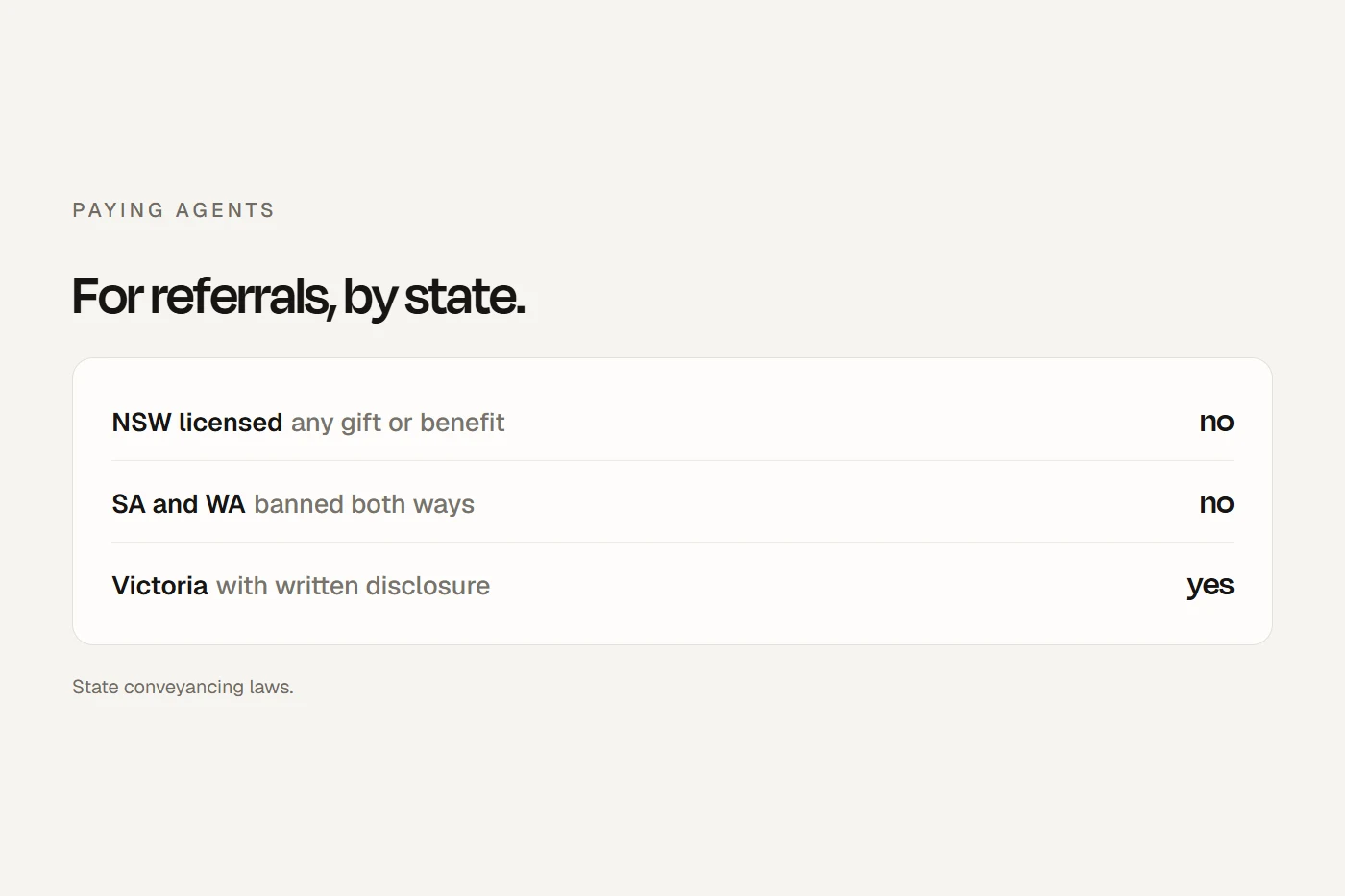
- Know your state's referral ruleNSW licensed conveyancers, South Australia and WA can't pay for referrals at all. Victoria and solicitors elsewhere can, with written disclosure first.
- Win agents with serviceFast contract reviews and clear updates are the referral relationship you're allowed everywhere.
What clients value
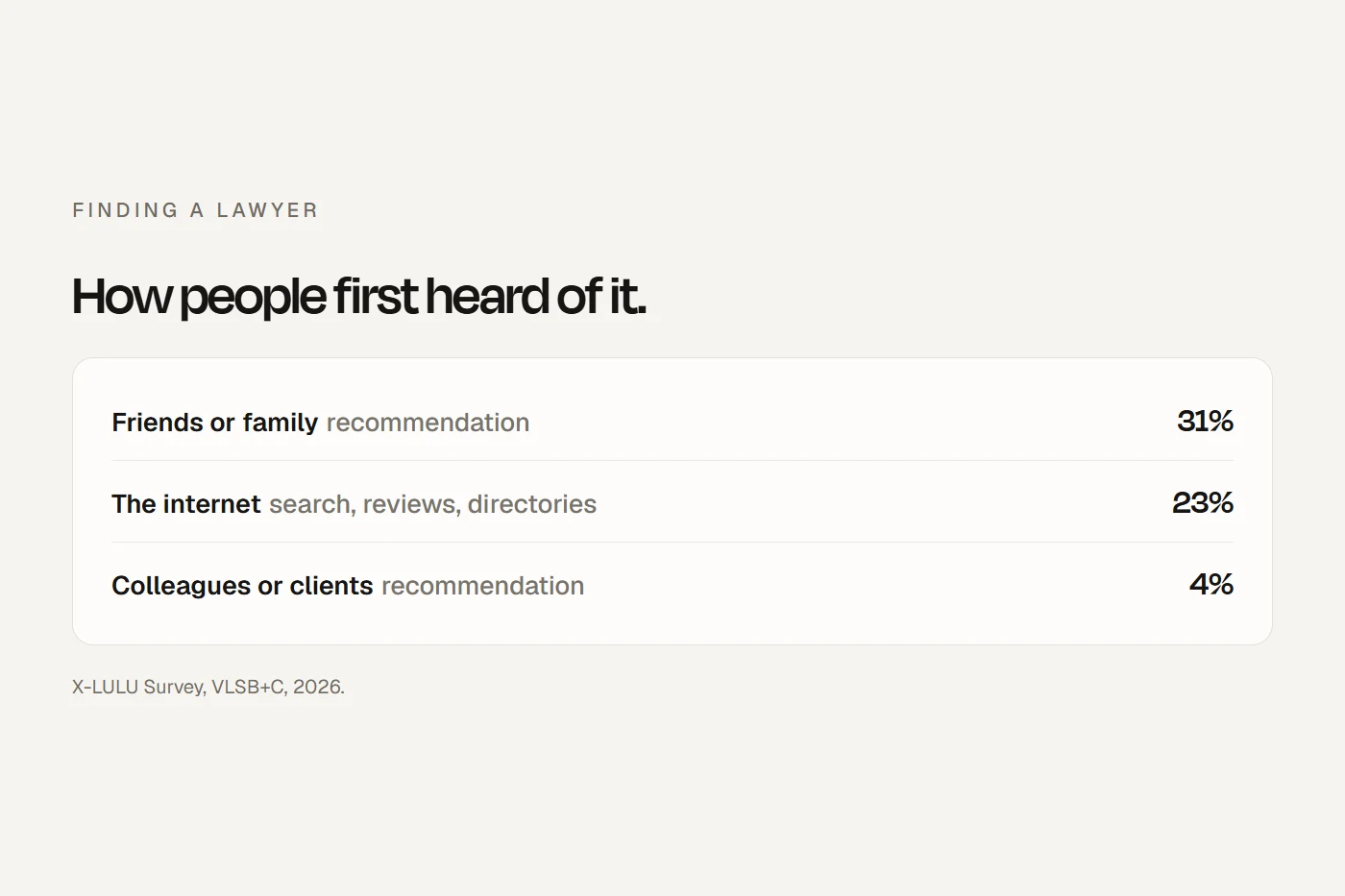
There's no Australian survey of how buyers and sellers choose a conveyancer, or how many come from an agent's recommendation. The best data is the regulators' survey of legal service users outside Victoria. Conveyancers were the second most used legal service after solicitors. People most often said the way a provider communicates mattered (56% for conveyancers), and email was the main channel 59% of the time. Value for money mattered to 53%. And conveyancers were the service people most often contacted for prices, with prices harder to find online than for any other legal service. Most clients recalled getting cost information at the start, usually in writing, and conveyancers mostly charged fixed fees.
Conveyancing is something most people do rarely, so the first recommendation or the first clear search result counts. Consumer Affairs Victoria tells buyers to "get written quotes from several". Your website is where that comparison happens.
Who can do conveyancing
Licensed conveyancers work in NSW, Victoria and South Australia, and in WA as settlement agents. In Queensland, conveyancing is a legal service only solicitors and law practices can provide, and the national eConveyancing council says conveyancers can't operate in the ACT. A licensed conveyancer's website shouldn't offer Queensland or ACT matters. Conveyancers became AML/CTF reporting entities under AUSTRAC's reforms, so your intake should mention identity checks, and you're covered by the Privacy Act for that work: have a privacy policy.
Showing your price lawfully
For home buyers and sellers, the consumer law requires a single total price whenever you show a part price, including GST and unavoidable fees. "$499 + disbursements" alone is risky when the standard disbursements, such as searches, certificates, the eConveyancing fee and identity verification, are known. Show the total for a standard matter, list what's included, and say what changes it: strata, off the plan, extra searches. "From" prices are only fine where the extras genuinely can't be worked out in advance, and the "from" figure must be one a real client can pay.
- WA goes furthest: the written costs disclosure must state an all-in "service amount" covering professional fees, office disbursements, searches, eConveyancing fees and taxes, with duty shown separately, and you can't charge more without the client's written agreement to unforeseeable work.
- NSW and Victoria require written costs disclosure before or when you're retained; if you don't give it, the client need not pay.
- An instant quote on your website is advertising, not your costs disclosure. Label it an estimate and send the written disclosure before you start.
- NSW ads must show your licence number, including on your website.
The defaults are examples only; use your own figures, and check your eConveyancing provider's current fees.
Paying agents for referrals: state by state
| Where | Can you pay agents for referrals? | The rule |
|---|---|---|
| NSW, licensed conveyancer | No | The conduct rules bar offering "any gift, favour or benefit, whether monetary or otherwise" to get someone to engage you. |
| NSW, solicitor | With disclosure first | The solicitors' conduct rules allow it if disclosed to the client in advance. |
| Victoria | With written disclosure | Paying or receiving a commission is a potential conflict, disclosed in writing on the prescribed form. |
| South Australia | No, either way | Conveyancers can't pay for referrals, and agents can't ask for or take them. |
| WA | No, either way | Settlement agents can't give any reward for referrals, and agents can't demand or receive one. The regulator says that includes gifts like wine or football tickets, free searches and free office space. |
| Queensland (solicitors) | With disclosure first | Under the solicitors' conduct rules. |
Scroll the table sideways to see every column.
In NSW, an agent may legally receive a disclosed benefit from someone they refer to, but a licensed conveyancer may not offer one. When you refer clients on, to a building inspector or broker, NSW, Victoria and WA all require you to disclose any fee you receive. Pay-per-lead platforms deserve care: WA's regulator warned settlement agents about exactly that model, and in NSW and South Australia per-referral fees sit close to the rules above. A flat advertising fee is closer to ordinary advertising, but get advice.
What's allowed everywhere is being the conveyancer agents want their deals to go to: fast contract reviews, clear updates with the client's consent, and no last-minute surprises.
Fraud warnings belong on your website
Payment redirection scams target property settlements. No regulator has published wording, but the professional indemnity insurer Lawcover's advice is clear: phone clients to check bank details, train staff consistently, and warn clients "not to rely on emailed bank account details, even if they seem to have been emailed by your practice". A line like this works on your contact page, footer, email signature and engagement letter:
"We will never send or change our bank details by email or text. Before you transfer money, call us on the number on our website or in your engagement letter, not a number in an email."
If your eConveyancing provider offers a secure app for exchanging bank details, offer it. In PEXA's own survey, most recent buyers checked bank details by calling a number they already had.
Can I say this?
Paste your website copy, an ad or your Google profile, and I'll flag the risky lines.
It catches common patterns, not everything. In NSW, also add your licence number next to any advertised price.
The channels
- Agents, brokers and accountants: service, not payments, as above. Paying a mortgage broker per referral is caught by the same rules in NSW, South Australia and WA.
- Google Business Profile: your name as on your sign, no "cheap conveyancer" keywords in the name, and a service area if clients don't come to your office. In NSW, posts promote your business, so include your licence number. Ask every client for a review at settlement, and reply without discussing their matter.
- Your website: a price page with a total, a "how we keep you updated" page (communication is what clients value most), the fraud warning, your licence number and insurance line, the states you work in, and a privacy policy.
- Lead and comparison platforms: shared-lead marketplaces, exclusive-territory lead sellers and agent comparison sites with a preferred conveyancing partner all exist. Check each model against your state's referral rule before you sign.
- Google Ads: ads are advertisements, so the licence number (NSW) and total price rules apply.
The software
Nearly every settlement in NSW and Victoria now runs electronically, and IPART found one platform, PEXA, handles about 99% of eConveyancing. Sympli is the second, now owned by InfoTrack. On the practice side, the published prices:
| Product | What it is | Published price |
|---|---|---|
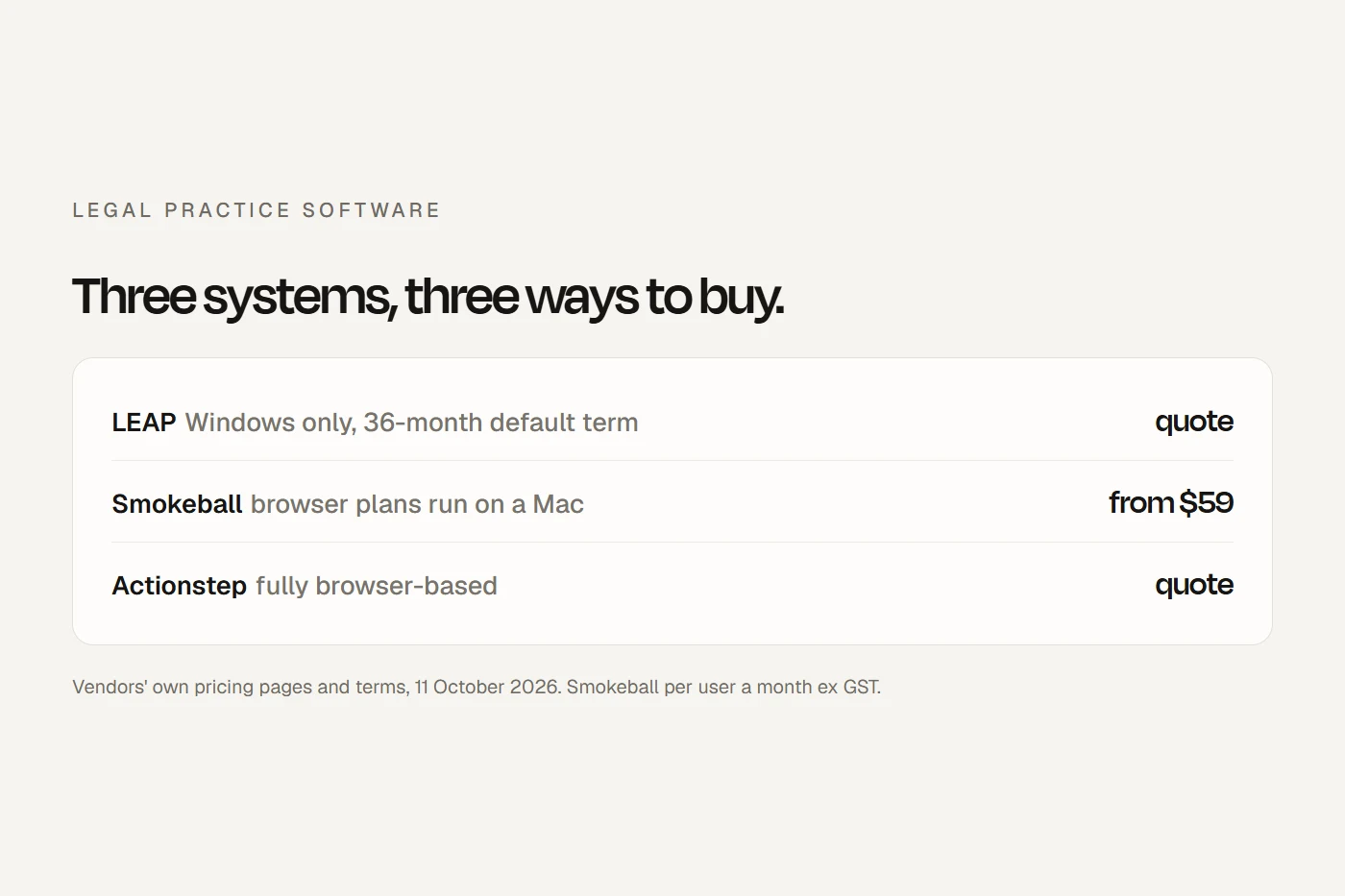
| LEAP Conveyancer | Practice management for conveyancing, with InfoTrack searches built in | $209 a user a month plus GST (the page may be older) |
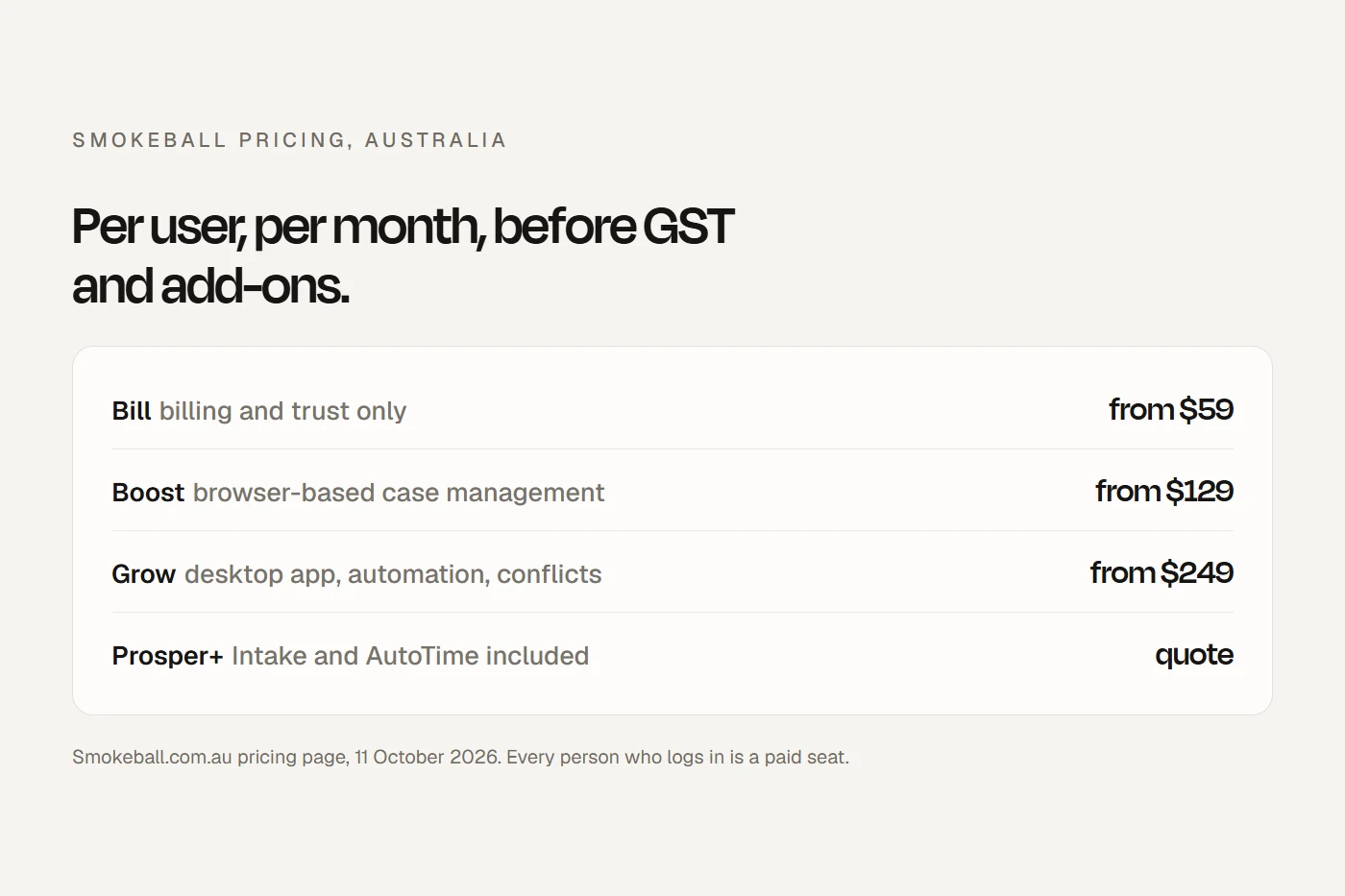
| Smokeball | Cloud practice management with a conveyancing area | From $59, $129 or $249 a user a month, before GST |
| triConvey | Practice management bundled with triSearch searches | $0 if you search exclusively through triSearch, or $300 a month plus GST standalone |
| Actionstep | Practice management, configurable by area | Not published |
| Dye & Durham Unity Conveyancer | For Victoria, NSW and Queensland, with PEXA integration | Not published |
| PEXA | eConveyancing lodgement and settlement | Per successful lodgement, no subscription |
Scroll the table sideways to see every column.
"Free" software is paid for through search fees, so compare the total cost per matter, not the licence line. Much of the software, search and settlement plumbing traces back to two groups: PEXA, and the group behind LEAP, Smokeball and InfoTrack. My guides to Smokeball pricing and LEAP, Smokeball and Actionstep cover the contracts in more detail.
A 90-day plan
Your ticks save in this browser.
- Days 1 to 30: put your licence number in your website footer, ads and Google posts (required in NSW, good practice elsewhere).
- Days 1 to 30: build a price page with a total for a standard purchase and sale, including GST and usual disbursements.
- Days 1 to 30: check your written costs disclosure matches the website and goes out before you're retained.
- Days 1 to 30: add the bank details warning to your site, email signature and engagement letter.
- Days 1 to 30: check every agent arrangement against your state's rule, and stop anything that isn't allowed.
- Days 31 to 60: write a "how we keep you updated" page with response times and update points.
- Days 31 to 60: set up your Google Business Profile properly, with the states and suburbs you serve.
- Days 31 to 60: ask every client for a review at settlement, with no incentive.
- Days 31 to 60: add a privacy policy and mention identity checks in your intake.
- Days 61 to 90: visit the agents you work with and offer service standards, not payments.
- Days 61 to 90: work out your software and search cost per matter.
- Days 61 to 90: check any lead platform against your state's referral rule before signing.
My view
The opportunity in conveyancing marketing is plain: clients go looking for prices and struggle to find them, and they care most about how you'll keep them informed. A website with a clear total, an honest list of what changes it, a page on how you communicate and a fraud warning beats most of the competition before you spend anything on ads. And whatever your state allows on referral payments, the agents worth having send work to the conveyancer whose settlements go smoothly.
Questions I get asked
Can conveyancers pay real estate agents for referrals?
Not NSW licensed conveyancers, and not in South Australia or WA. In Victoria it's allowed with written disclosure on the prescribed form, and solicitors elsewhere can with prior disclosure.
How should conveyancers advertise their fees?
Show a total for a standard matter including GST and usual disbursements, and list what can change it. A part price like "$499 plus disbursements" needs the total beside it.
What software do conveyancers use in Australia?
Practice management such as LEAP Conveyancer, Smokeball, triConvey or Actionstep, search platforms such as InfoTrack or triSearch, and PEXA or Sympli for electronic settlement.
Can a conveyancer do conveyancing in Queensland?
No. In Queensland, conveyancing is a legal service provided only by solicitors and law practices.
How can conveyancers protect clients from settlement scams?
Never send or change bank details by email, tell clients to call a number they already have before transferring money, and offer a secure app if your provider has one.
About this guide
Written by Joseph Alzein, founder of bdog. bdog builds websites for conveyancers and law firms and has no arrangement with any vendor named here. The data comes from the X-LULU survey run for the legal regulators and IPART's eConveyancing review; the rules from the NSW, Victorian, South Australian and WA conveyancing and settlement agent laws, the solicitors' conduct rules and the Australian Consumer Law; software prices from the vendors' own pages, read on 12 October 2026. Prices change, so check before you buy. This is general information, not legal advice.
Main sources: