Marketing a cosmetic clinic under the current Ahpra rules
Channel by channel, what a cosmetic clinic can do to win clients inside Ahpra’s cosmetic guidelines, the practice guidelines and the TGA’s ban on advertising prescription medicines. With a wording check, a sorter, a cost calculator and a 90-day plan.
On This Page
Most of what ranks for cosmetic clinic marketing is written by agencies and suppliers selling the channel they recommend, and some of it still suggests testimonials, transformation reels and rewards for referrals and reviews. None of that survives the current rules. A cosmetic clinic sits under three layers at once: Ahpra's guidelines for advertising higher-risk non-surgical cosmetic procedures, the practice guidelines on how those procedures are offered, and the Therapeutic Goods Administration's ban on advertising prescription medicines, and the TGA's guidance now includes examples aimed squarely at clinics. My guide to the cosmetic advertising rules covers what they say. This one is about what a clinic can actually do to win clients inside them, channel by channel. It's general information, not legal advice. Ahpra and the TGA won't pre-check an ad, but your professional association, insurer or a lawyer can.
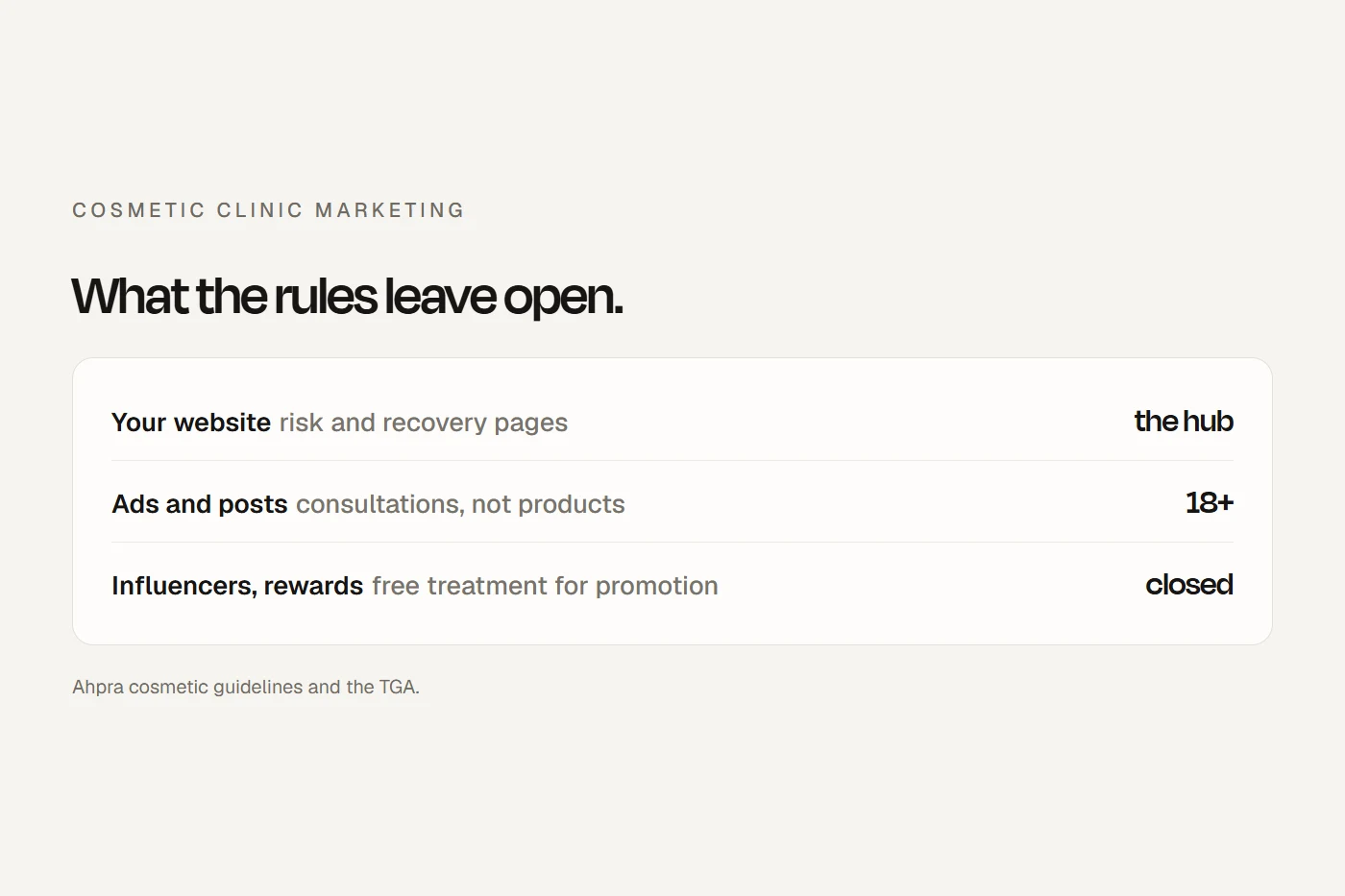
- Your website is the hubEvery ad and post about a higher-risk procedure has to point people to risk and recovery information. That lives on your site.
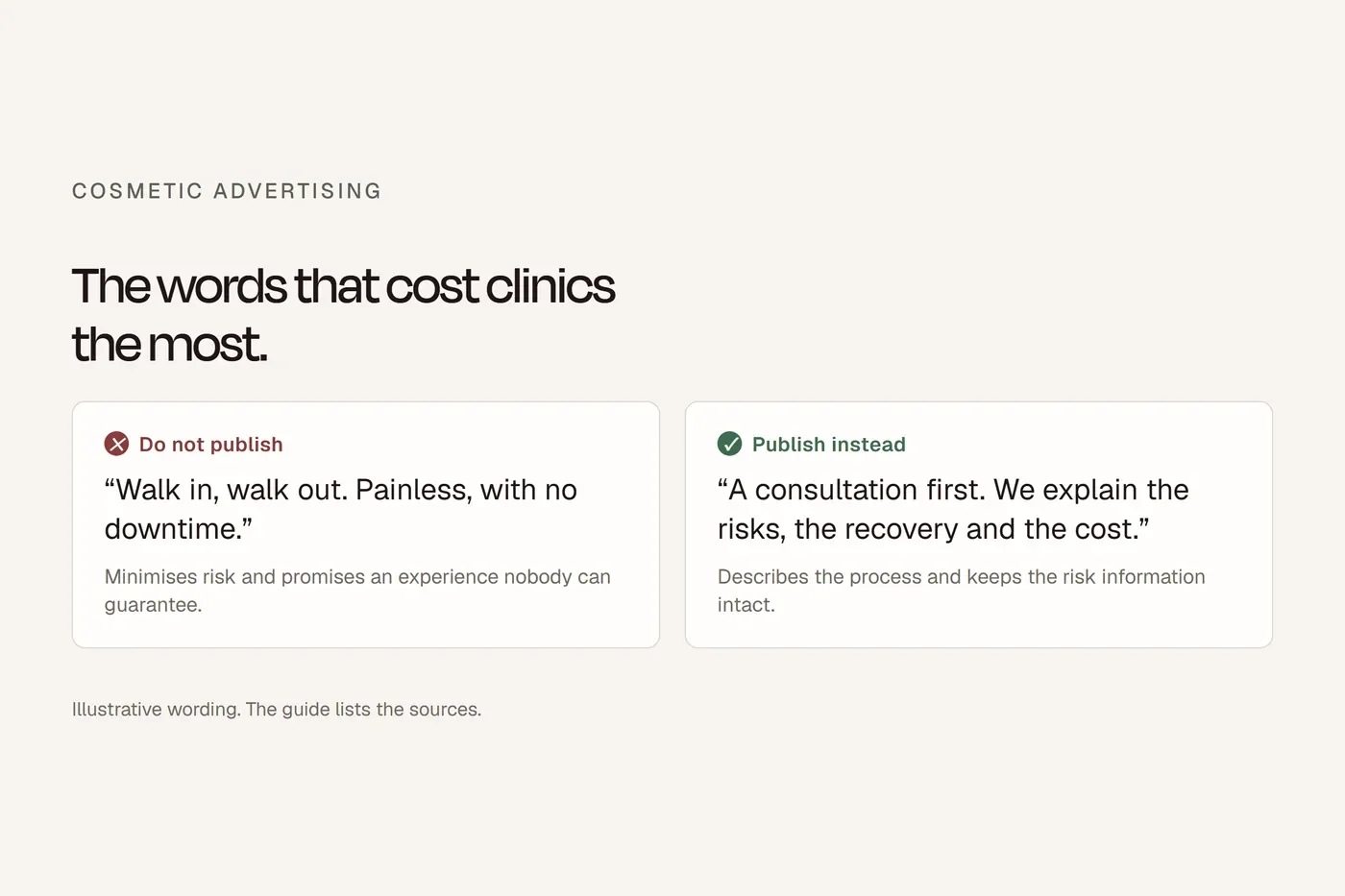
- Market the consultation, not the productNo product names, nicknames, prices or "anti-wrinkle" class terms for prescription injectables, anywhere, including your booking menu.
- Influencers, referral rewards and giveaways are effectively closedThe practice guidelines ban free or discounted procedures for promotion and inducements to recruit clients.
How cosmetic clients choose a clinic
Ahpra itself says advertising drives demand in this field in a way it doesn't in most health care, and that social media and inducements "are used extensively to reach and influence consumer choice". That's why the rules are stricter here than anywhere else in health.
There's no independent Australian survey of how people choose a clinic. The only one I found was commissioned by an injectables supplier, so read it with that in mind. Friends, family or colleagues were the most common prompt to consider treatment at every age, well ahead of influencers and celebrities, especially for people over 30. People who were still deciding worried most about cost, results looking unnatural or overdone, safety, and not knowing enough about the treatment.
Ahpra and the TGA both tell the public what to check before choosing: that the prescriber and the person injecting are registered and qualified, how much training and experience they have, whether the prescriber will consult with them first, and what happens if something goes wrong. Because product names can't be advertised, both also tell people to ask about the product in the consultation. Put those together and you have the content that works and that the rules allow: who will treat me, are they registered, what happens at the first visit, what are the risks and recovery, what does a consult cost, and what if something goes wrong.
The three layers, in short
- Ahpra's higher-risk advertising guidelines apply to anyone advertising procedures such as injectables, dermal fillers, thread lifts and hair transplants performed by registered practitioners, including the business owner, not just the injector. No testimonials. Registration details whenever an ad names the person performing the procedure. Risk and recovery information findable from every ad. Strict rules on images and video. Nothing aimed at under-18s.
- The practice guidelines (Ahpra's for nurses and other non-medical practitioners, the Medical Board's for doctors) ban commissions to recruit clients, free or discounted procedures for promotion, add-on incentives, and promoting finance.
- The TGA bans advertising prescription medicines to the public. For a clinic that means no brand names, no abbreviations or nicknames, no class terms such as "anti-wrinkle injections" or "lip filler", no syringe or vial graphics, and no prices for treatments that involve them. Its guidance applies to websites, social media, booking menus, emails to past clients and even posters in reception.
Treatments that don't involve a prescription medicine, such as lasers, peels and devices listed on the Australian Register of Therapeutic Goods, can be named, described and priced, with Ahpra's general rules on offers and claims. Many clinics lead their marketing with those for exactly that reason.
Check your wording
Paste an ad, a caption, your Google profile, a booking menu or an email, and I'll flag what the TGA and Ahpra rule out.
It catches the common patterns. It can't see your images: no syringes or vials, no beds, beaches or pools, no thumbs-up or tears, no filters, and nobody under 18.
The channels, one by one
Your website: the hub
Three rules make the website the centre of everything else. Ahpra requires that full information about risks can be "easily found" from any ad, and says that where an ad such as a social post can't hold it, it should link to it. It requires realistic information about recovery. And it requires registration details whenever advertising names the person performing a higher-risk procedure, in a form such as "AB (NMW000123456) Registered nurse (Division 1)". So you need a risk-and-recovery page for each concern or treatment family, written without product or class names, a "your first consultation" page, and a page for each practitioner with their registration line, training and memberships spelled out. Real photos of your rooms help; the regulators tell clients to check the premises.
What not to put there: product names or product prices, a booking menu that lets people choose prescription products (the TGA gives exactly this as an example of prohibited advertising), a reviews widget, or an AI tool that previews someone's face after treatment, which Ahpra bans. Price your consultation and your non-prescription treatments, with clear terms.
Google Business Profile
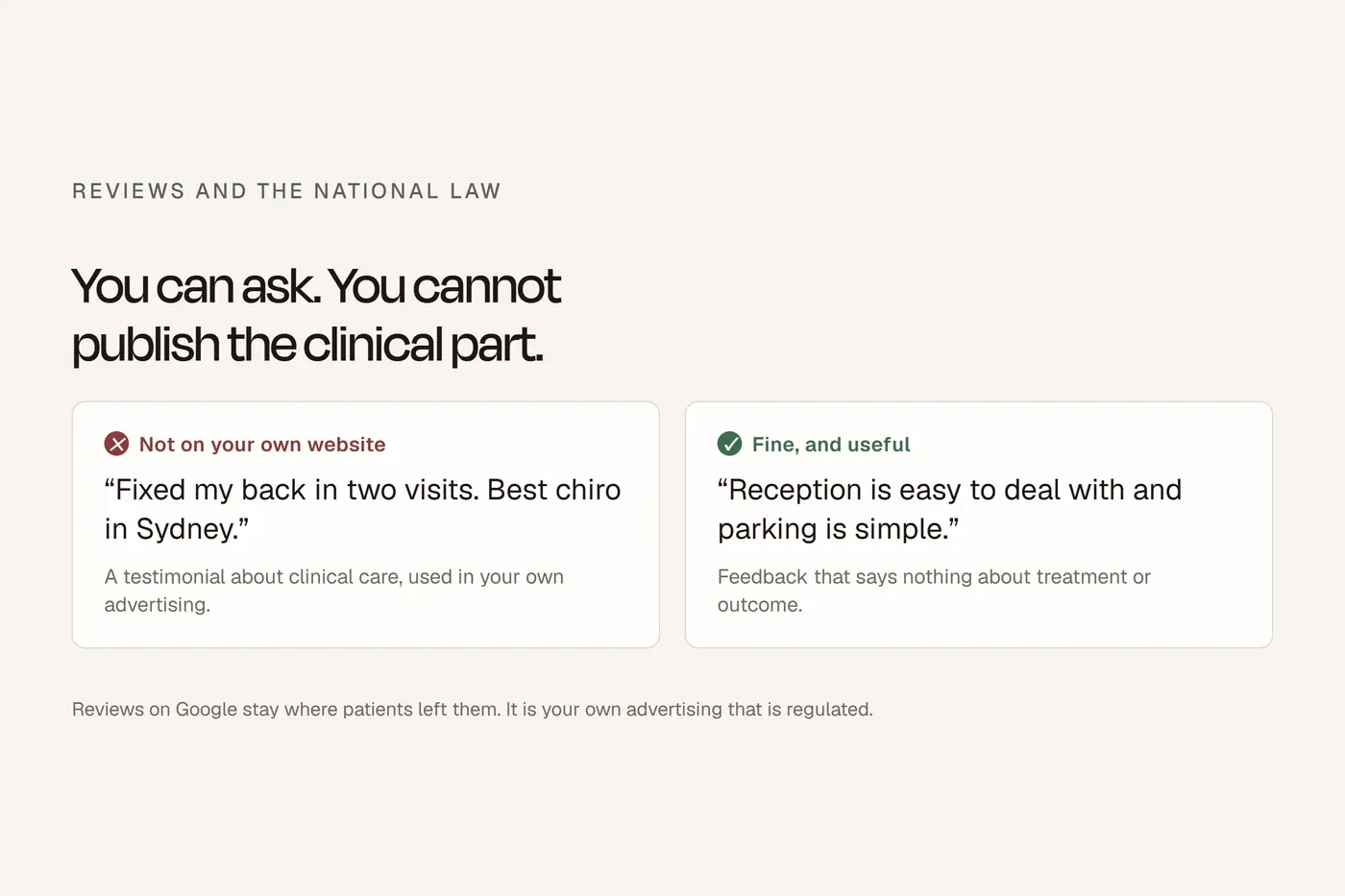
Your Google profile is advertising too. List services as consultation types and non-prescription treatments, not products. Use real photos of the clinic and team, with no product boxes or syringes. Ask every client for a review the same way, with nothing offered. Then leave positive reviews alone: Ahpra's cosmetic guidelines count "liking or otherwise responding to" a patient's post as using a testimonial, and in cosmetic work even a comment about the experience counts as clinical. More in can I ask patients for Google reviews?.
Instagram, Facebook and TikTok
This is where most clinics get into trouble, so the rules are specific:
- Mark it adult. Ahpra requires social content about higher-risk procedures to be identified as "adult content". On Instagram, a professional account can set a minimum age; set it to 18.
- Information, not entertainment. Ahpra lists music, dancing, singing, comedy, montages and non-informative voice-overs as trivialising. A practitioner explaining what a consultation covers is fine; a lip reel set to a trending song isn't.
- No emojis, lifestyle settings or reactions. No emojis on images or in the text, no beach, pool, bed or hotel settings, and no clients giving a thumbs up or crying with happiness.
- No reposts. Re-sharing a client's story or post is using a testimonial, and Ahpra says a client tagging your clinic isn't allowed either, because the post then shows on your page. Turn tagging off or approve tags manually, and turn off or moderate comments and reviews.
- Point to the risks. Every post about a higher-risk procedure needs a link or a clear pointer to your risk-and-recovery page.
- Post less. Ahpra asks practitioners to consider how often they post, because excessive posting can make procedures seem normal. It's the only health rule I know of that tells a business to post less.
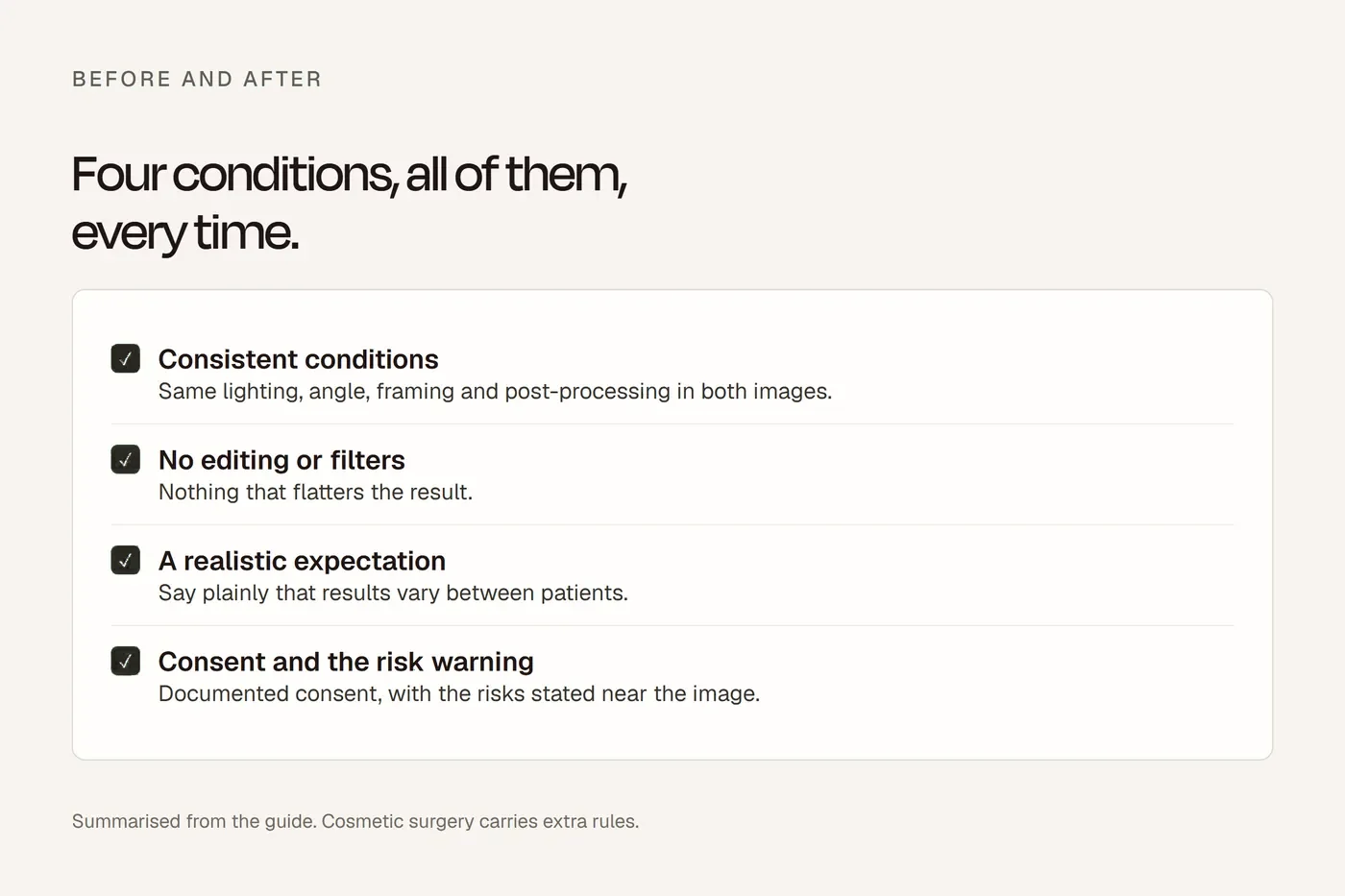
Before-and-after images deserve their own warning. Ahpra allows them with strict conditions, set out in my before-and-after guide. But the TGA says an "after" photo that's apparently due to a prescription injectable is likely to be advertising the medicine, and its latest guidance names before-and-after images and treatment progress as likely prohibited. So for injectables, treat them as off. For lasers and other non-prescription treatments, Ahpra's conditions are the test.
Paid ads
Google doesn't allow prescription drug terms in ads targeting Australia, in the ad or on the page it sends people to, and the TGA rules apply to both anyway. Meta requires cosmetic procedure ads to target people 18 and over, and doesn't allow prescription drug ads in Australia. TikTok's ad policy lists cosmetic clinics as not allowed in Australia. What's left works: consultation-led ads ("Skin consultations with a registered nurse in [suburb]"), practitioner-led ads, and ads for non-prescription treatments by name, each landing on a page with the risk information. Keep offers to non-prescription treatments, with terms one click away and no countdowns.
Influencers
For injectables, this channel is effectively closed three ways. The practice guidelines ban free or discounted procedures for promotion, including to influencers. Ahpra makes you responsible for what any influencer you engage posts, including testimonials. And the TGA says posts showing treatment, its progress or its results are likely advertising a prescription medicine, and that responsibility can extend to the clinic. What's left is properly disclosed paid content about things that can be advertised, such as your own skincare range or a non-prescription treatment, with no claims about clinical results and you approving every word.
Word of mouth
Friends and family were the biggest prompt in the only survey there is, so be easy to recommend: a clear consultation page to send a friend to, practitioner pages with registration, and a card with the clinic's details. What you can't do is reward it. "$50 off your next treatment for every friend you refer" is a discount to an existing client for promoting your services, and arguably an inducement to recruit, so treat it as banned for higher-risk procedures. The same goes for anything offered for a review.
Email and SMS
The TGA's own example of prohibited advertising is a clinic emailing former patients about injectable products, with prices. Broadcast "time for your top-up" messages also run into Ahpra's rule against misleading people about how often treatment is needed. Keep broadcasts to clinic news, a new practitioner (with their registration line), non-prescription treatment offers with terms, and aftercare education, sent only to people who agreed to hear from you.
Offers and finance
For prescription injectables: no prices, no per-unit prices, no packages, no competitions, no add-on gifts. You can tell people which payment methods you accept, including buy now pay later services, but you can't promote finance, so "pay later" never goes in a headline. For non-prescription treatments, genuine offers are fine with terms stated plainly and no urgency. Cosmetic surgery practices have stricter rules again: no discounts, deadlines, bundles or travel packages, and patients need a referral, preferably from their GP.
Can I post this?
Tap a card for the verdict. General information, not legal advice.
What a booked consultation costs you
Put in one channel's numbers for a month. The starting numbers are made up, not a benchmark, and the calculator deliberately stops at the first visit rather than assuming repeat treatments.
Count calls and consultation bookings by channel, or the numbers mean nothing.
A 90-day plan
Ahpra says the guidelines apply to past posts too, and the TGA says the same of historical social media. So the first month is cleaning up. Your ticks save in this browser.
- Audit every channel, including old posts and story highlights: website, Google profile, Instagram, Facebook, TikTok, booking menu and email templates.
- Remove product names, class terms, nicknames, hashtags and prices for prescription injectables everywhere, including the booking menu.
- Remove testimonials, review widgets and reposted stories; lock down tagging and comments.
- Set your Instagram minimum age to 18 and check paid ads target 18 and over.
- Add registration lines to every practitioner bio and any post that names an injector.
- Stop referral and review rewards, influencer freebies, giveaways and finance promotion.
- Check your business name, handle, logo and domain for "injectables" or syringe imagery, and get advice if they're in play.
- Write a risk-and-recovery page for each concern or treatment family, without product or class names.
- Write a "your first consultation" page: who they'll see, their registration, what happens, time to decide, the consultation fee.
- Build practitioner pages with registration lines and training in plain words.
- Keep any gallery to non-prescription treatments, with separate consent and Ahpra's conditions.
- Price your non-prescription treatments with plain terms.
- Fix your Google profile: services as consultation types, real photos, booking link to the consultation page.
- Run consultation-led Google ads for 18 and over, landing on your hub pages.
- Run Meta ads with a practitioner explaining the consultation, a clinic tour, or a non-prescription offer with terms.
- Plan fewer, better posts: education, the team, the rooms, aftercare, each linking to its risk page.
- Email clinic news and non-prescription offers to people who opted in, never product broadcasts.
- Count calls and consultations by channel, and run the calculator.
My view
The clinics that will do well under these rules are the ones that sell the person and the process: who will treat you, their registration and training, what happens at the first visit, what can go wrong and what they'll do about it. That's what the regulators tell clients to look for, and it's what people who are still deciding say they worry about. It also happens to be most of what a good cosmetic clinic website is. Clean up what's live first, because the rules reach back to old posts.
Questions I get asked
How do I advertise my cosmetic clinic?
Lead with consultations and your practitioners, not products. Build a website with risk and recovery information, practitioner pages with registration details and a first-consultation page, then point every ad and post to it.
Can I use influencers to promote injectables?
Effectively no. The practice guidelines ban free or discounted procedures for promotion, you're responsible for what they post, and the TGA treats content showing treatment or results as likely advertising a prescription medicine.
Can I show prices for injectables?
The TGA says prices for treatments involving prescription medicines, including per-unit prices and packages, are likely advertising the medicine. You can show your consultation fee and prices for non-prescription treatments.
Can I run referral rewards for a cosmetic clinic?
Not for higher-risk procedures, in my reading of the practice guidelines, which ban discounts for promotion and inducements to recruit clients. Make yourself easy to recommend instead.
Can I advertise a cosmetic clinic on TikTok?
Not with paid ads: TikTok's policy lists cosmetic clinics as not allowed in Australia. Organic posts must follow Ahpra's rules on video, which rule out music, dancing and montages.
About this guide
Written by Joseph Alzein, founder of bdog. bdog builds cosmetic clinic websites with Ahpra's advertising guidelines in mind. The rules come from Ahpra, the Medical Board, the TGA and the platforms' own policies, read on 12 October 2026. The client survey was commissioned by an injectables supplier. This is general information, not legal advice.
Main sources:
- Ahpra: guidelines for advertising higher-risk non-surgical cosmetic procedures
- Ahpra: thinking about cosmetic injectables
- TGA: cosmetic injections checklist
- Google Ads: healthcare and medicines
- Meta: health and wellness ads
- TikTok: healthcare and pharmaceuticals ad policy
- Instagram: set a minimum age for your account
- ACCC: social media promotions
- Supplier-commissioned survey of injectables clients