Can lawyers use testimonials and Google reviews?
Yes, within the conduct rules on advertising and confidentiality, the consumer law and Google’s own rules. Personal injury, family and criminal limits, written consent, asking for reviews fairly, replying safely, and awards and rankings. With a consent checklist, a review reply checker, a sorter and a review calculator.
On This Page
Yes, Australian lawyers can use testimonials and Google reviews. Search the question and Google mixes in the health practitioners' testimonial ban, which doesn't apply to you. The real limits are different: the solicitors' conduct rules on advertising and confidentiality, the consumer law, Google's own review rules, and extra restrictions in personal injury, family and criminal work. Replies to reviews are where lawyers have actually been disciplined. This guide covers what you can publish, how to get consent, how to ask for reviews, how to reply safely, awards and rankings, and a checker for your replies. It draws on the conduct rules, law society guidance, tribunal decisions and Google's and the ACCC's rules. It's general information, not legal advice; your law society's ethics line is the place for a specific question.
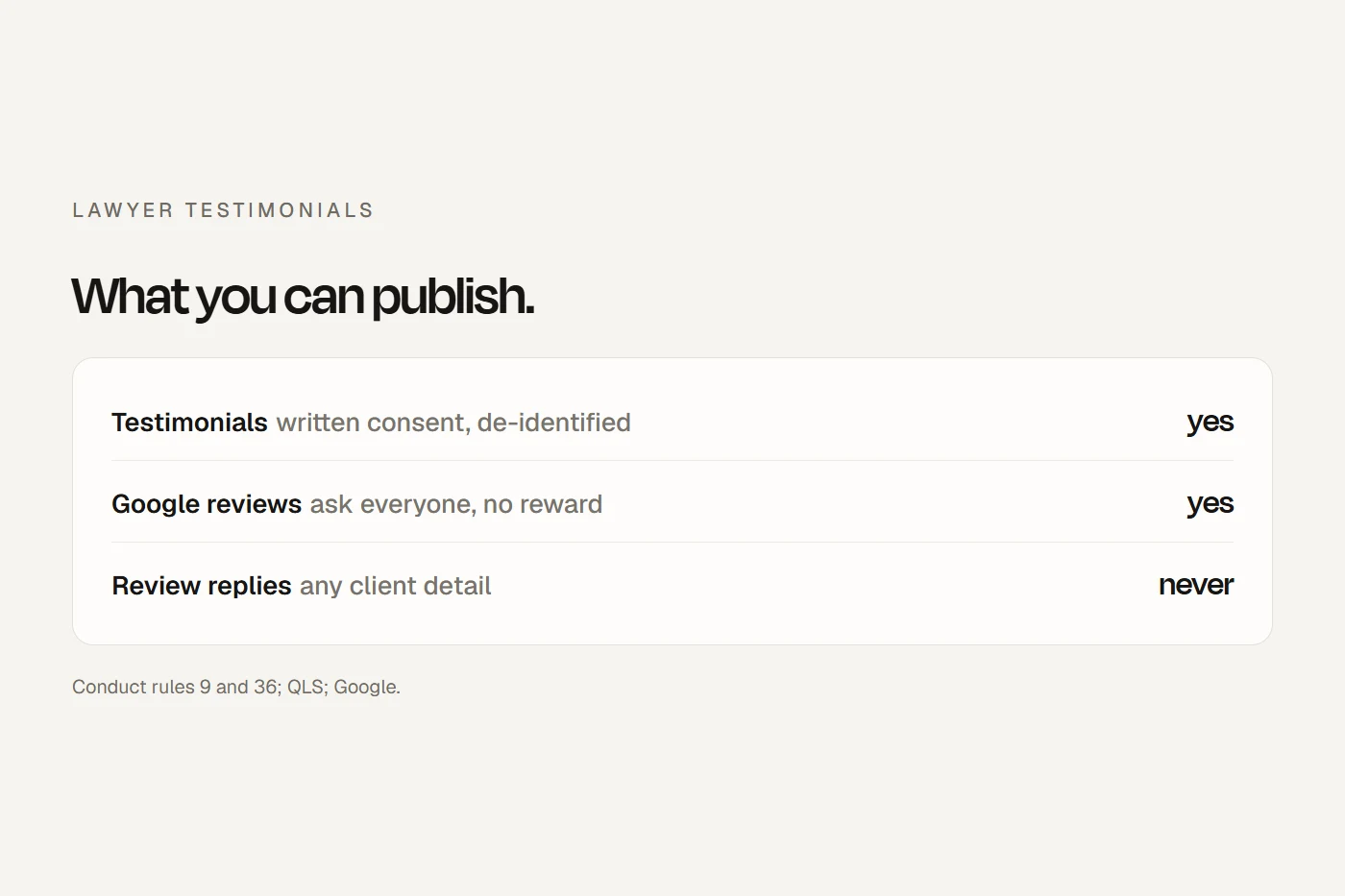
- Testimonials are allowedIf they're genuine, consented in writing and de-identified. No rule bans them for lawyers.
- Confidentiality is the real limitNothing about a client goes public without consent, including in a reply to a bad review.
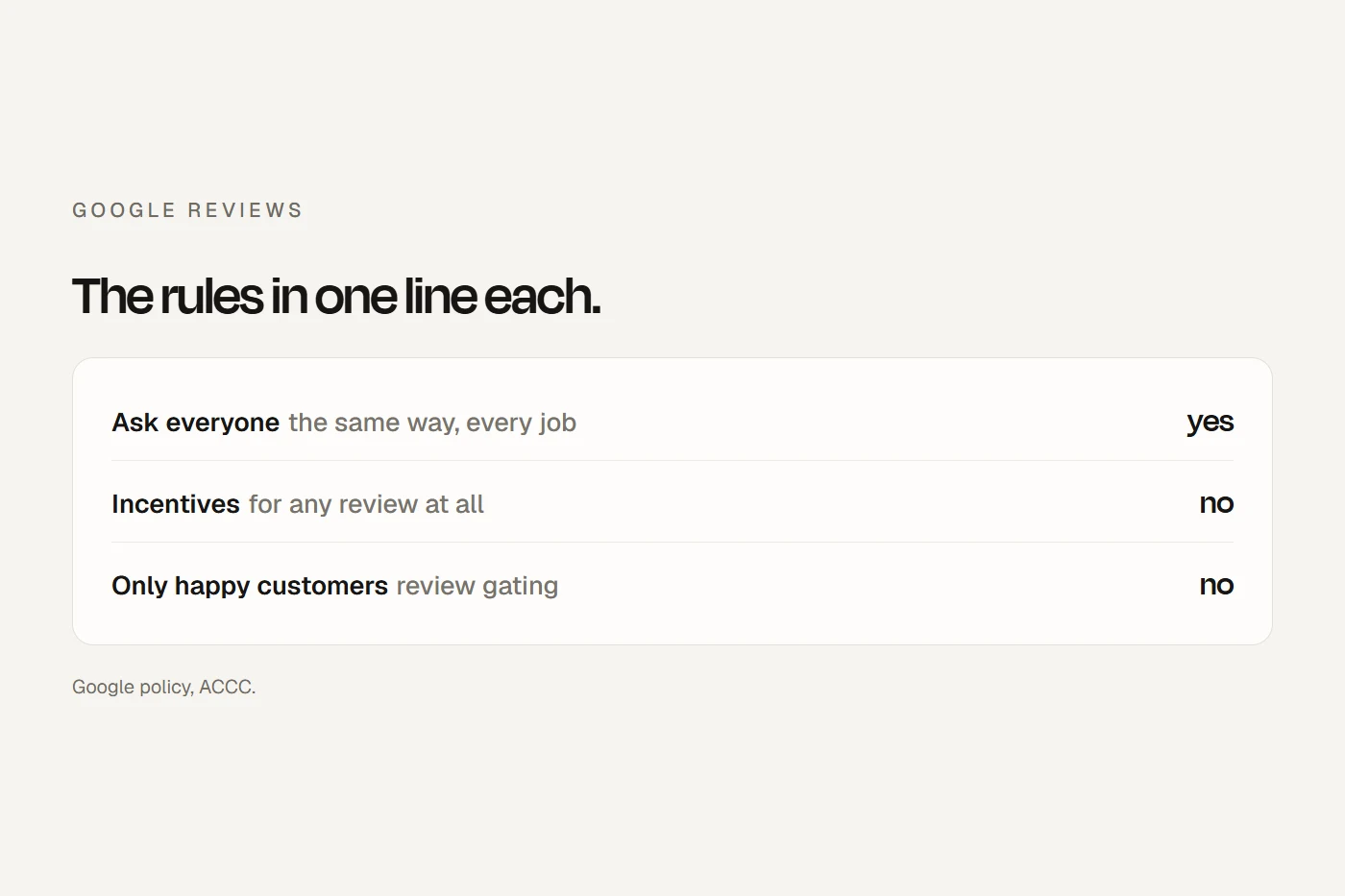
- Ask everyone, reward no oneGoogle bans incentives and asking only happy clients. Ask every client the same way when the matter ends.
How clients use reviews
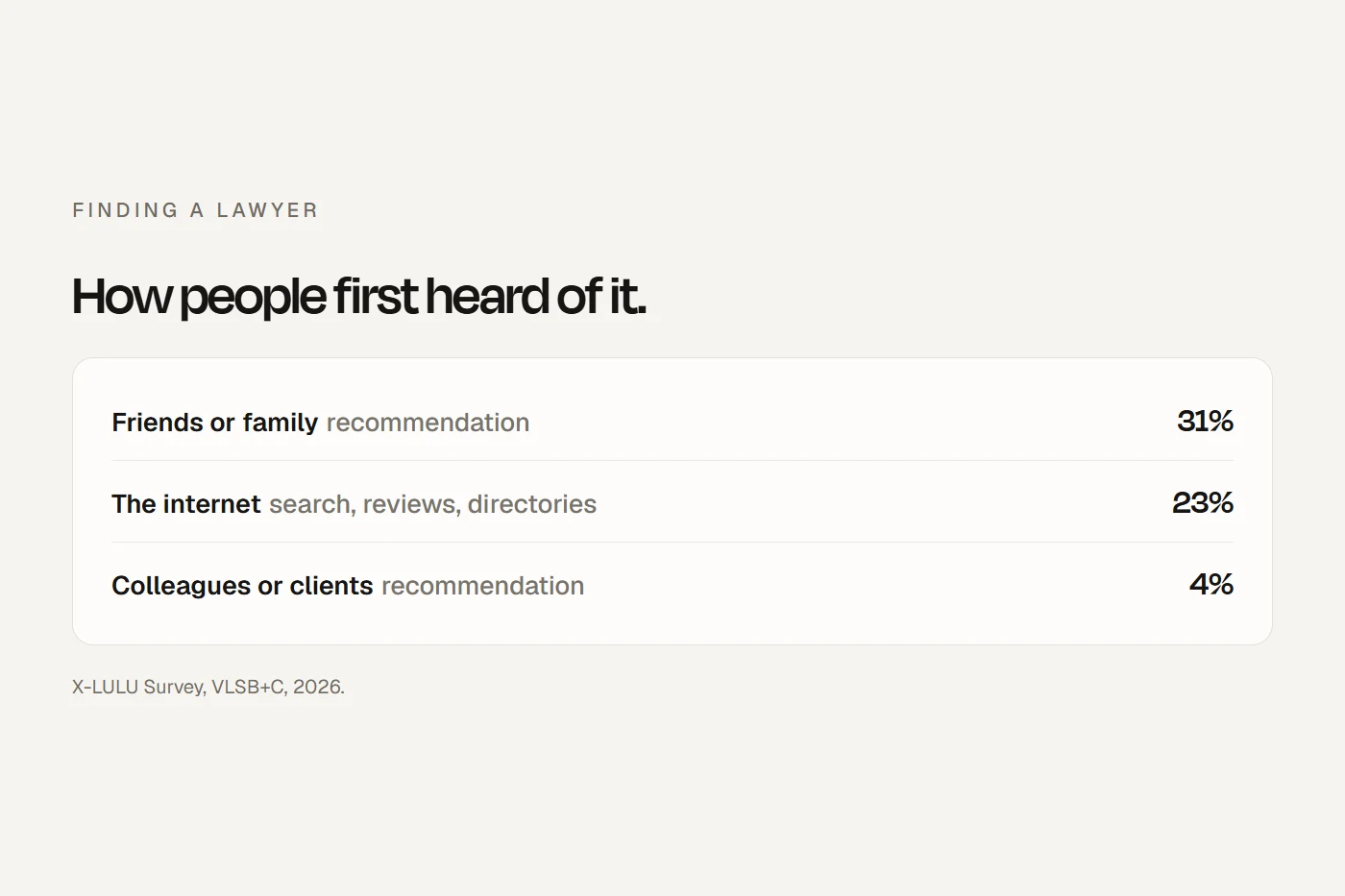
The legal services regulators' surveys of lawyer use found about one in five people who used a legal service went looking for reviews first, usually through Google, and that reviews were the most common thing people researched online. They also found that almost nobody who's unhappy posts a review: a few per cent of dissatisfied clients outside Victoria, and fewer inside it. So most reviews come from clients who were asked, which is why a steady, fair process for asking matters more than anything else on this page.
The rules that apply
Advertising: rule 36 of the Solicitors' Conduct Rules (rule 42 in Tasmania). Your advertising, marketing and promotion must not be false, misleading or deceptive, offensive, or prohibited by law. It doesn't mention testimonials, reviews or awards; they're judged by whether they mislead. You also can't convey a false impression of specialist expertise or use "accredited specialist" unless you are one.
Confidentiality: rule 9 (rule 13 in Tasmania). You can't disclose anything about a client's affairs unless the client authorises it or an exception applies. The Queensland Law Society says confidential information includes everything learned during the retainer, and may even cover information available from public sources. The Law Society of NSW treats even the fact of a retainer as needing consent to disclose. When a client dies, confidentiality passes to their legal personal representative, so an estate client's testimonial needs the executor's consent.
The Australian Consumer Law. A testimonial must be genuine; if one is challenged, the law presumes it misleading until you produce evidence it's real, so keep the client's original words. The ACCC says it's illegal to create or arrange fake reviews, reviews from staff or family without disclosing the connection mislead, and so does hiding or removing genuine negative reviews.
Law society guidance. The Queensland Law Society's guidance statement on social media and websites says: if you display testimonials, get the client's written consent first, de-identify all comments, don't post photos of clients, take particular care with children in family law matters, keep testimonials updated, and remove one from a client who later falls out with the firm. The LIV's guidelines say advertising shouldn't identify a client if that breaches confidentiality, or compare you with any named or identifiable solicitor. The Law Society of WA's guidelines say testimonials "should not be used" for personal injury work, and that advertising past success rates is "likely to be misleading".
Where your practice area changes the answer
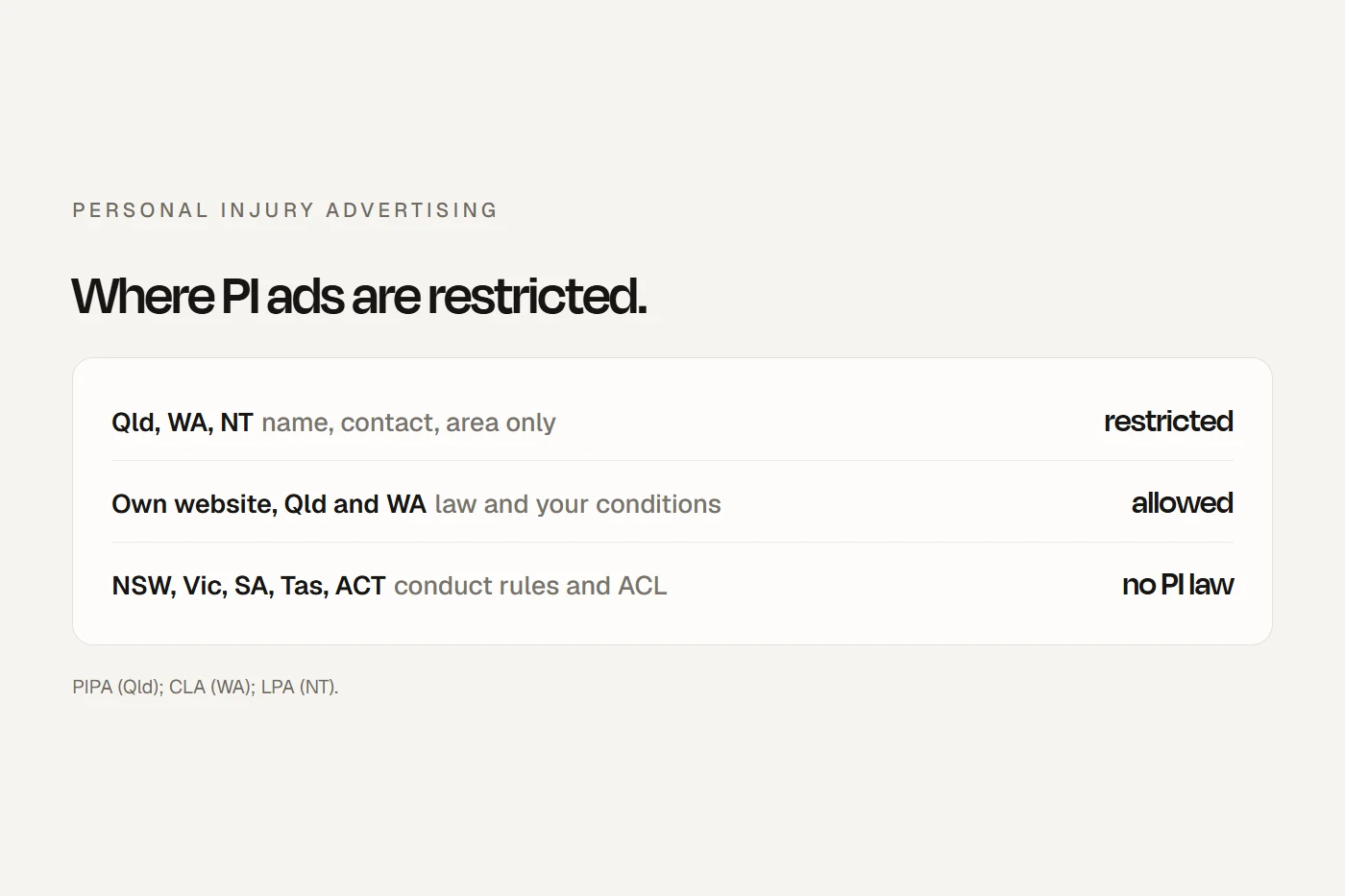
Personal injury in Queensland, WA and the NT. These places restrict personal injury advertising by law. In Queensland and WA your own website may explain the law and the conditions on which you act, and a Queensland tribunal has said statements that "simply promote the virtues of the firm" go beyond that. A testimonial praising the firm is likely outside it, and the NT has no website exception at all. A general firm can still use testimonials on its wills or conveyancing pages; keep them off anything that promotes injury claims. My guide to personal injury advertising rules covers each state.
Family law. The Family Law Act makes it an offence to publish an account of proceedings that identifies a party, a witness or someone connected with them, and identifying material includes an address, a workplace, property, or a connection to an identified person. "They got me the house in [suburb]" can do it. So can your reply to a review.
Criminal law. State laws ban identifying children in criminal proceedings and complainants in sexual offence cases, even years later, and suppression orders bind everyone, including on the internet. Rule 28 bars publishing anything about current proceedings that could prejudice a fair trial. A criminal client's testimonial should be about the service, never the charge, the result, a child or a complainant, and only once every appeal is finished.
How to use testimonials safely
Use the checklist below as the back page of your consent form. A testimonial about the service, such as how quickly you answered or how plainly you explained the process, is safer and more persuasive than one about a result, which implies the next client will get the same.
- Consent in writing Given after the matter ended, before anything is published.
- The client saw the exact wording Or approved any trimmed version.
- Where it will appear Website, Google profile, social media, ads: separate tick boxes, not in the costs agreement.
- They can withdraw And you'll remove it.
- De-identified No surname, suburb, employer, property, dates, court, other party or children.
- No photo Unless separately and expressly consented.
- Not a family law matter that could identify anyone No child or sexual offence complainant; no suppression order.
- The matter and any appeal are finished
- Not for personal injury advertising In Queensland, WA or the NT.
- Not paid for, discounted or scripted
- Says nothing you couldn't say yourself No "specialist" unless accredited, no "always wins", no guarantee.
- The client has capacity and understands
- Signed form and original words filed
- A review date set Remove it if the client falls out with the firm.
- Executor's consent for an estate matter
Attribute testimonials by matter type, like "A client, wills and estates". Case studies work the same way: describe the type of matter and what the firm did, not the person, with nothing from a live matter and nothing that could identify anyone in family or criminal work.
Asking for Google reviews
Google allows you to ask for reviews that reflect a genuine experience. It doesn't allow incentives of any kind, asking only clients you know are happy, discouraging negative reviews, asking for specific content, or reviews from people with a conflict of interest, which includes current or former staff and, in my reading, barristers you brief. The ACCC has said review tools that send happy customers to Google and unhappy ones to a private form can distort a business's reviews, and the Federal Court found a business misled consumers by keeping review requests from guests it expected to complain.
So put the same review request in every matter-closing letter or email, with your Google review link, no incentive and no suggested wording. Leave out anyone with a live appeal or a suppression order. On your website, a review widget should show the total count and say if it's showing selected reviews, with a link to all of them.
The defaults are made up. There's no Australian figure for how many law clients leave a review when asked, so use your own rate after a month of asking everyone.
Replying to reviews
This is where lawyers have actually been disciplined. A Queensland solicitor who publicly attacked a client and disclosed her past convictions was found guilty of professional misconduct, among other breaches. Another, replying to a client's Facebook post, named him as a client and discussed his criminal matter, and was found guilty of unsatisfactory professional conduct. A third posted disparaging Google reviews of another business from his firm's account and was found to have risked bringing the profession into disrepute.
The Law Society of NSW lists what to weigh before replying to a bad review: confidentiality, a possible conflict of interest if you're still acting, getting independent advice (especially about defamation), whether a reply could bring the profession into disrepute, and not saying anything about matters before a court. The Queensland Law Society says you can't use confidential information to rebut criticism on a review site, and that the usual approach is to thank the reviewer, acknowledge the complaint, say you're concerned they're not happy, and offer to talk off-forum. It also warns that unfounded threats of legal proceedings can be regarded as bullying.
A reply that neither confirms nor denies the person was a client is the safest pattern: "Thank you for taking the time to leave a review. Our duty of confidentiality means we can't discuss any matter here. If you'd like to talk, please call [first name] on [number]." The same applies to positive reviews: "glad we got your conviction overturned" breaches confidentiality too. For a review you think is fake, report it through Google before anything else.
Awards, rankings, "best" and "specialist"
Rankings and awards are fine if you describe them accurately: the publication, category, practice area and year. The publishers' own rules are a sensible minimum. Best Lawyers says you're not permitted to say you're a "best lawyer" or suggest its award guarantees a result, and its logos must be licensed. Doyle's says its rankings can't be bought, and they're peer opinion, with ranked lawyers able to buy a recognition banner. So "Recommended, family law, Doyle's Guide [year]" is accurate; "award-winning, Sydney's best family lawyer" isn't, and the LIV's guidelines discourage comparisons with identifiable solicitors.
A client's words become your advertising once you publish them. "The best family law specialist in town" in a testimonial claims specialist expertise, so only use it if the lawyer is accredited, and in Queensland the Legal Services Commission treats "specialist" itself as covered by the rule. Success rates like "we win 95% of our cases" are likely to mislead, because many matters settle and past results imply future ones. A true count of matter types, like "over 300 wills a year", is the safer kind of number.
Can I do this?
Tap a card to see the verdict.
Your first 90 days
Month 1: clean up. List every testimonial, case study and result on your site, Google profile, LinkedIn and Facebook, and check consent, de-identification and whether the matter is finished. Remove anything without consent, anything that could identify people in family proceedings, any criminal result involving a child or complainant, and any testimonial on personal injury pages in Queensland, WA or the NT. Take out success rates, "best" and unaccredited "specialist", including in client quotes. Check award badges are accurate and current. Turn off Facebook reviews or set up moderation.
Month 2: set up asking. Adopt the consent form and the reply template, and name who may reply for the firm and who checks replies before they go up. Get your Google review link and add the request to every matter-closing letter.
Month 3: keep it honest. Reply to every review that says something, using the checker. Report reviews that breach Google's policies. Fix your website review widget. Collect a couple of consented testimonials about the service, and diary a regular review of all of them.
Questions I get asked
Can lawyers advertise in Australia?
Yes. Advertising must not be false, misleading, deceptive or offensive under rule 36 and the consumer law. Queensland, WA and the NT also restrict personal injury advertising.
Can lawyers use client testimonials?
Yes, if they're genuine, you have the client's written consent and they're de-identified. Keep them off personal injury pages in Queensland, WA and the NT, and away from anything that could identify people in family or criminal matters.
Can a law firm ask clients for Google reviews?
Yes. Ask every client the same way, with no incentive and no suggested wording. Google bans asking only happy clients.
How should a lawyer reply to a bad review?
Briefly, without confirming the person was a client or mentioning any matter, and offer a call. Don't attack the reviewer or threaten proceedings without independent advice.
Can I say I'm the best lawyer in my city?
No. It's an unverifiable comparison, and ranking publishers themselves forbid "best lawyer" claims. Describe any ranking accurately instead.
Do the health testimonial rules apply to lawyers?
No. The ban on testimonials is in the health practitioners' National Law. Lawyers are governed by the conduct rules and the consumer law.
About this guide
Written by Joseph Alzein, founder of bdog. I build websites for law firms and other professional practices. Sources were checked on 12 October 2026. This is general information, not legal advice; ask your law society's ethics line about a specific question. I've left out penalties.
Main sources:
- Queensland Law Society: guidance statement 24, social media and websites
- Queensland Law Society: negative online reviews
- Queensland Law Society: LinkedIn endorsements
- Law Society of NSW: ethics FAQs
- Law Institute of Victoria: advertising guidelines
- Law Society of WA: ethical and practice guidelines
- ACCC: online reviews
- Google: Maps user contributed content policy
- Queensland tribunal decision on social media comments, 2024
- Queensland tribunal decision on Google reviews, 2026
- Best Lawyers: publicising guidelines
- Doyle's Guide: methodology
- Legal services regulators: lawyer use survey outside Victoria