Personal injury advertising rules by state
What applies where: the three places with personal injury advertising laws for lawyers, what your own website can say, what two Queensland tribunal decisions mean, claim farming and referral fees, buying leads, and Google’s and Meta’s own rules. With a state picker, a channel table, a cost per signed matter calculator, a sorter and a 90-day checklist.
On This Page
If you run a personal injury practice, where you practise decides what you can advertise. Queensland, Western Australia and the Northern Territory have laws aimed at personal injury advertising by lawyers. NSW used to, and still has some of the most cited out-of-date blog posts saying it does. Every state has the conduct rules and the consumer law, and several now ban claim farming and paid referrals. This guide sets out what applies where, what your website and ads can say in each state, the line between advertising and buying leads, and how Google's and Meta's own rules sit on top. It draws on each state's legislation, two recent Queensland tribunal decisions and law society guidance. It's general information, not legal advice for your firm.
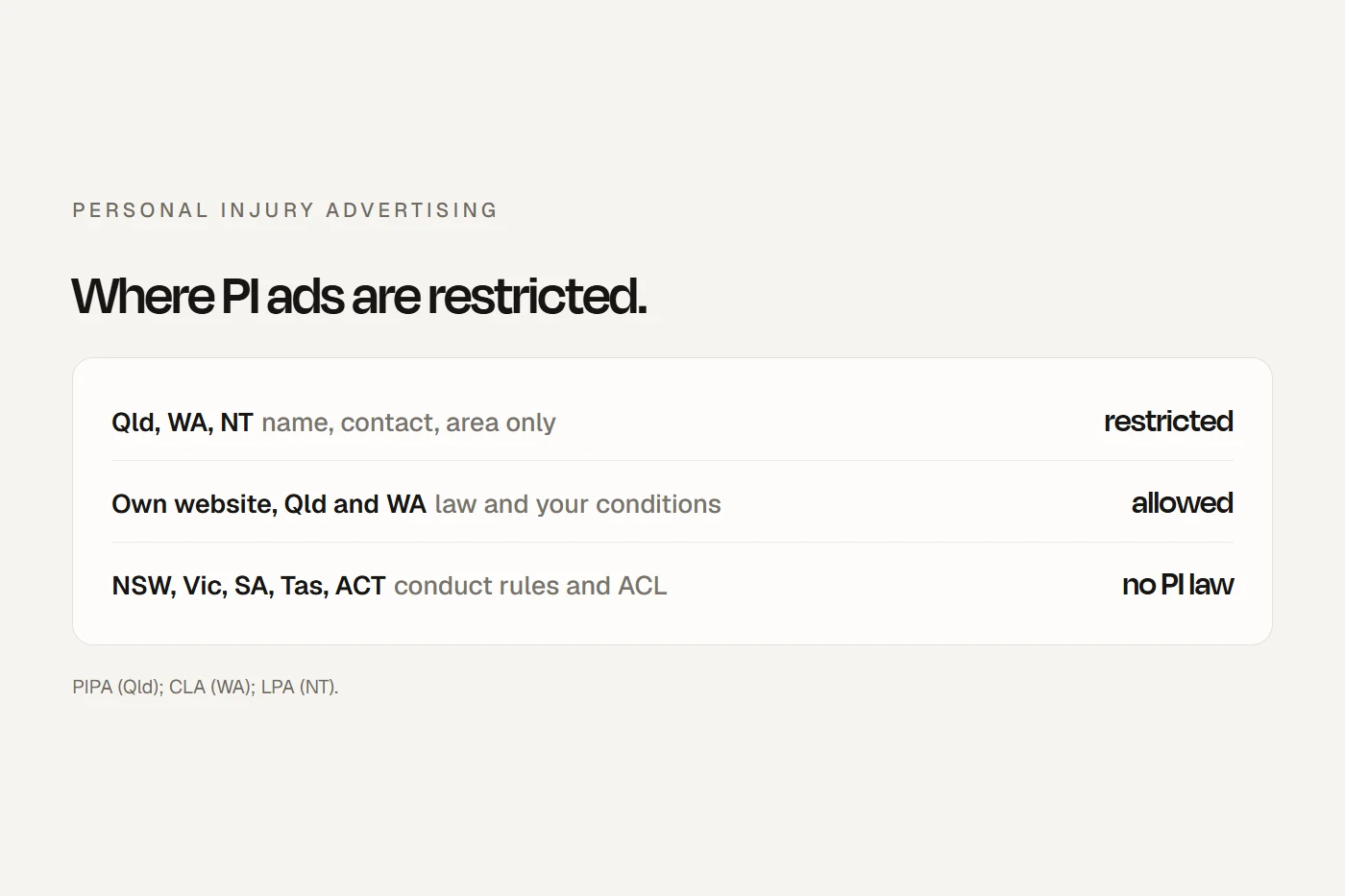
- Three places restrict PI adsQueensland, WA and the NT. Outside your own website, an ad there can say only your name, contact details and area of practice.
- Your own site can explain, not promoteIn Queensland and WA, your website may explain the law and your conditions, including "no win, no fee". Praising the firm goes too far.
- Advertising isn't buying leadsFlat-fee advertising is fine. Paying per injured enquiry looks like a paid claim referral, which several states ban.
How injured people find a lawyer
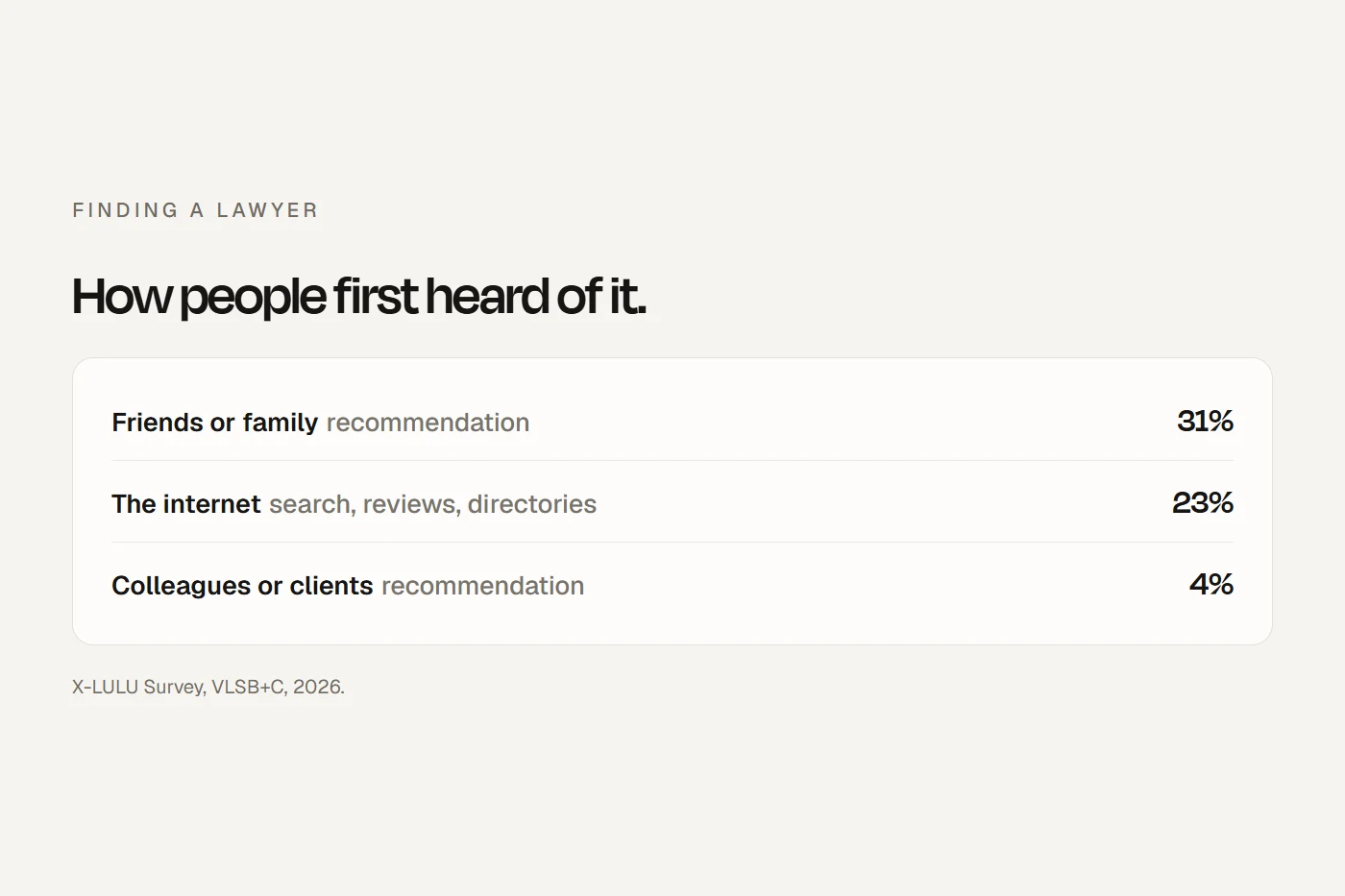
I couldn't find an Australian survey of how injured people choose a personal injury lawyer. The nearest is the legal services regulator's survey of lawyer use outside Victoria: injuries and illness were the second most common kind of dispute people used legal services for, recommendations from friends or family were the most common way people first heard of a lawyer, and nearly half had used the internet to research services. No win, no fee arrangements were mostly associated with injury matters.
Not everyone uses a lawyer at all. Queensland's motor accident regulator says the share of claimants who lodge directly with the insurer is now closer to a third, and that people often seek legal help when a claim becomes complex. That's who your website is talking to: someone who has started a claim, or is about to, and wants to know how it works and what it will cost.
The rules that apply everywhere
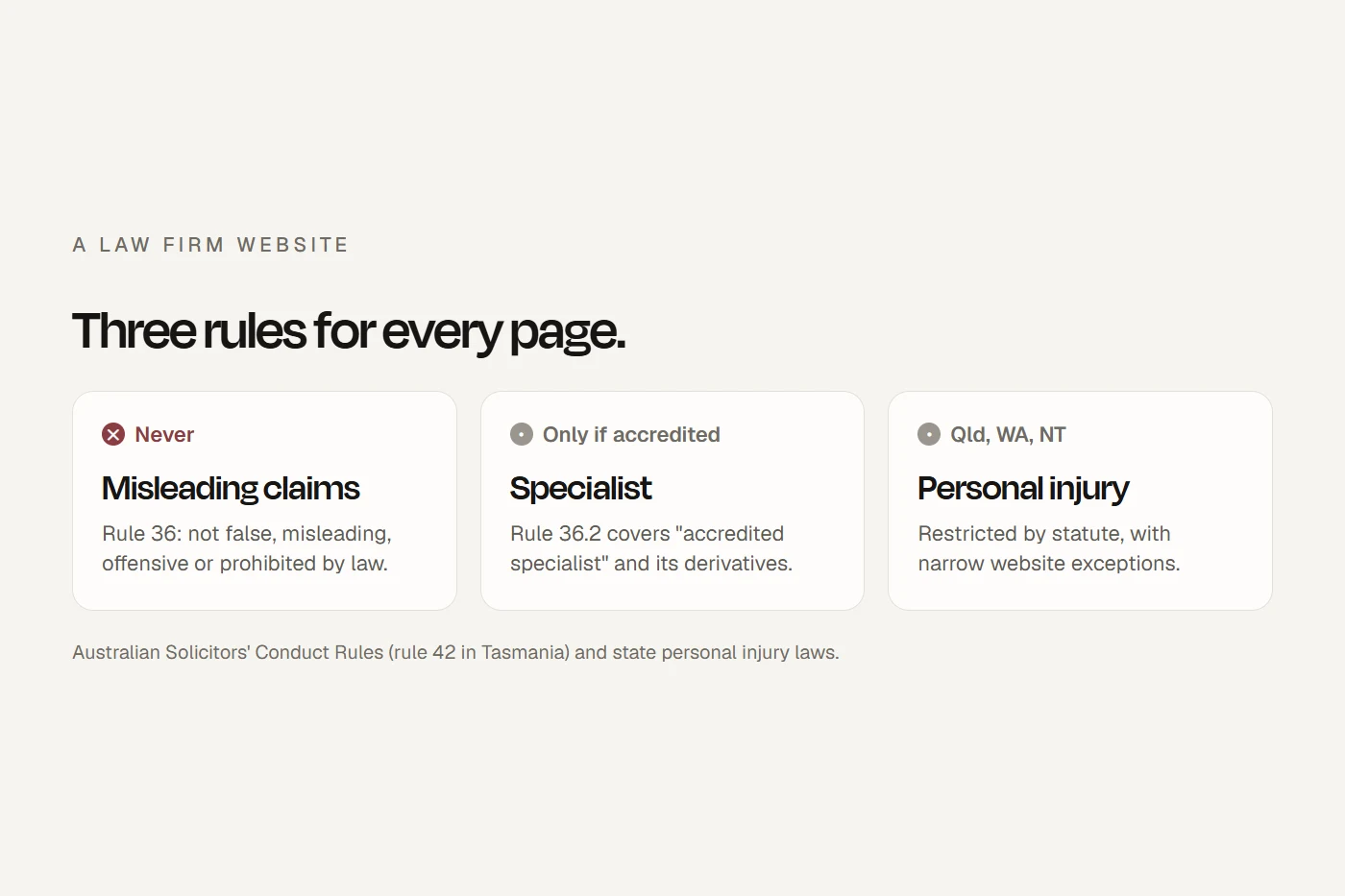
- Rule 36 of the Solicitors' Conduct Rules (rule 42 in Tasmania): advertising must not be false, misleading or deceptive, offensive, or "prohibited by law". That last part pulls the state personal injury laws into the conduct rules.
- Rule 34.2: you must not seek instructions in a way likely to oppress or harass someone who, because of recent trauma or injury, is at a significant disadvantage. Think hospital approaches, crash scenes and cold messages.
- Rule 12: referral payments need overt, prior disclosure to the client, where they're allowed at all.
- The Australian Consumer Law: no misleading claims, and testimonials must be genuine.
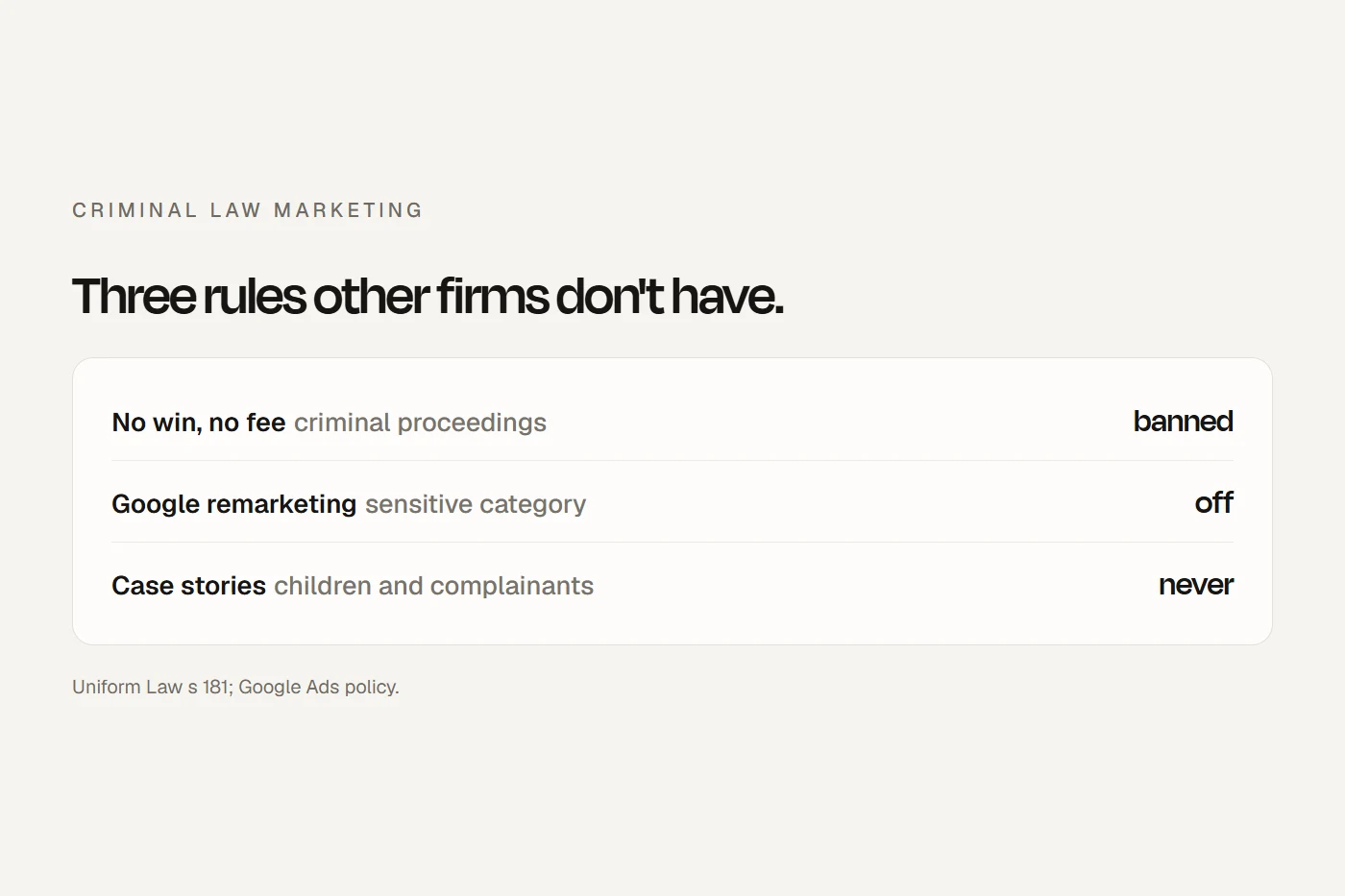
- "No win, no fee" is a costs promise. Conditional costs agreements are allowed for personal injury work, but contingency fees calculated on the settlement are prohibited, and disbursements can be payable whatever the outcome. The Queensland Law Society says using the phrase without qualification is likely to mislead unless the client truly pays nothing either way, and that "conditions apply" on its own "is unlikely to be enough".
What applies in your state
Queensland
- PI advertising law
- Personal Injuries Proceedings Act 2002, sections 62 to 69. It binds anyone, not just lawyers
- Ads
- Name, contact details and area of practice only, by an allowed method: print, an independent directory, signs, leaflets. Not radio, TV or cinema, and not in or on a hospital, which includes medical centres, physio rooms and dental surgeries
- Your own website
- May explain how negligence law works and your conditions for taking on work
- Claim farming
- Paid claim referrals and paid cold contact are banned under all three schemes: personal injury, motor accident and workers compensation. Every claim needs a law practice certificate
- Ask
- Legal Services Commission; QLS Ethics Centre
Western Australia
- PI advertising law
- Civil Liability Act 2002, Part 3, still in force under the Uniform Law
- Ads
- Name, contact details and area of practice, speciality or accreditation only, by an allowed method. Not in or on a hospital
- Your own website
- May explain how negligence law works and your conditions for taking on work
- Touting
- No touting at crash scenes or hospitals, and no paying for touting. A health worker may give out a firm's details only alongside at least three competing firms
- Ask
- Legal Practice Board of WA; Law Society of WA
Northern Territory
- PI advertising law
- Legal Profession Act 2006, Part 3.2
- Ads
- Name, contact details and area of speciality only, by an allowed method. Not in or on a hospital
- Your own website
- The Act has no own-website exception, so check with the Law Society NT before your injury pages go further than name, contact and speciality
- Touting
- No touting at crash scenes or hospitals, and no rewarding anyone for soliciting claims
- Ask
- Law Society NT
New South Wales
- PI advertising law
- None for lawyers. The Law Society of NSW confirms the old ban on advertising personal injury and work injury services went when the Uniform Law started
- Claim farming
- The Claim Farming Practices Prohibition Act 2025 bans paid cold contact and paid referrals for civil claims such as public liability and medical negligence. It doesn't cover motor accident or workers compensation claims, and it expressly allows advertising a law practice to the public
- Motor accidents
- A lawyer must not give anything in return for a claimant being referred to them
- Workers compensation
- The advertising rules apply to non-lawyer agents, including lead sites that pass enquiries to lawyers, not to lawyers
- Ask
- Law Society of NSW
Victoria
- PI advertising law
- None for lawyers
- Claim farming
- Touting rules in the workers compensation Act target non-lawyer agents on hearing loss claims
- Ask
- Victorian Legal Services Board and Commissioner; Law Institute of Victoria
South Australia
- PI advertising law
- None for lawyers
- Claim farming
- None found
- Ask
- Law Society of SA
Tasmania
- PI advertising law
- None for lawyers. Rule 42 of the Tasmanian conduct rules applies
- Ask
- Law Society of Tasmania
Australian Capital Territory
- PI advertising law
- None for lawyers
- Motor accidents
- It's an offence for a lawyer to give anything in return for a referral of a motor accident claimant, other than reasonable hospitality
- Ask
- ACT Law Society
Older Queensland Commission guidance treated a website viewed in Queensland as published there, so a firm in another state whose site targets Queensland clients should read the Queensland rules too.
Queensland, in detail
Queensland's Act catches any statement that may encourage someone to make an injury claim or to use a particular firm, even if it's about other things too. Outside the allowed methods, the only permitted statement is your name, contact details and area of practice. The Act's own example of a breach is "advertising personal injury services on a 'no win, no fee' or other speculative basis".
Your own website is the exception: it may carry statements about how the law of negligence works and a person's rights under it, and about the conditions on which you'll act. A 2026 Queensland tribunal decision tested where that line sits:
- The website is judged as a whole, not page by page.
- "No win, no fee" on your own site is a statement about the conditions on which you act, so it's allowed there.
- A free consultation is also a condition, so that's allowed too.
- What breached the Act were statements that "simply promote the virtues of the firm": an About page selling the firm, comparisons with bigger firms, and a repeated "we stand by you".
A 2025 decision went further: a "No Win, No Fee" billboard on a building treated as a hospital and the firm's website were professional misconduct, and its Instagram and LinkedIn posts were unsatisfactory professional conduct. The parties agreed that kind of advertising is quite prevalent in Queensland. The Legal Services Commission says its educative approach "has run its course", and it's reviewing its published guidance, so check its page before you rely on anything older.
Social media isn't your website, and paid social isn't one of the allowed methods, so my reading is that personal injury ads on Facebook or Instagram are off the table in Queensland. Older Commission guidance treated Google Ads like print: name, contact and area, with the landing page held to the same rules. Ask the QLS Ethics Centre before you run either.
Claim farming, referral fees and buying leads
Advertising and buying leads are different things in law. Queensland says advertising made to the public, such as an ad in a sporting club's newsletter, isn't a claim referral, but paying anything for a claim referral is an offence. NSW's claim farming Act says the same for civil claims, and defines a referral to include passing on a claimant's personal details.
So my reading, which you should check with your law society: paying a lead seller per injured enquiry, where they collect the person's details and pass them to you, is paying for a claim referral. That's very likely an offence in Queensland under all three schemes, for NSW civil and motor accident claims, and for ACT motor accident claims. A flat monthly fee for a directory listing or an ad that shows your firm to the public is the carved-out case. Paying Google or Meta per click is paying for advertising to the public, though no regulator has said so in terms.
Cold contact is caught too. In Queensland and for NSW civil claims, contacting people to solicit a claim is an offence if anyone gets paid because of it, whether by phone, email or message. Contacting your own past clients is allowed where you reasonably believe they won't object, and the Spam Act still needs their consent for marketing messages.
What each channel can carry
| Channel or content | Qld | WA | NT | Other states |
|---|---|---|---|---|
| Name, contact details, "personal injury lawyers" | Yes, by an allowed method | Yes | Yes | Yes |
| Own website: how claims and negligence law work | Yes | Yes | Check | Yes |
| Own website: "no win, no fee" with what the client still pays | Yes | Likely yes, as a condition | Check | Yes, if not misleading |
| Own website: "we fight for you", "expert team", comparisons | No | Likely no | No | Yes, if true |
| Testimonials and settlement amounts | Likely no | Likely no | No | With consent, genuine, and no implied promise |
| "No win, no fee" in Google Ads, billboards or print | No | No | No | With the conditions spelled out |
| TV and radio | No | No | No | Yes |
| Facebook, Instagram, LinkedIn posts and paid social | Avoid | Check | Check | Yes, within Meta's rules |
| Google Business Profile: name, contact, category | Yes | Yes | Yes | Yes |
| Ads in or near hospitals and medical centres | No | No | No | Not banned by statute; rule 34.2 applies |
Scroll the table sideways to see every column.
"Likely" and "check" mark my reading where no tribunal or regulator has ruled. In the other states, testimonials should be genuine, consented and de-identified, and a settlement figure implies a result the next client may not get.
Google and Meta add their own layer. Google bars advertiser-curated audiences, including remarketing lists, for sensitive interest categories such as "Health" and "Abuse and trauma"; it doesn't say whether injury law ads fall in them, so expect remarketing may be limited. Meta doesn't allow ads that assert or imply the viewer's health, so "Injured at work?" is at risk of rejection even where state law allows it, while "Workers compensation lawyers in [suburb]" is the safer pattern. On Google Business Profile, use your real firm name with no keywords; lead generation agents aren't eligible for a profile.
What does a signed matter cost you?
Put in your own numbers. The defaults are made up, not industry figures, and there's no fee default because personal injury costs are regulated differently by state and scheme.
On the made-up figures, $3,000 brings 40 enquiries at $75 each. Half are in scope and a quarter of those sign, so 5 matters at $600 each. The cash point matters as much: you pay for the advertising months or years before the fees arrive.
Can I say this?
Tap a card to see the verdict.
Your first 90 days
Tick items off as you go; the list remembers your progress on this device.
- Month 1: work out which rules apply Queensland, WA, the NT, or the conduct rules only, for every state your site targets.
- Month 1: Qld and WA website rewrite Injury pages explain the law and your conditions; firm-praise and comparisons removed.
- Month 1: one conditions page "No win, no fee" and free consultation, with disbursements and the other side's costs explained.
- Month 1: testimonials and settlement figures Removed in Qld and WA; elsewhere only genuine, consented and de-identified.
- Month 1: every ad and listing checked Name, contact and area only in Qld, WA and the NT, and nothing in or on hospitals or medical centres.
- Month 2: Google Business Profile Real firm name, personal injury category, no keywords in the name.
- Month 2: Google Ads by state Restricted states get name, contact and area, and the landing page is your compliant site.
- Month 2: Meta No PI ads in Queensland; elsewhere, copy that doesn't imply the viewer is injured.
- Month 2: lead sources reviewed Pay-per-enquiry deals cancelled where they're banned, flat-fee listings kept.
- Month 3: Qld law practice certificates A process for every claim, at retainer, settlement and sale.
- Month 3: staff rule No approaches at hospitals or crash scenes, no cold messages to non-clients.
- Month 3: review requests Every finished client, no incentives.
- Month 3: a six-monthly check Queensland's rules are under review, so check the Commission's page twice a year.
Questions I get asked
Can personal injury lawyers advertise in Australia?
Yes. In Queensland, WA and the NT, ads outside your own website are limited to your name, contact details and area of practice, by allowed methods. The other states have no personal injury advertising law for lawyers, but the conduct rules and consumer law apply.
Can I advertise "no win, no fee" in Queensland?
Only on your own website, as a statement of the conditions on which you act. Spell out what the client still pays. In any other ad it breaches the Act, which uses "no win, no fee" as its own example.
Is personal injury advertising still banned in NSW?
No. The Law Society of NSW says the old ban went when the Uniform Law started. NSW does ban claim farming for civil claims and paid referrals for motor accident claims.
Can I use Facebook ads for personal injury in Queensland?
I wouldn't. Social media isn't your website and paid social isn't an allowed method, and a 2025 tribunal decision treated a firm's Instagram and LinkedIn posts as unsatisfactory professional conduct.
Can I buy personal injury leads?
Paying per injured enquiry looks like paying for a claim referral, which is banned in Queensland, for NSW civil and motor accident claims, and for ACT motor accident claims. Flat-fee advertising to the public is the safe version.
Can I show settlement amounts on my website?
In Queensland and WA it's likely outside what your website may say. Elsewhere it needs the client's consent and risks implying a result the next client may not get.
About this guide
Written by Joseph Alzein, founder of bdog. I build websites for law firms and other professional practices. Sources were checked on 12 October 2026. This is general information, not legal advice for your firm; check with your law society before you run an ad. I've left out penalties and costs caps.
Main sources:
- Personal Injuries Proceedings Act 2002 (Qld)
- Queensland Civil and Administrative Tribunal decision, 2026
- Queensland Civil and Administrative Tribunal decision, 2025
- Queensland Law Society: advertising personal injury work
- Queensland Law Society: can I advertise no win no fee?
- Legal Services Commission Queensland: claim farming
- Civil Liability Act 2002 (WA)
- Legal Profession Act 2006 (NT)
- Law Society of NSW: advertising legal services
- Claim Farming Practices Prohibition Act 2025 (NSW)
- Motor Accident Injuries Regulation 2017 (NSW)
- Google Ads: restricted targeting in personalised advertising
- Meta: privacy violations and personal attributes