Martial arts school marketing and software in Australia
Who trains and why, what you can and can’t promise, memberships people trust, state fitness codes, waivers, vouchers, the channels that bring families and adults in, and the software built for schools. With a wording check, a membership sorter, a retention calculator and a 90-day plan.
On This Page
This guide is for owners of karate, taekwondo, BJJ, judo, Muay Thai, MMA and kids programs who want more students and fewer cancellations, and want to do it within Australian rules: membership law, state fitness codes, injury waivers, activity vouchers, child safety and direct debit. It covers who trains and why, what you can and can't promise, how to write a membership people trust, the channels that bring families and adults in, and the software built for schools like yours. It's general information, not legal advice.
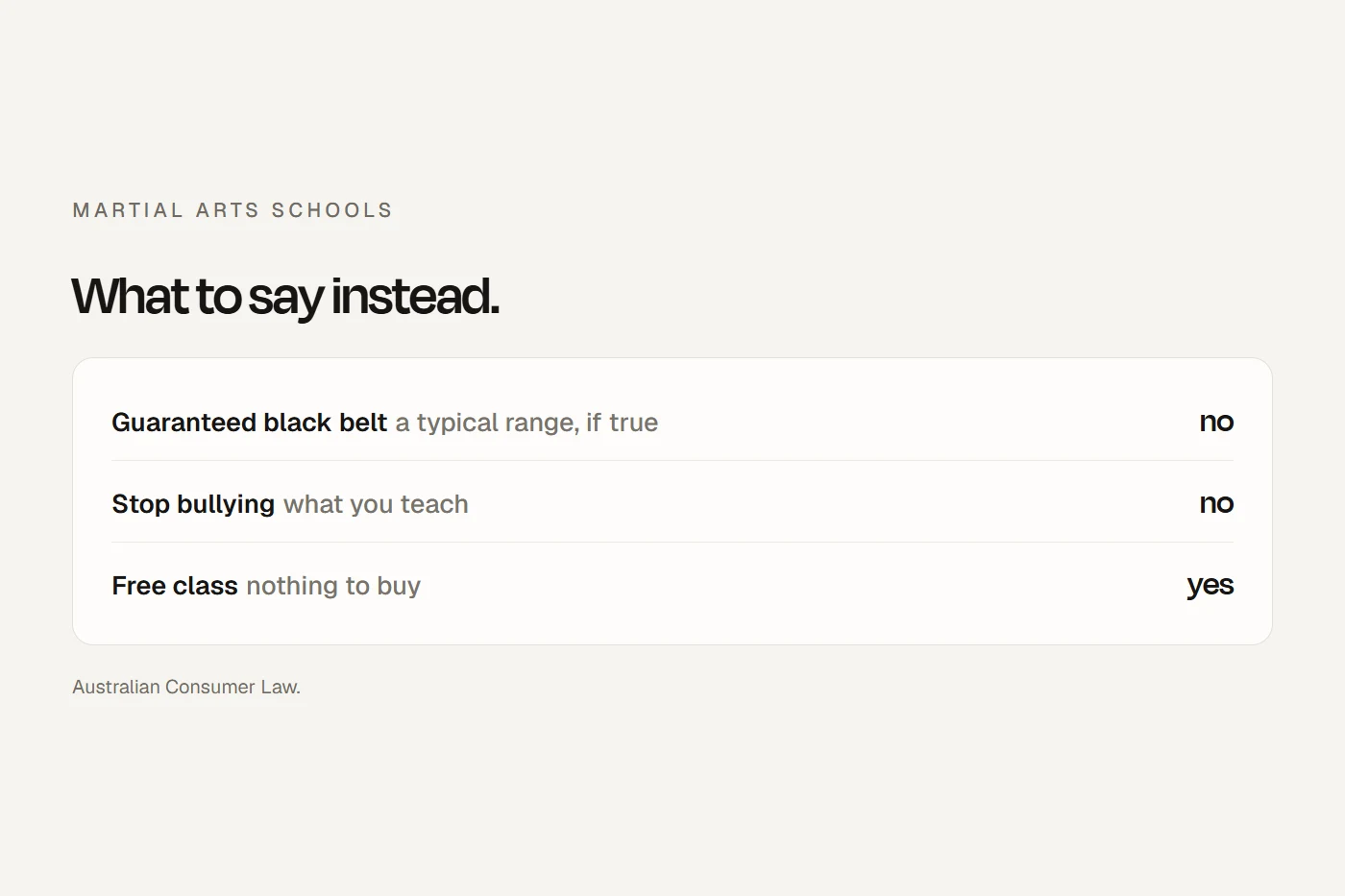
- Sell the program, not a result"Guaranteed black belt" and "stop bullying" are promises the law makes you back up. Say what you teach and how often.
- Make leaving as easy as joiningPlain terms, the total price, a freeze policy and a simple way to cancel. Hard exits are an ACCC priority, and members can stop a bank debit through their bank anyway.
- Count free classes against cancellationsThe calculator below shows how many free classes a month you need just to stand still.
Who trains, and why
The Australian Sports Commission's AusPlay survey gives the shape of the market. About one in 50 children does karate outside school, and about one in 40 boys. Taekwondo, jujitsu (AusPlay has no separate Brazilian jiu-jitsu row) and general "martial arts" each reach a smaller share. Peak ages are 5 to 11, and numbers fall away at 12 to 14 for karate and taekwondo, which is where retention gets hard. Boys outnumber girls nearly two to one in karate and taekwondo.
For children, martial arts is mostly a business market. About half or more of the children doing karate, taekwondo, jujitsu or general martial arts train through a private or commercial business rather than a club. Judo is the exception, mostly club-run. So a kids program competes with other businesses on how it looks and how easy it is to start, not only on tradition.
Adults spread across more styles. Boxing is the biggest combat activity, much of it in gyms. Jujitsu skews male and 25 to 44, and Muay Thai skews 18 to 24. An older ASC report on martial arts found adults' first reason to train was physical health and fitness, then fun, then mental health, and the main reason they stopped was not having enough time.
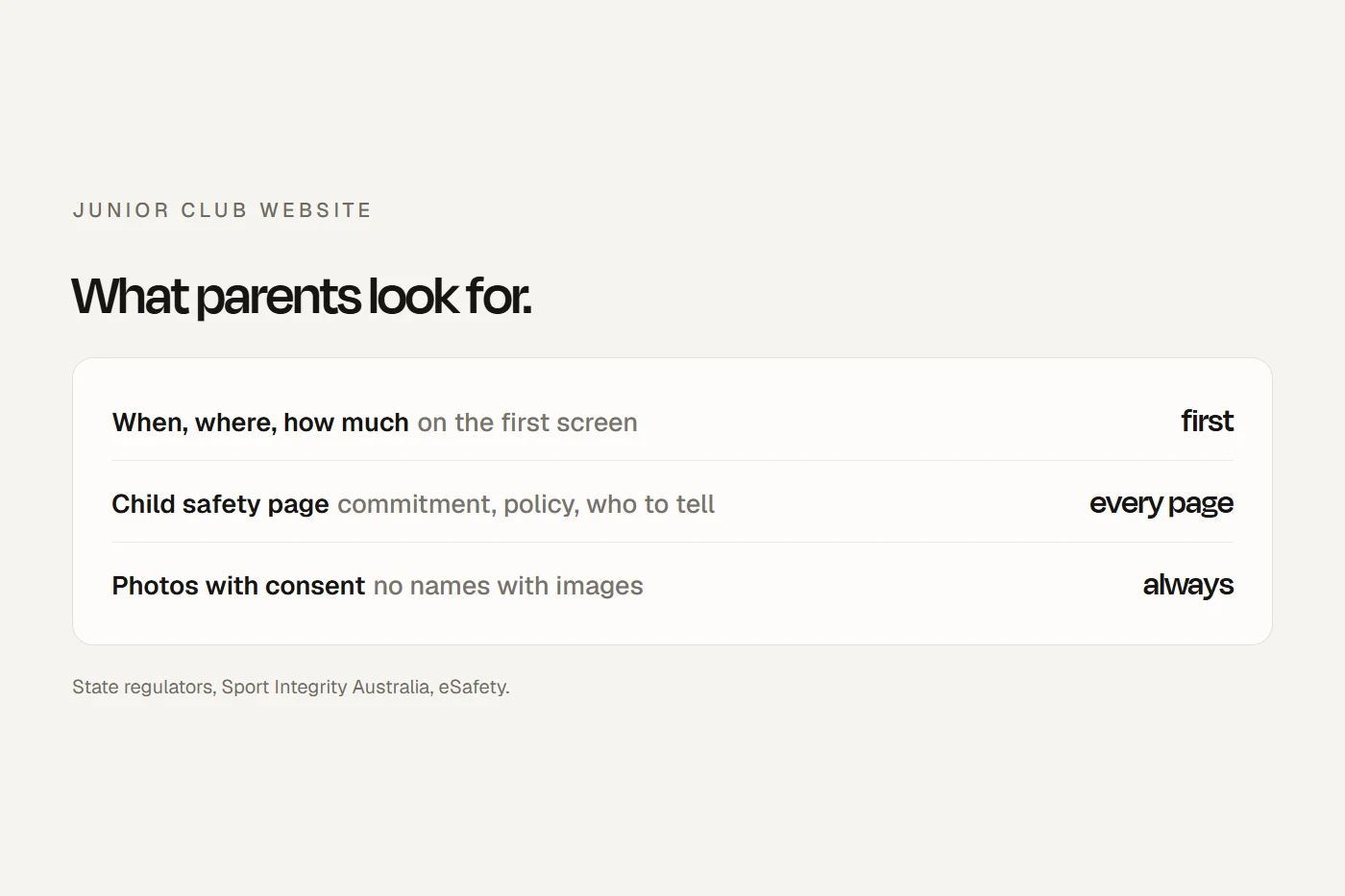
Parents in ASC research respond to good coaching, free trials, and clear information about the commitment asked of them and their child. The Australian Human Rights Commission tells parents to visit a provider's website and look for a child safety policy, a code of conduct, Working with Children Checks, a photo policy, and how to raise a concern.
What you can promise
The Australian Consumer Law treats a claim about the future as misleading unless you had reasonable grounds for it, and you carry the burden of showing you did. That catches a lot of martial arts copy. "Black belt in three years, guaranteed" depends on the student, not you. "Stop bullying" promises a result. And if a parent tells you the result they want ("I want him to stand up for himself"), consumer law adds a guarantee that your service will reasonably be expected to achieve it. Promise the program: what's taught, how often, and by whom.
Instructor credentials work the same way. There's no single national licence to teach martial arts. National bodies run coach frameworks (Judo Australia and Australian Taekwondo both do), and the Martial Arts Industry Association runs an industry accreditation scheme across styles. MAIA itself says "government accreditation" is not strictly a correct term. Name the real credential, its level and the body, so a parent can check it.
It catches common patterns, not everything.
Memberships people trust
This is where the law bites hardest. A standard membership is a standard form contract, so unfair terms in it can attract penalties. The ACCC's current priorities name harmful cancellation terms, including automatic renewals, early termination fees and terms that stop people cancelling. The terms to watch in martial arts are long "black belt" contracts with no exit except paying out the term, cancellation only in person when sign-up was online, automatic renewal without notice, the school able to change class times or prices while members can't leave, and no freeze for injury or moving away.
Three more things to know.
- Members can stop a bank direct debit through their own bank. The Banking Code requires banks to process the request promptly. It doesn't end the contract, but if your process is harder than a call to the bank, people will use the bank and you lose the conversation.
- "No contracts" has to mean it. The ACCC has warned gyms that "No Contracts" is likely misleading if members must give written notice, pay through a notice period or pay anything up front that isn't refunded.
- A new subscription law has passed. Rolling memberships, free intro periods and discounted intros are subscription contracts under it. Schools will have to show the key terms up front, warn people before a free period turns paid, and make cancelling easy to find and straightforward.
Sign-ups away from the dojo
A membership sold at a shopping centre stall, a market, a school fete or after you phone someone who didn't ask to be called is likely an unsolicited consumer agreement. The buyer then has 10 business days to cancel, and there are rules on hours and what you must tell them. A family who walks in, or fills in your web form asking you to call, isn't covered.
State fitness codes
| State | Mandatory fitness code? | Does it reach martial arts? |
|---|---|---|
| Qld | Yes: the Fitness Industry Code of Practice | Not named in the code, but the Queensland Government lists martial arts clubs among the fitness providers it covers. Treat a commercial school as covered |
| ACT | Yes: a new Fitness Industry Code of Practice | Not named. Ask Access Canberra |
| WA | Yes | No. The code expressly excludes training for martial arts |
| NSW, Vic, SA, Tas, NT | None found | The Australian Consumer Law still applies |
Scroll the table sideways to see every column.
Where Queensland's code applies, it asks for a 48-hour cooling-off period, a written statement of every fee before signing, a signed written agreement that says how to terminate, no more than a year paid in advance, notice before an ongoing agreement's initial term ends, a right to end it for permanent sickness or incapacity, and promotional material that doesn't encourage unrealistic expectations. Its fee statement makes a good pricing table for any school, in any state.
Which terms hold up?
Tap a card to see the verdict.
Waivers
For recreational services, consumer law lets a contract exclude liability for death and personal injury, and nothing else: never for significant injury caused by your reckless conduct, and never your other obligations, such as refunds or due care with property. A waiver that excludes "any injury, loss or damage however caused" goes too far. Victoria requires exact warning wording for recreational businesses, so copy it from the Consumer Affairs Victoria page rather than from another school's form. Whether a parent can sign away a child's injury claim is doubtful, so treat a parent's signature mainly as a record that you explained the risks. A waiver is still useful for a clear risk warning, a health declaration and emergency contacts; keep photo consent separate.
Free classes against cancellations
Enter your own numbers. The defaults are only an example, not an industry benchmark: I found no Australian figure for martial arts cancellations.
In the example, one point fewer cancellations a month keeps 1.2 more members every month, which is the same as three more free classes a month at a 40% join rate.
The channels
- A free class, really free. No compulsory uniform, sign-up fee or card charge hidden in the terms. If it rolls into a paid membership, say the price and the date up front, and remind people before it changes.
- The website. The timetable by age and level is the page people need most. Then full prices with any compulsory joining, insurance or grading fees, the minimum term, how to cancel and the freeze policy. Separate pages for kids and adults, because they come for different reasons. A child safety page, and instructors' real credentials.
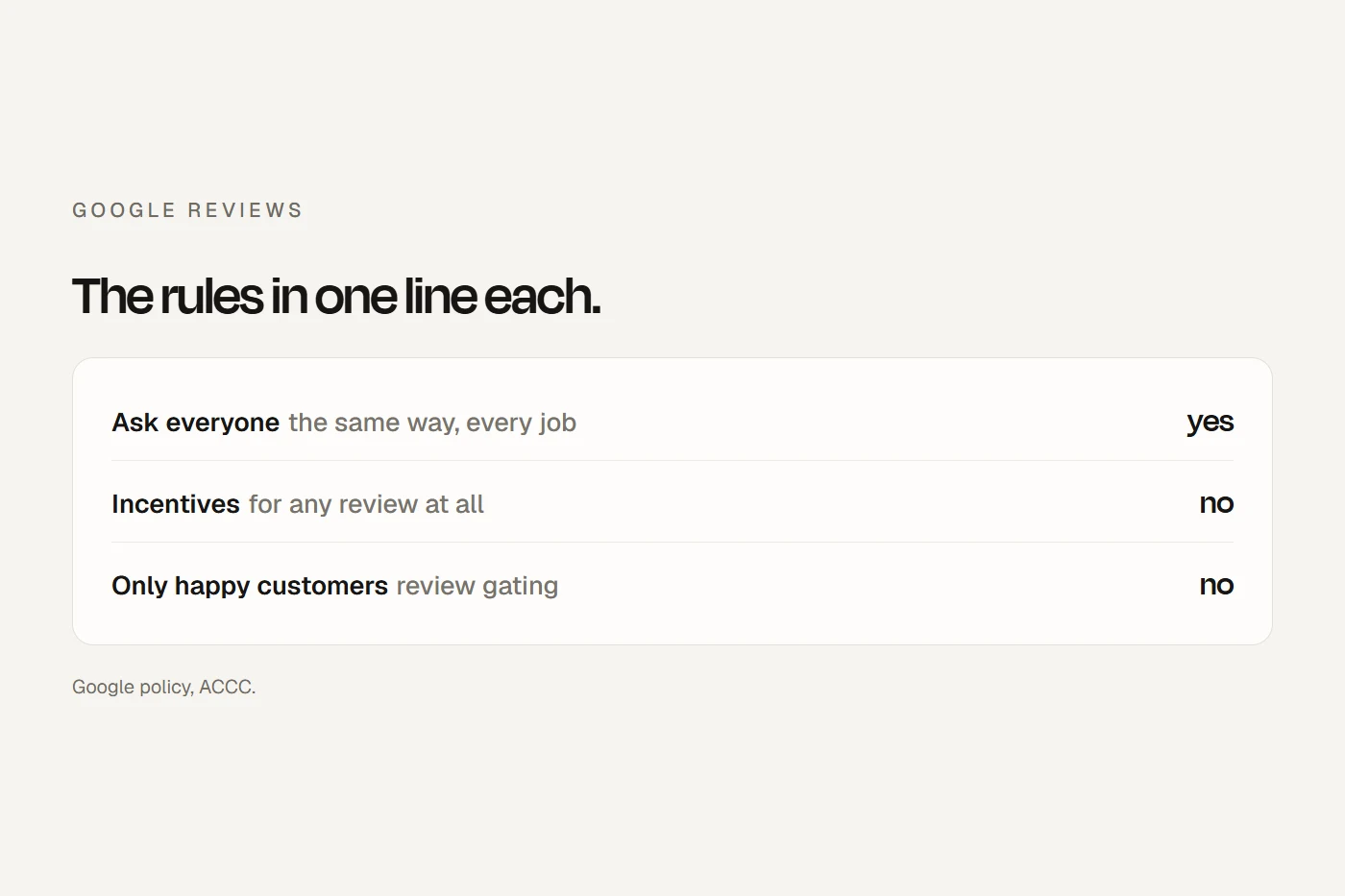
- Google Business Profile. Pick the most specific category for your style. Ask every member for a review at the same point, offer nothing, and don't ask only after a successful grading: asking only happy people is something Google bans.
- School holiday programs. A low-commitment first step for families who won't sign a membership yet. Price it as a one-off, not a subscription.
- Local Facebook groups. Parents are the audience: under-16s can't hold accounts on the major platforms. Get consent before posting any child's photo.
- Meta ads. Kids programs advertise to parents in your suburb, with the child's age in the ad. Adult ads lead with fitness and class times that fit a working week, since time is the main reason adults stop.
- Referrals. Reward the member when the person they referred joins, and say so plainly. Let members share a link themselves; don't collect friends' numbers and message them, which regulators have treated as spam. Never tie a referral reward to a review. If you run a prize draw, check your state's trade promotion rules first.
- Gradings and the teen pathway. Numbers drop at 12 to 14, so show teen and adult classes and the belt pathway on the site, with typical timeframes as ranges.
Activity vouchers
NSW's Active and Creative Kids names martial arts and mixed martial arts. Queensland's sport vouchers work through affiliation, and its recognised list includes the national karate, taekwondo, judo, jujitsu, kendo, kung fu wushu, Muay Thai, boxing and wrestling bodies. The NT scheme names martial arts and boxing. Victoria's Get Active Kids excludes sole traders and doesn't list Pty Ltd companies as eligible, and WA, Tasmania and SA depend on affiliation or a recognised sport. So a freestyle system with no recognised national body may not qualify in some states. Only say you accept vouchers once you're approved.
Child safety and photos
Child safe rules reach kids martial arts programs: Victoria's Child Safe Standards cover coaching for children, South Australia's cover sole traders offering coaching to children, and in Queensland a business running sport mainly for children needs a blue card. Teaching involves contact and correcting technique, so a short public "how we coach children" statement helps parents: no one-to-one behind closed doors, parents can watch, and how technique is corrected. My guide to kids sports club websites covers checks, child safe standards and photo consent state by state.
Software and direct debit
Prices as published on 12 October 2026, in the currency each vendor shows. I have no arrangement with any of them.
| Product | Published price | Currency | Martial arts features | Payments in Australia |
|---|---|---|---|---|
| Clubworx (Australian) | Free to 20 active members; then $109, $149 or $169 a month by members | AUD, GST not stated | Belt tracking, grading events add-on, online waivers | Ezidebit direct debit and card |
| GymMaster (NZ) | From $119 a site a month, by members | AUD, excluding tax | Gym-first | Not checked |
| Spark Membership (US) | $199 a month after an 8-week free period | Not stated | Belt history, family accounts | Australian availability not stated |
| Zen Planner (US) | From $99 a month | Not stated on the page | Belt and skill tracking | Not stated |
| Gymdesk (US) | From $100 a month, by members | USD | Has a martial arts page | Its own payments run only in the US and Canada |
| Kicksite (US) | From $49 a month, by students | Not stated | Built for martial arts | Not stated |
Scroll the table sideways to see every column.
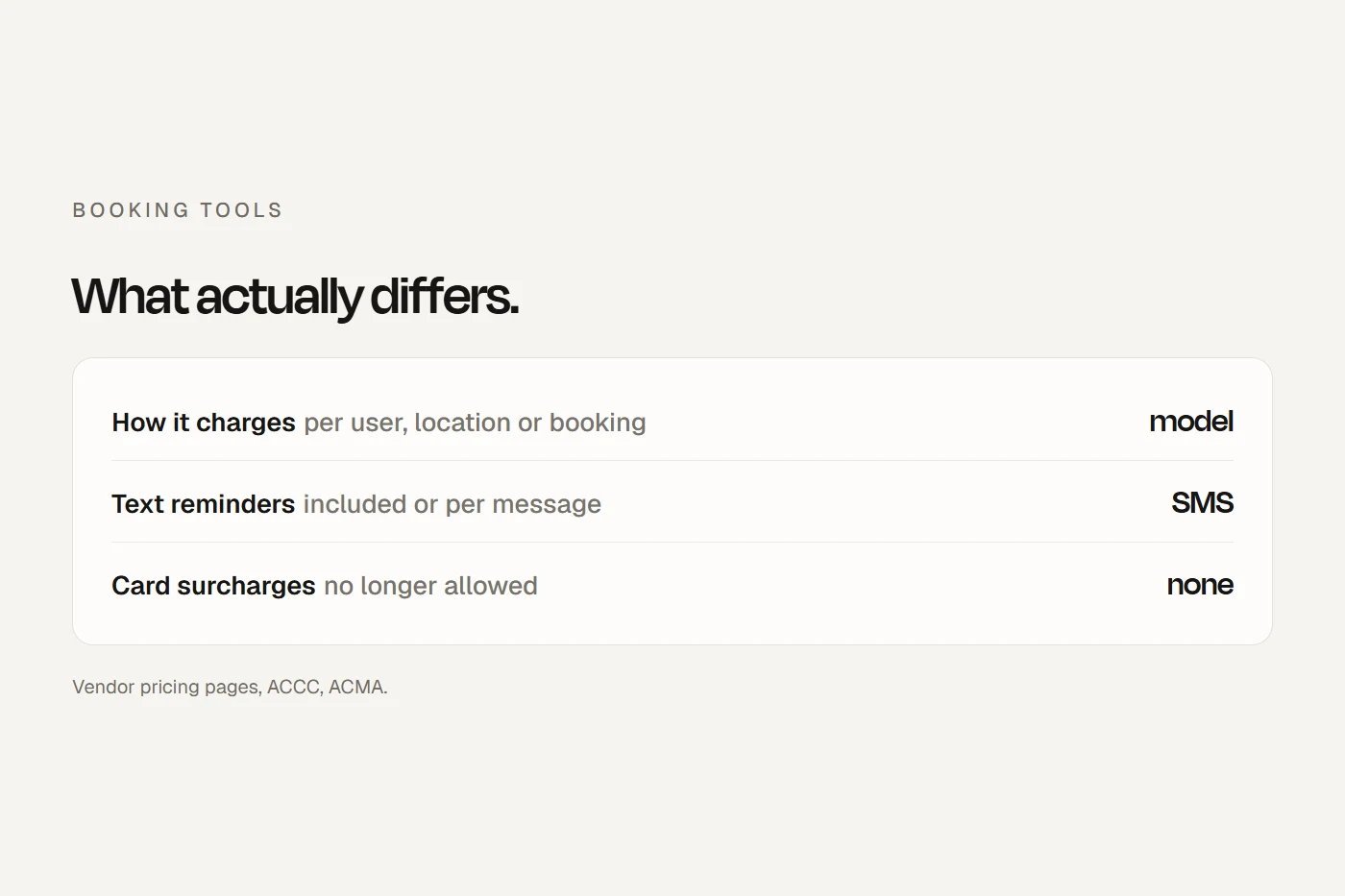
For any of them, ask: the price in Australian dollars and whether it includes GST; whether it takes bank direct debit or only cards; grading and belt tracking; family accounts; online sign-up using your own terms; how freezes and cancellations work; and where member data is stored. For the debits themselves, Ezidebit publishes per-transaction pricing for bank and card debits, while Debitsuccess and PaySmart quote on request. Whichever you use, turn off any setting that passes card fees to members. My guide to online booking systems covers class tools such as TeamUp and Mindbody.
Your next 90 days
Your ticks save in this browser.
- Rewrite your membership terms: a plain summary at the top, the total price, the minimum term, how to cancel and the freeze policy.
- Check whether a fitness code applies in your state, and in Queensland add the cooling-off period and fee statement.
- Replace the waiver with one limited to death and personal injury, using the Consumer Affairs Victoria wording in Victoria.
- Fix the website: timetable by age and level, full prices, kids and adults pages, a child safety page and named credentials.
- Set up your Google Business Profile with the most specific category and photos you have consent for.
- Run one free class offer with no hidden conditions, and a reminder before any paid period starts.
- Advertise kids classes to local parents, and adult classes on fitness and convenient times.
- Run a school holiday program as a low-commitment first step.
- Register for your state's voucher if you're eligible.
- Ask every member for a review at a fixed point, with no reward.
- Track cancellations and the free-class join rate each month, and run the calculator.
- Show the teen pathway and gradings on the site, as ranges, not guarantees.
- Check your direct debit settings: no card surcharges, a failed-payment process and a clear way to cancel.
- Recheck every instructor's check and every photo consent before next term.
My view
Most of the growth in a martial arts school comes from keeping the students you have: terms people trust, a freeze when life gets in the way, and a pathway that holds teenagers. On the front end, a website that answers a parent's questions about times, total price, safety and who teaches will do more than any promise of a black belt. Get those right and the free class does the selling.
Questions I get asked
How do I get more students for my martial arts school?
A genuinely free first class, a website that shows times, full prices and safety for parents, a Google Business Profile with steady reviews, local parent-focused ads, and a holiday program as a first step. Then keep them with fair terms and a teen pathway.
Can I advertise that my program stops bullying?
Not as a promise. Say what you teach, such as confidence and how to respond to bullying. A promised result is a claim you'd have to back up.
Are martial arts waivers enforceable in Australia?
Only for death and personal injury, never for reckless conduct, and Victoria requires set wording. A blanket "however caused" waiver goes too far, and a parent signing for a child may not bind the child.
Do martial arts schools have to follow the fitness industry code?
In Queensland, treat it as yes. WA's code excludes martial arts. The ACT's doesn't name it. NSW, Victoria and the other states have no mandatory code, but consumer law applies everywhere.
Can martial arts classes be paid with Active Kids vouchers?
In NSW, yes, for approved providers: martial arts and mixed martial arts are listed. Other states depend on affiliation with a recognised body.
About this guide
Written by Joseph Alzein, founder of bdog. bdog builds websites for martial arts schools and has no arrangement with any vendor named here. Participation data is from the Australian Sports Commission's AusPlay survey; the rules come from the Australian Consumer Law, the Competition and Consumer Act, state fitness codes, the Banking Code of Practice, the ACCC and state voucher programs. Software prices are from each vendor's own page, read on 12 October 2026. This is general information, not legal advice.
Main sources: