Mortgage broker leads: buy them or build them
For brokers deciding whether to buy leads: where broker business really comes from, what lead sellers sell, whether they can legally pass on a borrower’s details, your disclosure and best interests duties, the Do Not Call Register and calling hours, lead ads and refer-a-friend rules. With a seller check, a cost-per-settlement calculator and a 90-day plan.
On This Page
- Where broker business actually comes from
- What’s for sale
- Can the seller legally pass you the lead?
- Your side: disclosure, best interests and conflicted remuneration
- Calling and messaging bought leads
- Lead ads, rates and refer-a-friend offers
- Check a lead seller
- Cost per settlement, not per lead
- Building your own
- A 90-day plan
- My view
- Questions I get asked
Search for mortgage broker leads and page one is lead sellers, a software vendor's "31 ways" list, an agency and a Facebook thread asking which lead service to use. None of them tells you whether the seller can legally pass a borrower's details to you, what you have to disclose when you pay for introductions, or when you can lawfully call a bought lead. This guide is for a solo or small-team broker working under an aggregator, deciding whether to buy leads, build their own, or both. I build mortgage broker websites and have no relationship with any lead seller. The rules come from the National Credit Act and Regulations, ASIC, the Do Not Call Register Act, the telemarketing standard, ACMA and the Privacy Act.
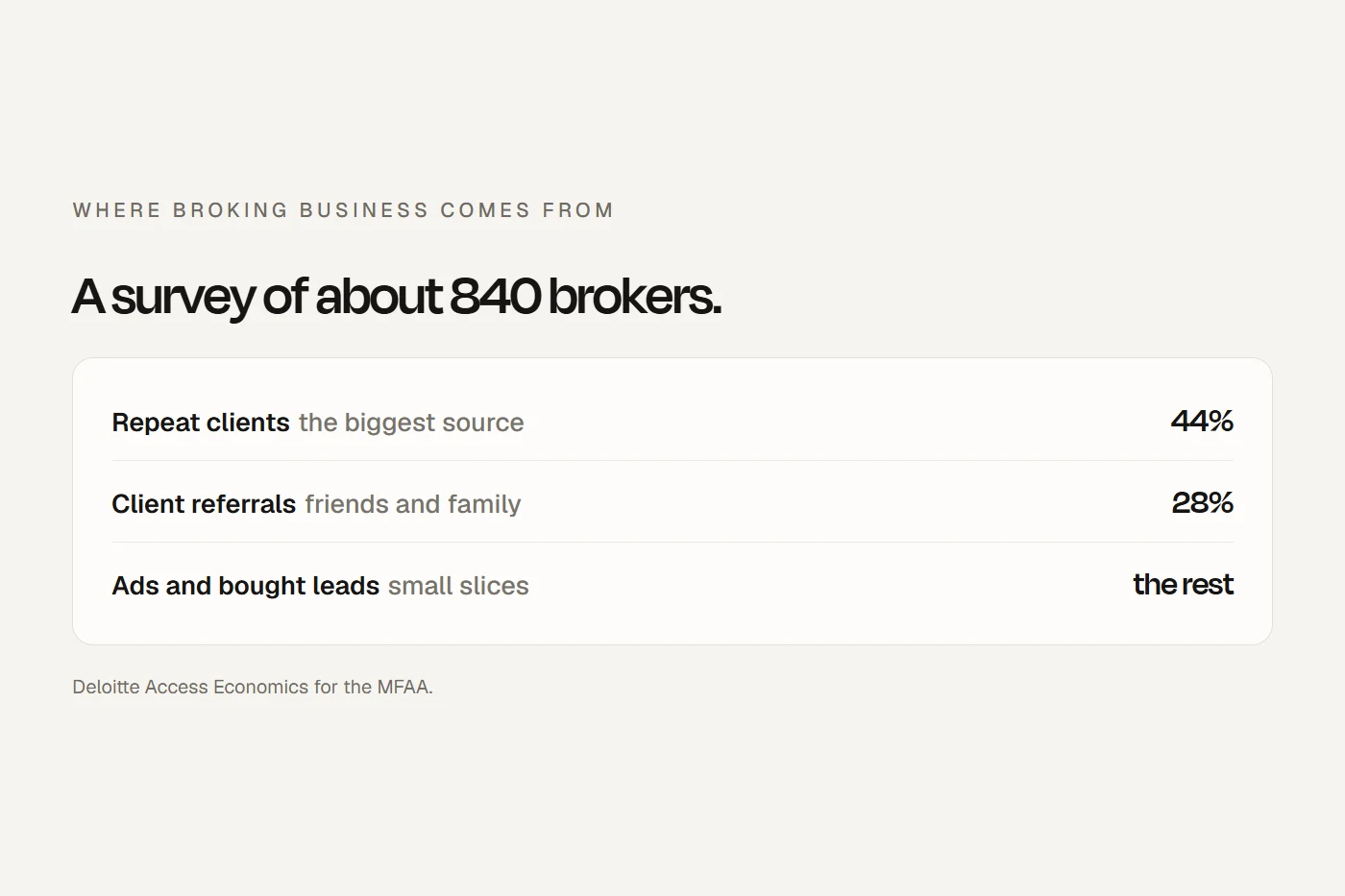
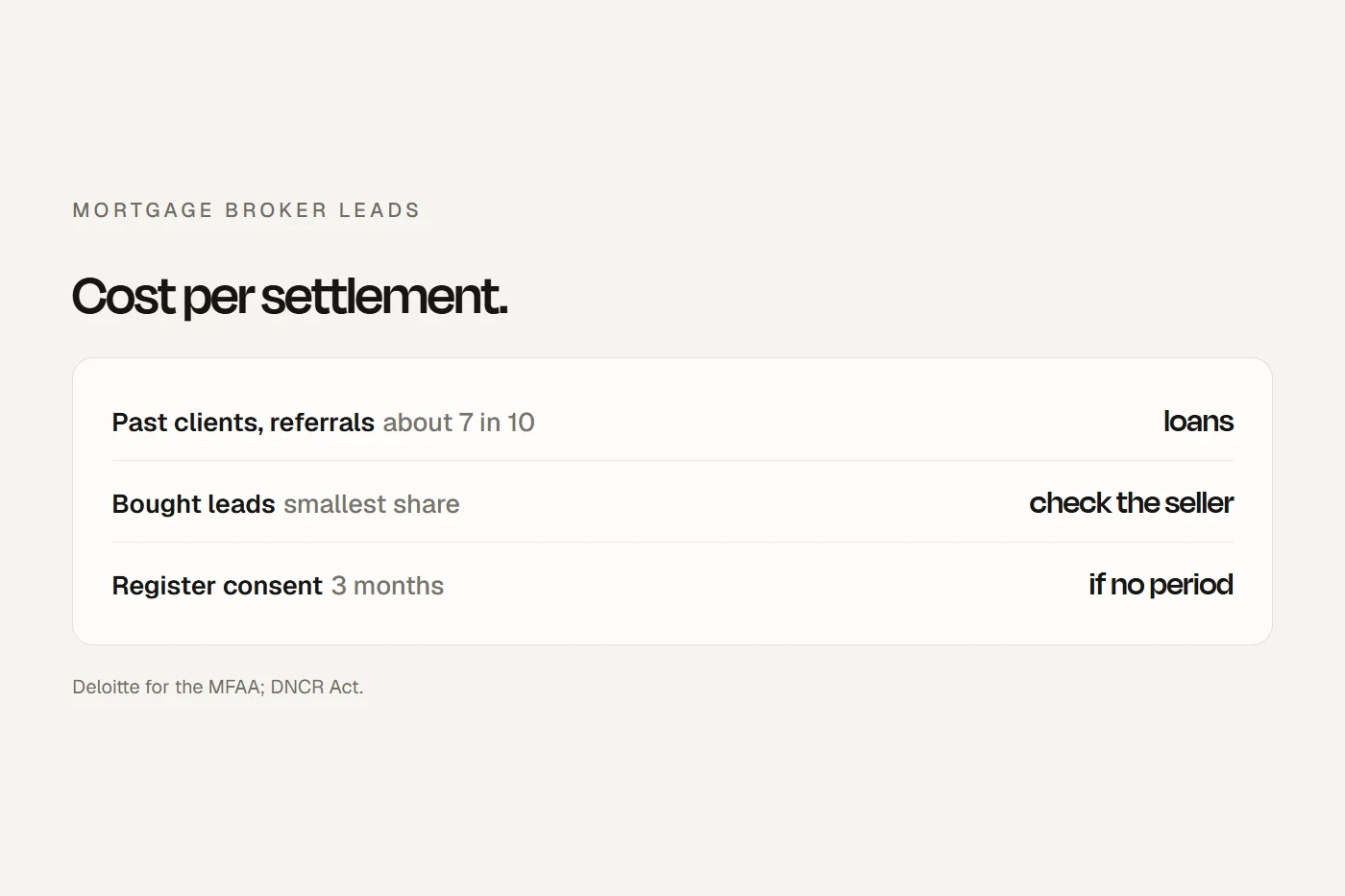
- Most broker business isn't boughtBrokers surveyed for the MFAA said about seven in ten loans come from past clients and the people they refer. Bought, aggregator and directory leads together were the smallest slice.
- Check the seller before you buyA business whose main job is collecting enquiries and passing on names can't use the referrer exemption, and your licensee can't deal with an unlicensed intermediary. Ask what licence or exemption the seller relies on.
- Bought consent goes staleA borrower's "call me" consent with no stated period lapses after three months if their number is on the Do Not Call Register, and calls are limited to set hours.
Where broker business actually comes from
In Deloitte's survey of brokers for the MFAA, repeat customers and client referrals were the key sources, together about seven in ten loans. Professional referrers came next, then advertising, and bought, aggregator-supplied and directory leads together were the smallest share. Borrowers say the same: in an FBAA survey of home owners and investors, about a third found their broker through family or friends and more than a quarter through another professional. And ASIC's Moneysmart tells borrowers to find a broker through recommendations from people they know.
So a bought lead starts with no one vouching for you, and often talking to other brokers too. That doesn't make buying wrong; it makes it the expensive way to fill the diary. Measure it by what each settlement costs, not what each lead costs.
What's for sale
- Exclusive leads: one enquiry sent to one broker, usually matched by postcode.
- Shared leads: sent to several brokers, first to accept wins. Expect lower contact rates.
- Live transfers: a call centre qualifies the borrower by phone and puts them through to you.
- Appointments: a pre-booked meeting in your diary.
- Aged or recycled leads: older enquiries resold later. The consent is often the problem.
Almost no seller publishes prices; most quote by state and weekly volume, some ask for payment monthly in advance, and some replace wrong numbers while others are non-refundable. The only public price list I found was on a page last updated about a decade ago. Some aggregators sell leads too, with fees deducted from your commission. Comparison sites also route borrowers to brokers, and the bigger ones hold their own credit licences and say on their sites that they're paid referral fees.
Can the seller legally pass you the lead?
Under the National Credit Act, acting as an intermediary between a borrower and a lender is a credit activity that needs a licence, unless an exemption applies. ASIC's guidance says a real estate agent paid a finder's fee by a broker is likely acting as an intermediary, and a comparison site referring users to lenders may be too.
There are two referral exemptions in the Regulations:
- Downstream: the referrer only tells the borrower you can help and how to contact you (a website link counts), and discloses any benefit it receives at the same time. The borrower contacts you.
- Upstream: under a written agreement, the referrer passes you only the borrower's name, contact details and a short description of what they want, within five business days, with the borrower's consent and the benefit disclosed. But this exemption isn't available to a business that is "principally making contact with persons for the purpose of giving their names or other details to another person", or one that approaches people face to face from stalls and booths.
In my reading, that means a business whose main job is collecting enquiries and passing on names can't rely on the upstream exemption; it needs its own licence, to be someone's credit representative, or to fit the downstream route. The FBAA says professional lead generation businesses must be licensed. It matters to you because the Act bars a licensee from doing business with someone who is engaging in credit activity without a licence, and for a credit representative that licensee is your aggregator. "Qualified" leads that arrive with the borrower's income, debts and employment also go past the name, contact and purpose the upstream exemption allows. Don't assume any seller is doing it wrong; ask, and get your licensee's view.
Your side: disclosure, best interests and conflicted remuneration
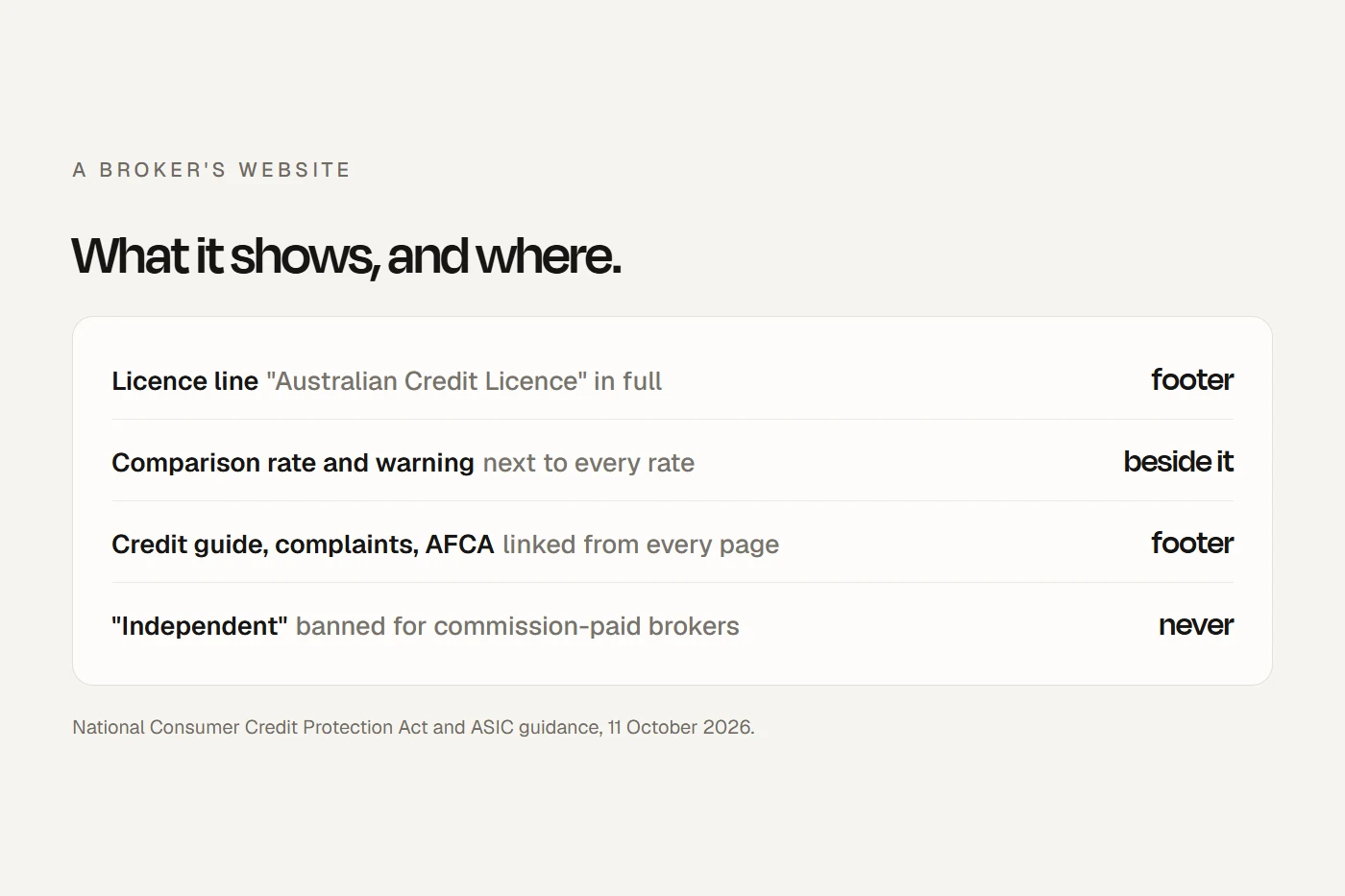
- Disclosure. Your credit guide must say if you're likely to pay third parties for introducing credit business, the classes of people you pay, and that the borrower can ask for a reasonable estimate. Your credit proposal document names who pays whom and estimates the amount. One national broker brand's credit guide lists affiliates, call centre companies and real estate agents among its referral sources.
- Best interests. What you paid for a lead doesn't change the loan you recommend. The best interests duty and the duty to prioritise the consumer's interests apply the same way whether the client came from a bought list or their sister.
- Conflicted remuneration bans benefits you receive that could reasonably be expected to influence your credit assistance, not payments you make. So paying a seller isn't conflicted remuneration. But free leads from a lender are a non-monetary benefit from a credit provider, and none of the carve-outs obviously covers them. Check with your licensee before accepting them.
- Who you pay has rules too. NSW real estate agents must disclose a referral relationship and fee on an approved form. Accountants who receive referral fees must tell the client in writing. A financial planner's licensee may ban referral fees altogether.
Calling and messaging bought leads
- The Do Not Call Register. You can't call, or cause someone to call, a number on the Register without the account-holder's consent. If consent was given without a stated period, it's taken to be withdrawn three months after it was given. Wash your list against the Register; a seller's assurance isn't enough.
- You cause the seller's calls. If a live-transfer centre calls borrowers under an arrangement with you, the law treats you as having caused those calls, and your contract with them must require compliance.
- Calling hours. The telemarketing standard limits calls to weekdays 9am to 8pm and Saturdays 9am to 5pm, in the borrower's time zone, with no calls on Sundays or national public holidays, unless the borrower agreed in advance to a call at that particular time. Even returning an enquiry promotes your services, so identify yourself and stop if asked.
- Email and SMS. ACMA says businesses stay responsible for consent even when they outsource marketing or buy a list. Its expectations: consent should say who will use it, including partners, and for how long; no pre-ticked or bundled consent; telemarketing consent more than three months old is stale; and no refer-a-friend consent, because consent must come from the person.
- Privacy. Tell a bought lead where you got their details, at or soon after you collect them. A small business that buys personal information without the person's consent can lose its Privacy Act exemption; buying leads the borrower agreed could be passed on doesn't, by itself, do that.
Lead ads, rates and refer-a-friend offers
- Rates in ads. Any ad showing an interest rate needs the comparison rate, at least as prominent, based on $150,000 over 25 years, with the warning. Advertising a rate you won't be able to offer most enquirers invites ASIC's bait advertising rule. ASIC's advertising guide treats lead generators as promoters.
- Refer-a-friend. "Sign with us and get a reward for every friend whose loan settles" offered to win a client is the pattern the ASIC Act's referral selling ban describes. A thank-you to an existing client after a referral settles, disclosed in your credit guide, isn't the same thing. Either way, contact the friend only once the friend has agreed.
- Meta lead ads. Meta's special ad category limits apply to the US, Canada and parts of Europe, not Australia. In Australia, mortgage ads need beneficiary and payer verification and a "Paid for by" disclaimer, must target people 18 and over, and Meta's instant forms can't ask for income, debts or credit scores.
Check a lead seller
Answer these about a seller you're considering.
Cost per settlement, not per lead
Put in one channel at a time. Price and commission fields start empty: enter what you keep after your aggregator's split.
The contact rate moves everything: a shared lead you reach 40% of the time costs almost twice as much per settlement as an exclusive one you reach 70% of the time. Count clawbacks too: a loan that refinances inside the clawback window, which can run up to two years, gives the commission back. And the calculator only works if every enquiry is tagged by source the moment it arrives.
Building your own
- Past clients are the biggest source. Contact them when rates move or fixed terms end, with a review offer rather than a savings promise, and an unsubscribe.
- Client referrals: make it easy to pass on your details, disclose any thank-you in your credit guide, and only contact the friend once they've agreed.
- Professional referrers: written agreements, the referrer passing name, contact and purpose within five business days, and disclosure on both sides.
- Google Business Profile and reviews: free, but lead generation businesses aren't eligible, and reviews can't be incentivised.
- Your website: what lead sellers actually run is a guide, a calculator and a form. Your own site can do the same under your name, with a consent box that names you, the credit guide and compliant rate displays. My mortgage broker website guide covers the rules.
- Ads: Google and Meta work, with the verification steps, the comparison rate and 18-plus targeting.
A 90-day plan
Your ticks save in this browser.
- Tag every enquiry by source as it arrives: calls counted, forms tagged.
- Check your credit guide says you may pay third parties for introductions, and names the classes.
- An unticked consent box on your forms that names your business, the channels and how to withdraw.
- A Do Not Call Register subscription to wash phone lists before any outbound calling.
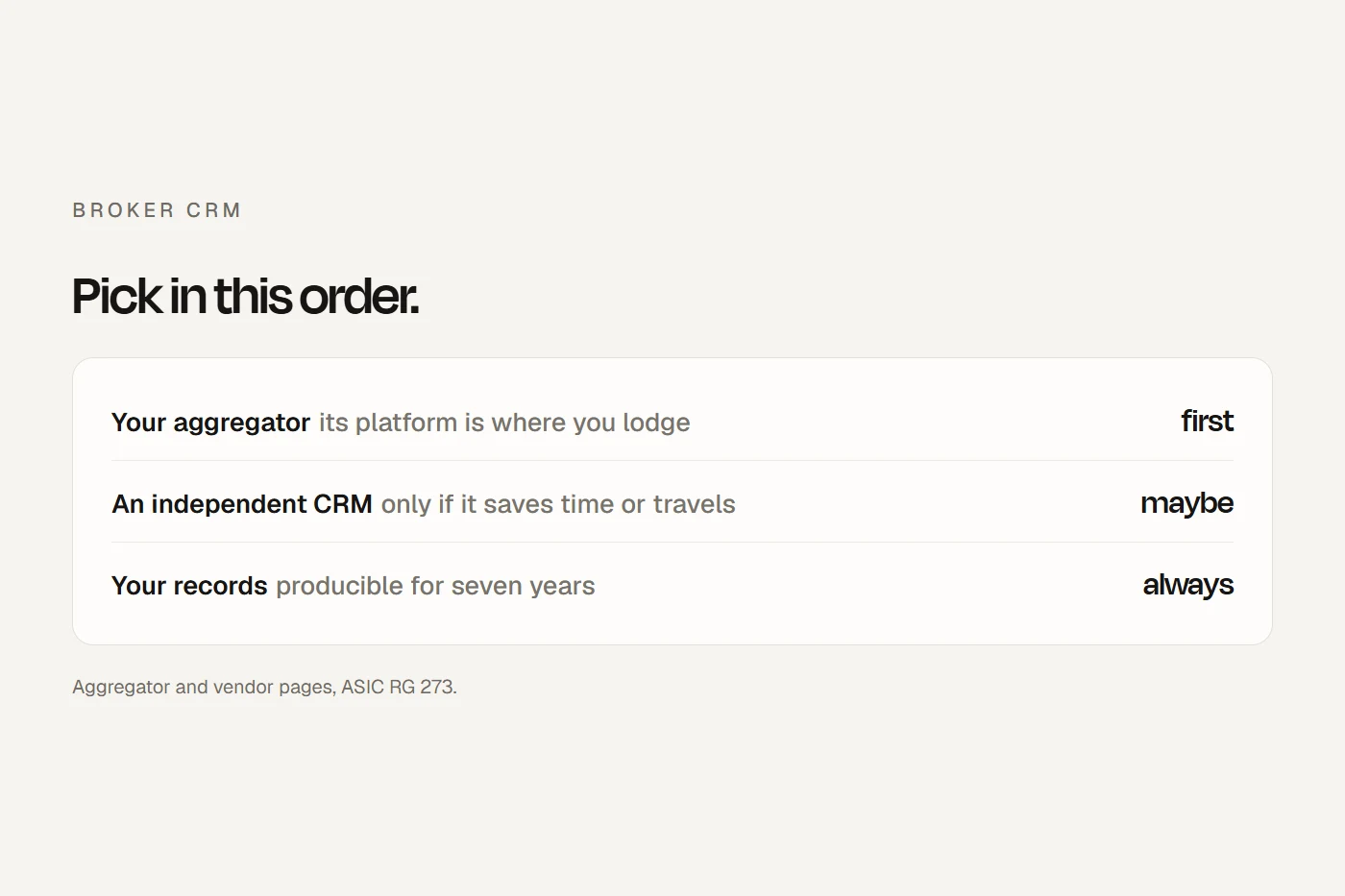
- Your aggregator's rules on lead sources and referrer agreements, read.
- Past clients emailed when rates move or fixed terms end.
- Written agreements with your top referrers, with disclosure on both sides.
- Google Business Profile complete, and a neutral review request to every settled client.
- If you trial bought leads: the eight questions answered in writing, and a small month-to-month order.
- Call within the permitted hours, and tell each lead where you got their details.
- Compare cost per settlement by channel at day 90, and keep what's cheapest per settlement.
My view
Buy if you need to fill the diary now, but build so you need to buy less every quarter. A lead seller's business is a guide, a calculator and a consent form; you can run the same thing under your own name, where the enquiry is yours alone and nobody else is calling them. And whatever you buy, get the licence, consent and Register answers in writing before the first lead arrives, because the obligations sit with you, not the seller.
Questions I get asked
How do mortgage brokers get leads?
Mostly from past clients and their referrals, then professional referrers such as agents and accountants, then advertising, with bought leads the smallest share. Many brokers also buy leads to fill gaps.
How much do mortgage leads cost in Australia?
Most sellers don't publish prices and quote by state and weekly volume. Work out what you can pay from what you keep per settlement and how many leads it takes to settle one.
Can I call a bought lead who's on the Do Not Call Register?
Only with their consent. Consent given without a stated period lapses after three months, and calls must be within the permitted hours.
Do I have to tell clients I paid for their referral?
Yes. Your credit guide says if you pay third parties for introductions, and your credit proposal document names who pays whom with an estimate of the amount.
Can I pay a real estate agent for referrals?
Yes, with a written referral agreement, the borrower's consent, disclosure on both sides, and in NSW the agent's approved disclosure form.
About this guide
Written by Joseph Alzein, founder of bdog. bdog builds mortgage broker websites and has no relationship with any lead seller. The rules come from the National Consumer Credit Protection Act and Regulations, ASIC's regulatory guides, the ASIC Act, the Do Not Call Register Act, the 2017 telemarketing industry standard, ACMA's consent expectations, the Privacy Act and Meta's advertising policies; the data from Deloitte's report for the MFAA and an FBAA survey. Sources were checked on 12 October 2026. This is general information, not legal advice; your licensee's compliance team has the final say.
Main sources: