Registered or unregistered NDIS provider: what your website can say
Who has to register, which words and logos each kind of provider can use, how to describe who you serve and what you charge, and what participants will check. With a do-I-need-to-register quiz, a wording sorter and a checklist.
On This Page
Search for "NDIS registered provider" and the NDIS Commission and the NDIA own page one, with pages explaining the difference between registered and unregistered providers. None of them answers the question a provider has when writing their website: what am I allowed to say about my status? That's what this guide covers, for registered and unregistered providers alike: who has to register, which words and logos each can use, how to describe who you serve and what you charge, and what participants will check. It's from the NDIS Act, the Provider Registration Rules, the Code of Conduct Rules, the NDIA's logo guidelines, the Commission's pages and the Australian Consumer Law, read on 12 October 2026. It's general information, not legal advice.
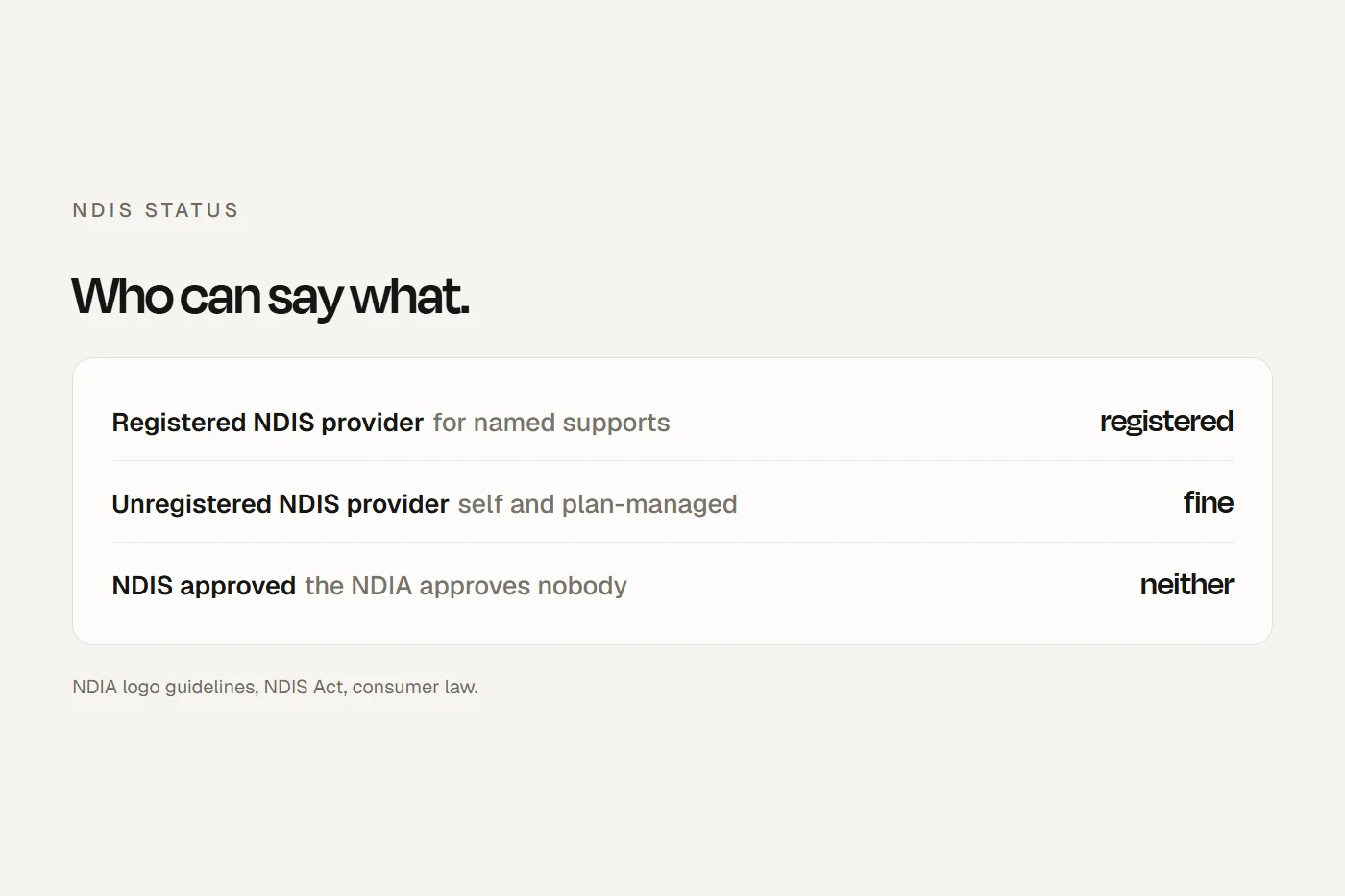
- Registered is a legal statusOnly say "registered NDIS provider" if the NDIS Commission has registered you, and name the supports you're registered for.
- Unregistered is fine, said plainly"Unregistered NDIS provider, working with self-managed and plan-managed participants" is accurate and allowed.
- Nobody says "NDIS approved"No provider can claim NDIS approval, use the plain NDIS logo without written consent, or put "NDIS" in a business or domain name.
What "registered" means
A registered NDIS provider has applied to the NDIS Commission, been audited against the NDIS Practice Standards, passed a suitability check of the business and its key people, and holds a certificate of registration. The certificate lists the classes of supports the provider is registered for, so registration isn't one badge: a provider can be registered for some supports and not others. Higher-risk supports get a fuller audit ("certification"), lower-risk ones a lighter check ("verification"). Those are audit methods, not titles. There are no registration tiers in force; the tiers you may have read about were proposals.
An unregistered provider is still an NDIS provider in law if it's paid from NDIS plans. The NDIS Code of Conduct applies to it and its workers, and participants can complain about it to the Commission. The Commission has written to hundreds of thousands of unregistered providers it found through plan payments to remind them. Unregistered doesn't mean unregulated.
Who has to be registered
Today you must be registered to:
- be paid from the NDIA-managed part of a participant's plan;
- manage participants' plan funding (plan management);
- provide specialist disability accommodation;
- do behaviour support assessments or write behaviour support plans;
- provide any support where a regulated restrictive practice is, or is likely to be, used;
- provide assistance with supported independent living;
- run an NDIS digital platform, meaning an app or website whose main purpose is connecting participants with workers and which processes plan payments.
Residential aged care providers supporting participants must be registered too. For everything else, registration is your choice. Some NDIA pages give shorter lists; the Registration Rules and the Commission's "About registration" page are the complete ones.
What's coming
The government has announced that more supports it considers higher risk will need registration, naming personal care, daily living supports and supports in closed settings as examples; the list hasn't been published. Most providers will also have to enrol with the NDIA, which the Department says is "a separate process to being a registered NDIS provider", so "enrolled" won't mean "registered". And the government is consulting on paying unregistered providers differently for some supports. Nothing on that has been decided, so don't tell participants unregistered providers are cheaper, or will be.
The rules on what you can say
Three sets of rules decide it.
The NDIA's logo guidelines. The NDIS logo and acronym are the NDIA's registered trade marks. No provider can use the plain NDIS logo without the NDIA's written consent. Only registered providers can use the "I/we heart NDIS" and "I/we support NDIS" logos with the "Registered Provider" tagline, from the NDIA's own packs. An unregistered provider "must not advertise or pass yourself off as a 'registered provider' or use other language (for example, 'official NDIS provider'), which falsely implies you are registered". And nobody may use "NDIS approved", "100% NDIS funded", "NDIS packages" or "NDIS" in a business, trading or domain name. The NDIA sends cease-and-desist letters and refers consumer law breaches to the ACCC.
The NDIS Act. Section 73B(3) makes it an offence for an unregistered person to hold themselves out as able to provide a support that the rules say needs registration. So an unregistered provider advertising behaviour support plans or supported independent living is committing an offence, not just making a mistake. The section is narrower than its heading: it doesn't make every false "registered" claim an offence.
The Australian Consumer Law. That gap is covered by the consumer law, which bans false or misleading claims that a business has a sponsorship, approval or affiliation it doesn't have. A false "registered provider" or "NDIS approved" claim is a textbook example, and the ACCC has said "NDIS approved" is one of the most common problems it sees in NDIS advertising.
Registered, unregistered, or neither?
Tap a card to see who can use it. "If true" means it must match your certificate or the facts.
If you're registered
- Say what you're registered for, in plain words that match your certificate. A bare "registered NDIS provider" on a site that also advertises supports outside your certificate can mislead.
- Show your legal name and ABN exactly as on the Provider Register, and link to the register. Participants can search it by business name, legal name or ABN, and the Commission tells them to.
- Use the tagline logo only from the NDIA's pack. Never the plain NDIS logo.
- Switch on your Provider Finder listing in the NDIA portal and keep your website, phone and email current. The Finder only shows registered providers who've chosen to display.
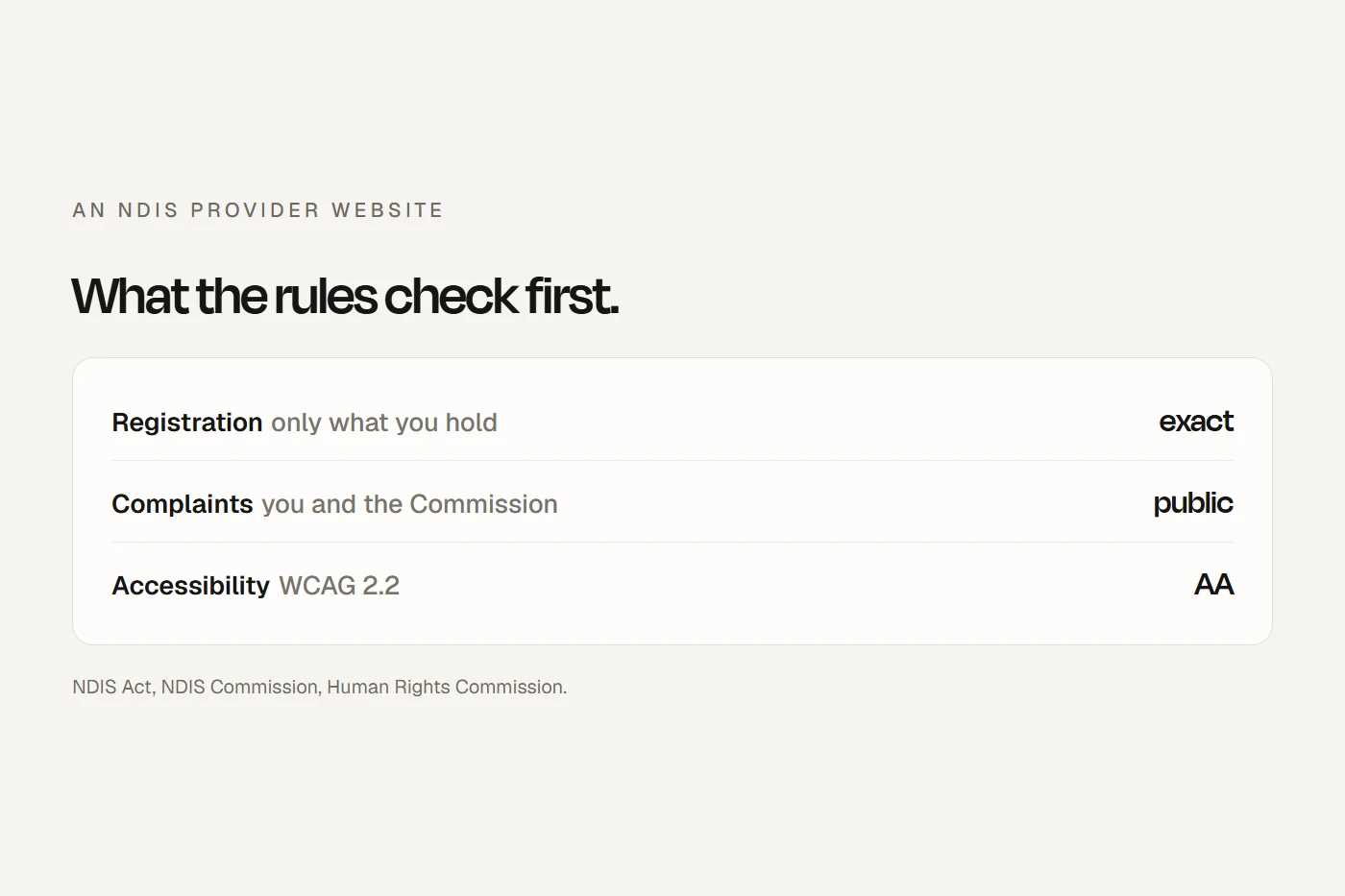
- Make complaints information public: how to complain to you, and how to complain to the Commission. The Complaints Rules require it to be "readily available and accessible to the public".
- Don't compare yourself to unregistered providers. The Commission says registration "can help with safeguards", but "we're safer than unregistered providers" is a claim about other businesses that you'd need to back up.
If you're unregistered
- Say it plainly: "We're an unregistered NDIS provider. We work with people who self-manage their NDIS funding or use a plan manager, and with private clients. We can't be paid from NDIA-managed funding."
- Help people check: "Not sure how your plan is managed? It's on your plan, or ask your plan manager or my NDIS contact."
- No logo of any kind, and no "registered", "official", "approved" or "certified".
- Nothing that needs registration on your services page: no supported independent living, specialist disability accommodation, behaviour support assessments or plans, or plan management.
- If you deliver under another provider's registration, don't call yourself registered. Say who you deliver for only if that's true and they agree.
- Show you meet the Code anyway: "We follow the NDIS Code of Conduct", a complaints section with the Commission's number, and, if you require it, a line that every worker holds a current NDIS Worker Screening clearance. You don't have to use worker screening, but the Commission recommends it and participants can ask for it.
Describing your prices
Several page-one articles, and two of Google's AI answers, say registered providers must follow the NDIS price limits and unregistered providers can set their own. That's not quite right. The NDIA's pricing page says the maximum prices "only apply to NDIA-managed and plan-managed participants". The limits follow how the participant's plan is managed, not whether you're registered. An unregistered provider serving a plan-managed participant can't be paid above the limit from that plan, and a self-managed participant isn't bound by the limits at all.
So, registered or not:
- "If your plan is NDIA-managed or plan-managed, we charge no more than the NDIS price limits."
- "If you self-manage, we'll agree a price with you before we start."
- "Our prices are the same for NDIS participants and private clients." The Code of Conduct Rules ban charging participants more for goods without a reasonable justification, and the Commission expects every provider, registered or not, to be able to justify its pricing.
Don't call any figure "the NDIS rate". Limits are maximums, and they change, so a dollar figure on your site will date.
Website checklist
Tick what your site already does. Your ticks save in this browser.
- A status line that's accurate: registered for named supports, or unregistered.
- Who you serve: NDIA-managed (registered only), plan-managed, self-managed, private clients.
- No "NDIS approved", "official", "certified", "100% NDIS funded" or "NDIS packages".
- No plain NDIS logo. The tagline logo only if registered, from the NDIA's pack.
- No "NDIS" in your business, trading or domain name.
- No support on your site that needs a registration you don't hold.
- Legal name and ABN in the footer, as on the register if you're registered.
- A link to the Provider Register, if you're registered.
- "We follow the NDIS Code of Conduct", and a complaints section with the Commission's number.
- A worker screening line only if every worker is cleared.
- Prices described without "the NDIS rate", and the same for NDIS and private clients.
- "Application lodged", not "registered", if you're waiting on a registration decision.
Accessibility, Easy Read, interpreters, privacy and the rest of the site are in my guide to what an NDIS provider website needs, and finding participants is in NDIS provider marketing.
My view
Whether you're registered or not matters less on your website than being exact about it. Participants are told to check, the register takes seconds, and the NDIA and the ACCC both act on false claims. A registered provider should name its supports and link to the register. An unregistered provider should say so in the first lines, say who it can serve, and show it follows the Code anyway. Neither should ever write "NDIS approved".
Questions I get asked
What is the difference between a registered and unregistered NDIS provider?
A registered provider has been audited and registered by the NDIS Commission for particular supports, and can serve NDIA-managed participants. An unregistered provider can serve self-managed and plan-managed participants. Both must follow the NDIS Code of Conduct.
Can I be an unregistered NDIS provider as a sole trader?
Yes, for supports that don't need registration, working with self-managed and plan-managed participants.
Can an unregistered provider use the NDIS logo?
No. Only registered providers can use the "I/we heart NDIS" logos with the "Registered Provider" tagline, and no provider can use the plain NDIS logo without the NDIA's written consent.
Do price limits apply to unregistered providers?
They apply to NDIA-managed and plan-managed participants, whoever the provider is. They don't apply when a participant self-manages.
What will happen to unregistered NDIS providers?
More higher-risk supports will need registration, most providers will enrol with the NDIA, and the government is consulting on pricing. Unregistered providers will still be able to deliver lower-risk supports.
About this guide
Written by Joseph Alzein, founder of bdog. bdog builds websites for NDIS providers. The rules come from the NDIS Act, the NDIS Provider Registration and Practice Standards Rules, the Code of Conduct Rules, the NDIA's logo guidelines and pricing pages, the NDIS Commission's pages and the Australian Consumer Law, read on 12 October 2026. Rules are changing, so check the Commission's pages before you rely on this. This is general information, not legal advice.
Main sources:
- NDIS Commission: about registration
- NDIS Commission: find a registered provider
- NDIA: NDIS logo guidelines
- NDIA: pricing arrangements
- NDIA: how to find and choose a provider
- NDIS Commission: Code of Conduct
- NDIS Commission: worker screening for unregistered providers
- NDIS Provider Registration and Practice Standards Rules