Starting a family day care business: approval, your home and families
The two routes (educator or provider), the Certificate III and checks, the rules for your home, ratios and council, how fees, levies and the gap work, and how to find families when you must market under the service’s name. With a route quiz, an earnings calculator, a sorter and a checklist.
On This Page
"Starting a family day care" means one of two quite different things. Most people mean becoming an educator: caring for a small group of children in your own home, as part of an approved family day care service. A few mean becoming the provider: running the service, recruiting educators and employing coordinators. This guide covers both: the approvals, the qualifications and checks, the rules for your home, how the money works, and how to find families, including the rule most educators don't know about their own advertising. It comes from the Department of Education, ACECQA, the National Regulations and the ACCC's childcare inquiry. It's general information; your service and your state regulator have the final say.
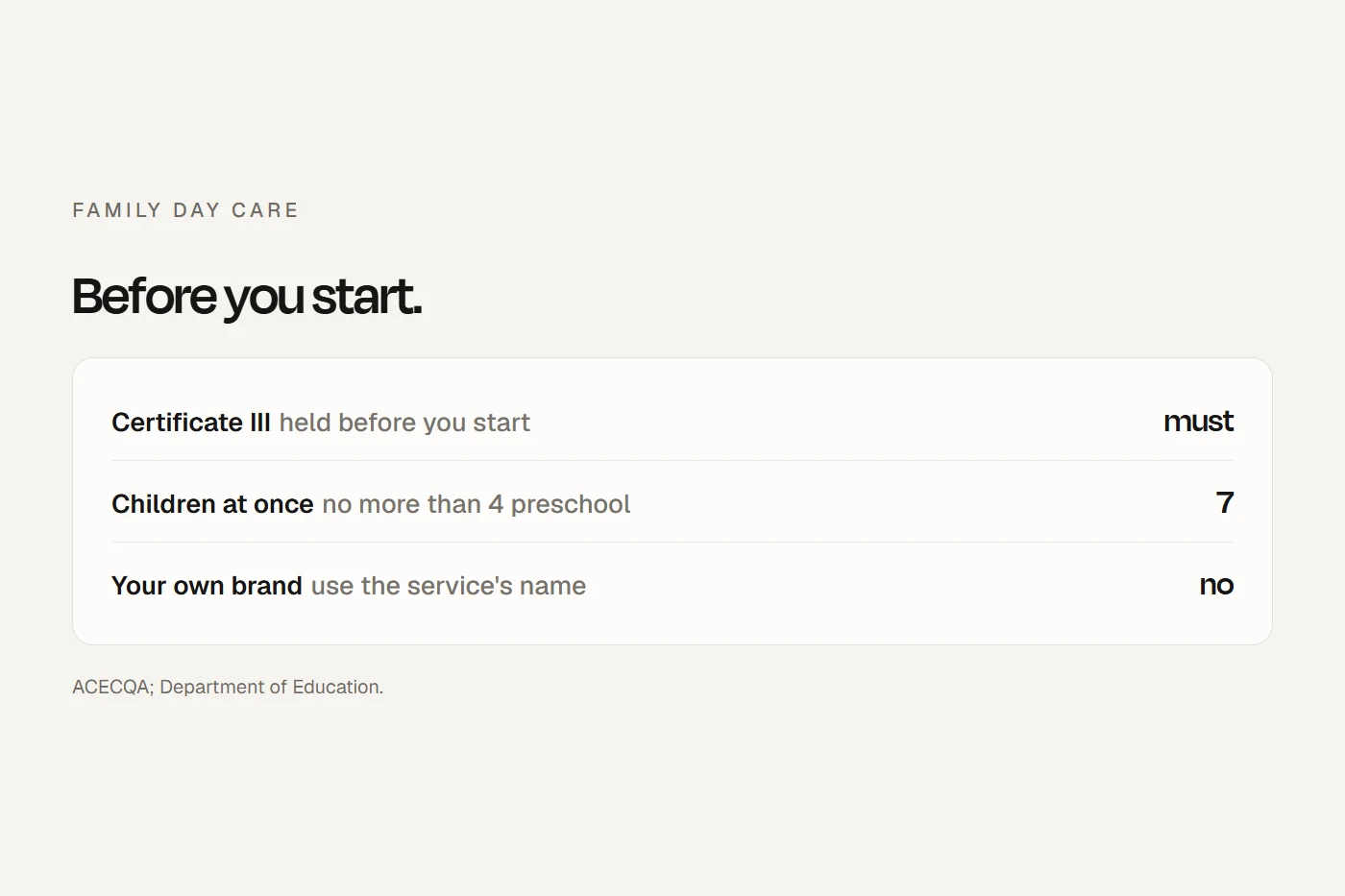
- Most people join a serviceOutside WA, caring at home outside a service with two or more educators isn't family day care and gets no Child Care Subsidy. One person starts by joining an approved service.
- Hold a Certificate III before you startNew educators can no longer start while "working towards" it. Then first aid, a working with children check and a home assessment.
- Market under the service's nameAll advertising, social media and newsletters must use the approved service's name and details, not your own brand.
Two routes: educator or provider
Educator. The Department of Education says family day care educators are "employed by, or contracted to, an approved provider". You run care from your home, usually set your own fees, and the service supports, monitors and pays you. Services only accept educators within a certain distance of a coordinator, so the first step is finding the services that cover your suburb.
Provider. Running a family day care service takes three approvals: provider approval and service approval from your state regulator under the National Law, and a separate Child Care Subsidy approval from the Department. You lodge them together through the National Quality Agenda IT System, and you should apply before your planned start date, because CCS can't be backdated past the application. Regulators decide provider approval within 60 days of a complete application and service approval within 90; the Department gives no timeframe for CCS approval. Every person with management or control must pass fit and proper checks under both laws, including police checks, working with children checks and, for new CCS applicants, a statement of tax record from the ATO. You'll need diploma-qualified coordinators from day one, and the regulator sets a maximum number of educators on every family day care approval.
On your own? Outside Western Australia, the National Regulations exclude care in your own home unless it's part of a service using two or more educators. That isn't family day care, and it can't attract Child Care Subsidy: the Department lists informal care, like babysitting, as ineligible. If you're in WA, ask the regulator.
What an educator needs
- An approved Certificate III in early childhood education and care, held before you start. Coordinators need a diploma.
- First aid, anaphylaxis and asthma training on ACECQA's approved list, renewed every three years, with CPR every year.
- A working with children check for your state, current before you start, and a National Police Check. Child Care Subsidy is only payable for sessions where the service has notified the Department of the educator's check.
- Every adult in the home assessed. The service must check that anyone 18 or over living there is fit and proper: a working with children check in NSW and Queensland (Queensland says every adult occupant needs a blue card), a check or teacher registration in Victoria, and a recent police check or equivalent elsewhere. You must tell the service when a new adult moves in.
- Public liability insurance of at least $10 million, plus home and contents cover that allows business use.
- A device for care only: a service-supplied or service-authorised phone or tablet, never used for personal accounts.
Your home
The service assesses your home before care starts and at least once a year, including a risk assessment. It looks at:
- Glass: accessible glass at or below 0.75 metres (1 metre in WA), including a front door, must be safety glass, filmed or guarded.
- Water hazards: pools, ponds, dams and anything that holds water. A pool needs fencing to your state's law, a monthly inspection by someone from the service who doesn't live or work there, and your own daily check.
- The rest: nappy change arrangements, animals, a way out if you live in a multi-storey building, and any renovations you're planning.
You'll display a floor plan of the care areas, the service's rating certificate and the prescribed information near the entrance.
Ratios
An educator can care for no more than 7 children at once, no more than 4 of them preschool age or under. Your own children under 13 count if no other adult is caring for them. The service can approve more only in exceptional cases: siblings, a child needing protection, or a rural area with no alternative. You also can't claim Child Care Subsidy for your own children on days you work, and relatives can't outnumber non-relatives in a fortnight (the "less than 50% rule").
Council
In NSW, home-based child care is exempt development, unless the home is on bushfire prone land. Elsewhere it varies by council: in WA one council requires approval for every family day care home while others exempt it. Ring your council's planning team before you register, and get the answer in writing.
How the money works
In most services you set your own hourly or session rate, and the ACCC found educators look at local centres and other family day care when setting it. The provider receives the Child Care Subsidy, collects the gap from families, takes its levies and pays you. The provider now collects every gap fee directly by electronic transfer: educators can't take it in cash or into their own account. Gap fees can't be waived, except in a declared emergency, or refunded.
The ACCC found home costs, the service's levies and consumables are educators' three biggest costs, and many educators do a lot of unpaid work: cleaning, paperwork and shopping. Levies differ between services, which is one reason educators switch. Childcare from an approved service is GST-free, but ask your accountant about your own contract, home expenses and capital gains tax on the house.
Every default is an example, not a forecast or a typical figure: replace them with your service's levy and your own numbers. Try one child fewer: an empty place all year cuts take-home far more than a small change in your fee. Tax, super and leave aren't included.
Finding families
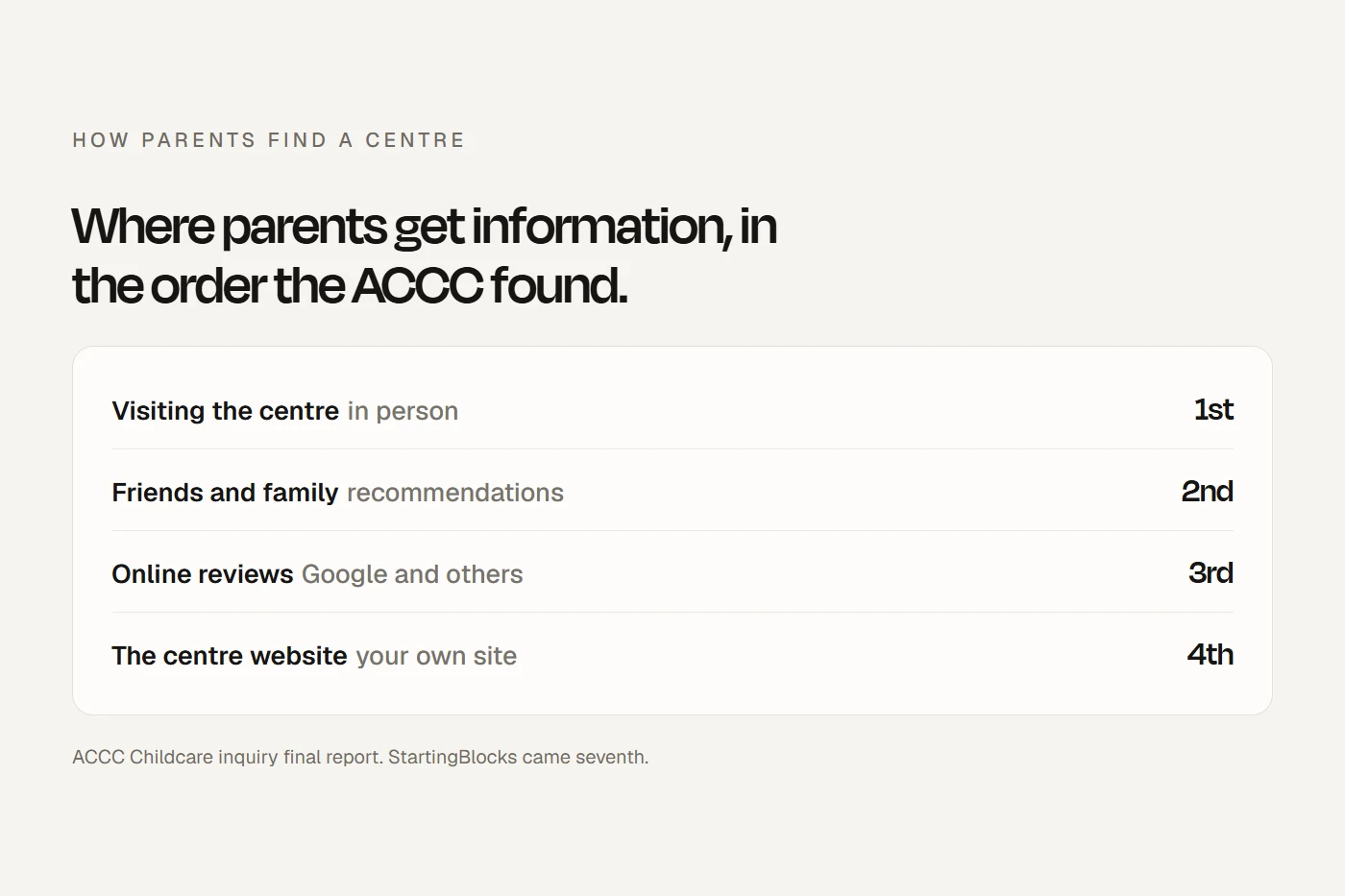
The ACCC found families choosing family day care put location and availability first, and that services do the work of matching educators with families. It also found StartingBlocks listed services, not individual educators. So for a new educator, the service's enquiry list and website are the first source of families, which is a good reason to choose a service partly on how well it markets.
The rule that shapes everything else: the Department says educators "must not use a different service name when delivering care on behalf of the CCS-approved service. All advertising, social media content and newsletters must clearly use the correct name and details of the CCS-approved service as the provider of care." Its own example is an educator who can't present her care as "Jen's Child Care". ACECQA says an educator can advertise if the ad makes clear which approved service they're part of and includes the service's contact details.
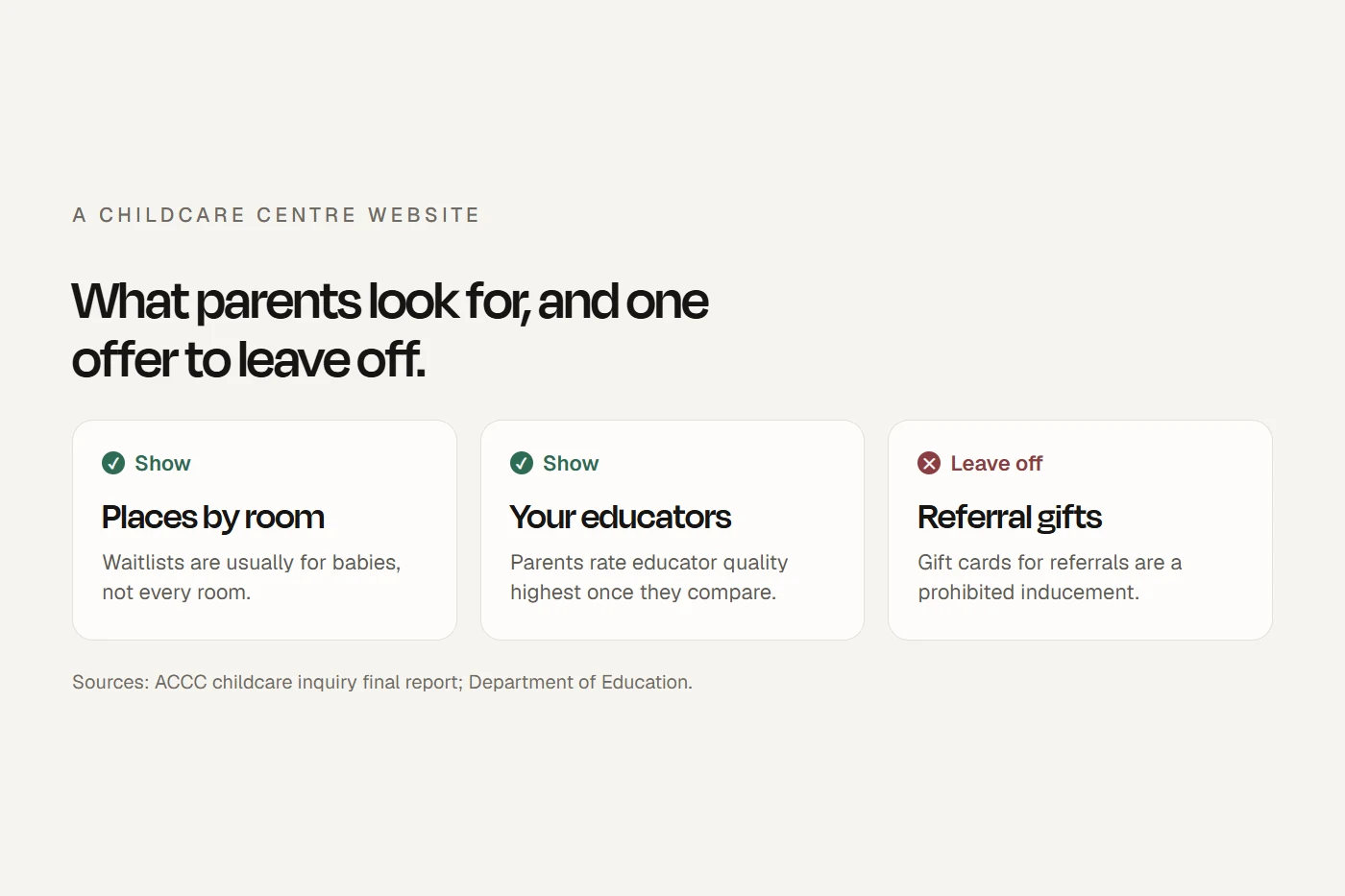
- Your profile on the service's website. The best page you'll have. Suburb (not street), hours including any early, late, weekend or overnight care, ages and vacancies by day, languages spoken, your qualifications and first aid, the service's rating, what a day looks like, meals, and how to book a visit. The ACCC notes family day care suits families wanting flexible hours, small groups and an educator who shares their language and culture, and the same educator every day is a real selling point.
- Your own website or Facebook page. Only if it presents the care as the service's: its name in the header and footer and its contact details, not a stand-alone brand. Check your service's agreement first.
- Google Business Profile. Google only shows an address where there's permanent signage, and the name has to be the service's, so in practice let the service run its profile. If you have one, hide the address and list your suburb as the service area.
- Local parent groups. Fine if the post names the service and uses no photos of children taken on a personal device.
- Your address. No rule requires you to publish it. Give the suburb publicly and the street once a visit is booked, and never pair the address with photos or a daily routine.
- Free visits and word of mouth. A free visit or trial is allowed, but gift cards or vouchers for referrals are a prohibited inducement, whoever offers them.
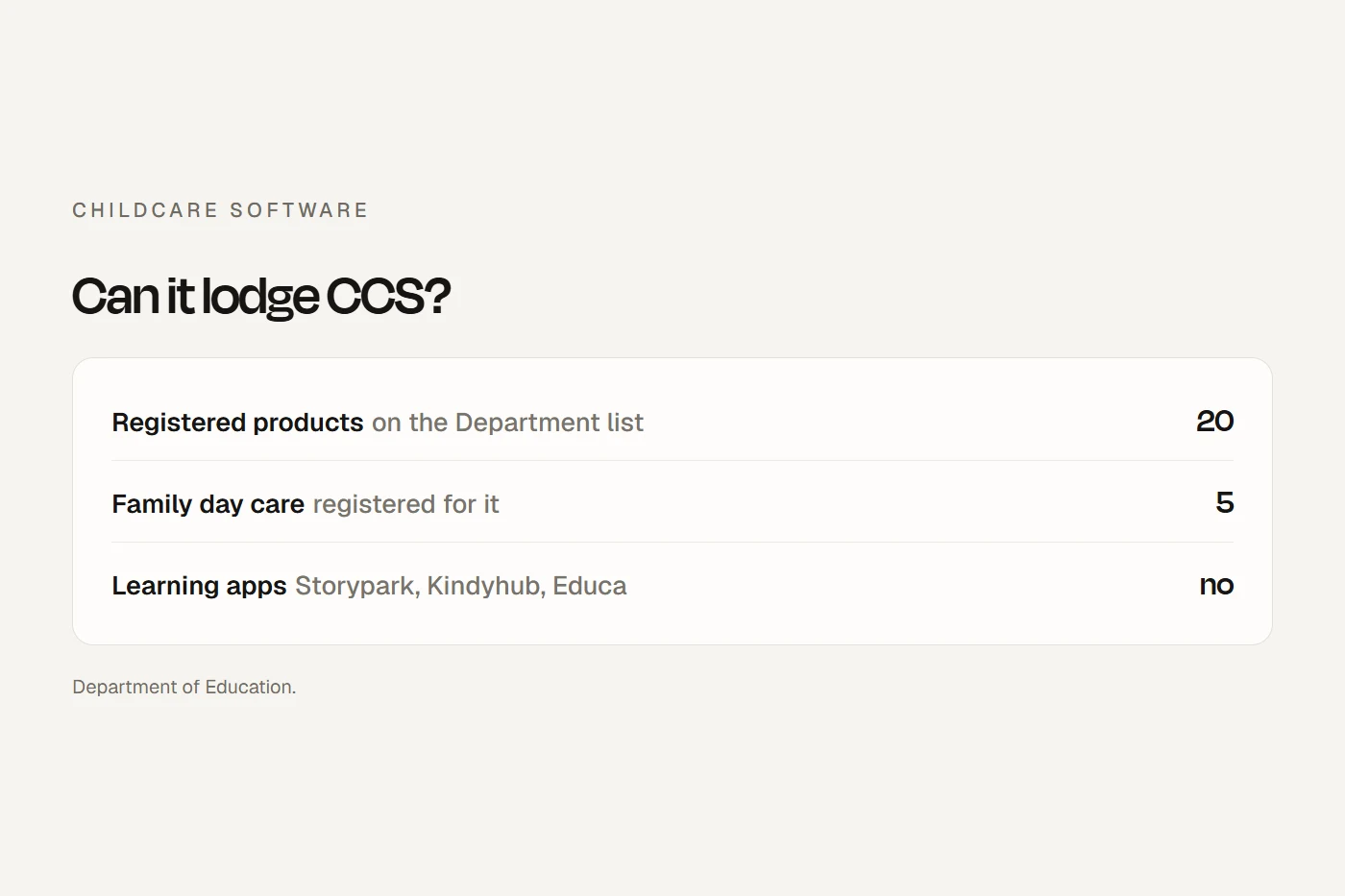
If you're starting a provider, you can't advertise care to families until the service application is lodged, but asking educators to register their interest is fine. My guides to childcare marketing and the childcare website checklist cover the service side, and childcare software covers the systems registered for family day care.
Can I do this?
Tap a card to see the verdict.
Your start-up checklist
For educators joining a service. Your ticks save in this browser.
- Hold an approved Certificate III or higher, or enrol and plan the placement hours.
- Get first aid, CPR, anaphylaxis and asthma training from ACECQA's approved list.
- Get your working with children check and a National Police Check.
- Check every adult at home can pass the screening your state requires.
- Shortlist services that cover your suburb and compare levies, support, payment timing, rating and how they find families.
- Get landlord permission if you rent.
- Ask your council in writing, unless you're in NSW and not on bushfire prone land.
- Prepare the home for the service's assessment: glass, water hazards, nappy change, animals.
- Take out $10 million public liability and check your home and contents cover.
- Get an ABN if you'll contract to the service, and a PRODA account.
- Set up a care-only device through the service.
- Put up the floor plan, rating certificate and prescribed information.
- Write your profile for the service's website, under the service's name.
- Talk to an accountant about GST, home expenses and capital gains tax.
My view
For most people, starting family day care means choosing the right service, and that choice decides how many families you meet. Ask each service how it markets its educators, whether you get a proper profile page, what the levies are, and how quickly you're paid now that it collects the gap. Then make your profile answer what families care about most: where you are, when you're available, and who you are.
Questions I get asked
How do I start a family day care business?
As an educator, hold an approved Certificate III, get your checks and training, and join an approved family day care service that covers your suburb. To run a service, you need provider, service and Child Care Subsidy approvals, lodged together.
Can I run family day care on my own?
Outside WA, care in your own home that isn't part of a service with two or more educators isn't family day care and gets no Child Care Subsidy. One person starts by joining a service.
How many children can a family day care educator have?
No more than 7 at once, and no more than 4 preschool age or under. Your own children under 13 count if no other adult is caring for them.
Can I advertise my family day care under my own name?
No. All advertising, social media and newsletters must use the approved service's name and details. You can promote yourself as an educator with that service.
Do I need council approval for family day care?
In NSW, usually not, unless the home is on bushfire prone land. Elsewhere it depends on your council, so ask in writing before you register.
About this guide
Written by Joseph Alzein, founder of bdog. bdog builds websites for childcare services. The rules come from the Department of Education, ACECQA, the Education and Care Services National Regulations, the GST Act, the ATO and state planning bodies. Data on how families choose and what educators earn is from the ACCC's childcare inquiry, described without dated figures. This is general information, not legal or financial advice.
Main sources: