What the Tax Practitioners Board allows accountants to advertise
There’s no separate TPB advertising rule. What does govern a tax or BAS agent’s marketing: the Code’s honesty item, the duty to keep clients informed, the symbol licence, the consumer law and APES 110. The website duty, registration type, the stronger new sanctions, refund claims, tax time loans, the ATO’s name and testimonials. With a sorter and a website checklist.
On This Page
- How clients choose a tax agent
- Where the advertising rules come from
- Advertise only what you’re registered for
- The one compulsory piece of website content
- The registered practitioner symbol
- Refund claims, fees and comparisons
- The ATO’s name and logo
- Testimonials, reviews and confidentiality
- Designations and memberships
- Channels
- Can I say this?
- Website checklist
- Your first 90 days
- Questions I get asked
If you search for the Tax Practitioners Board's advertising rules, you'll find blogs quoting a TPB rule against misleading advertising. It doesn't exist as a separate rule. The TPB has no guidance statement on advertising at all. What governs a registered tax or BAS agent's marketing is the Code of Professional Conduct in the Tax Agent Services Act, the Code determination's duty to keep clients informed, the TPB's symbol licence, the Australian Consumer Law, and, for CA ANZ, CPA Australia and IPA members, the accounting profession's code. The sanctions for getting registration claims wrong got much stronger recently. This guide covers what your website must show, what you can and can't claim, refund promises and tax time loans, testimonials, the ATO's name, and the channels. It's general information, not legal advice.
- Your website has one compulsory jobTell clients about the TPB register, how to complain, and their rights, with a link to your own register entry.
- Advertise only what you're registered forA BAS agent can't advertise tax returns. Advertising tax or BAS services while unregistered is now a criminal offence too.
- No refund promises, no ATO badges"Maximum refund, guaranteed" needs grounds you can't have, and nothing should suggest the ATO endorses you.
How clients choose a tax agent
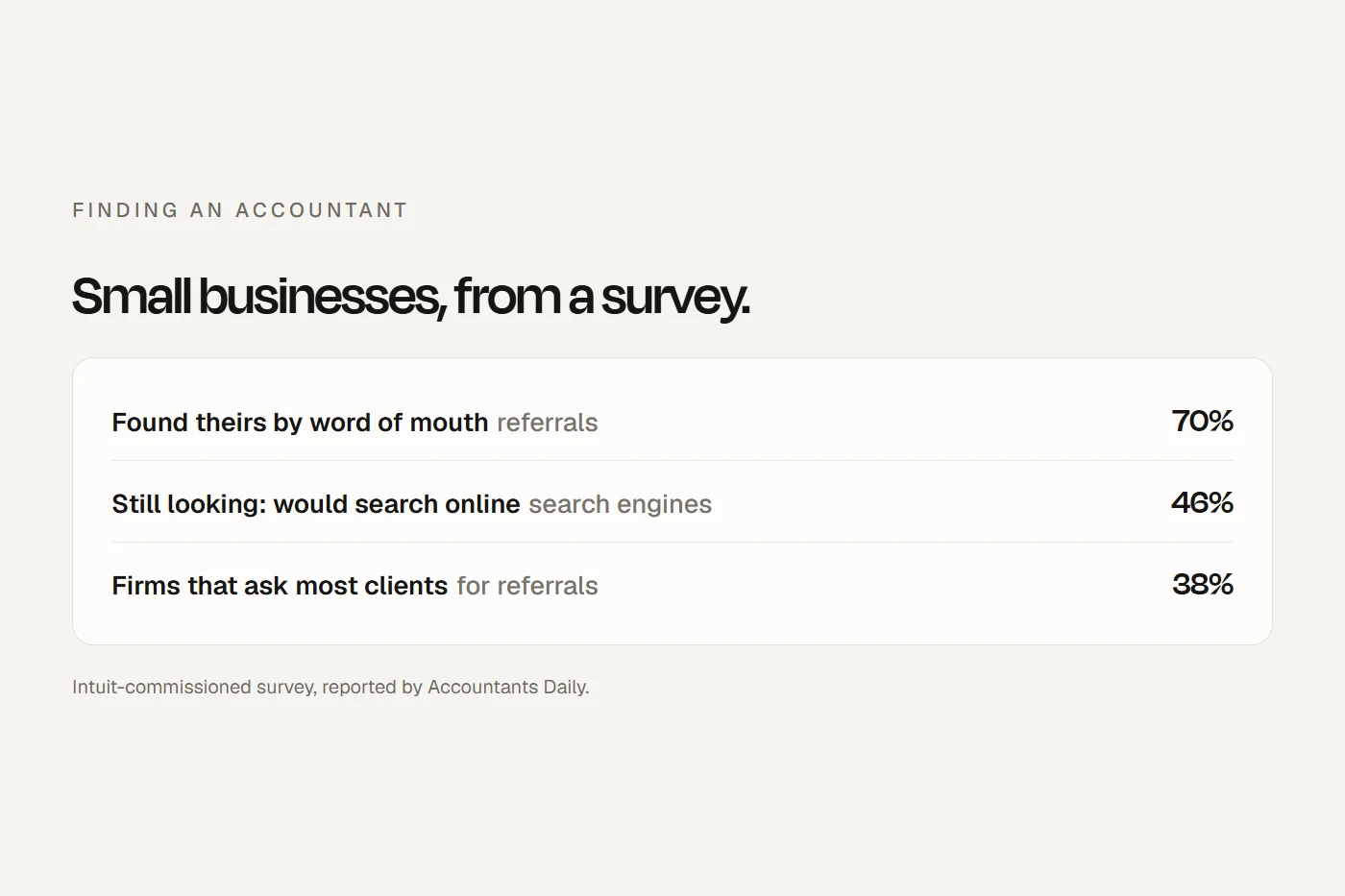
TPB survey data presented in a TPB webinar found about two in three people found their tax practitioner through recommendations from family or friends, about one in eight through an internet search, and only about one in sixteen through the TPB register. The TPB's more recent survey found about two in three consumers know the register exists. So most clients arrive by referral, check you online, and never look you up on the register unless your site makes it one click away. Registered agents lodge about six in ten individual tax returns.
Where the advertising rules come from
The Tax Agent Services Act. Only a registered tax agent may advertise tax agent services other than BAS services, and only a registered tax or BAS agent may advertise BAS services. Nobody may represent that they're registered when they aren't. These were civil breaches; since recent amendments they're also criminal offences, a registered agent's breach of the Code can now go to the Federal Court for a civil penalty, and the TPB can issue infringement notices. An unregistered business that pays an infringement notice for advertising goes on the TPB register for five years.
The Code of Professional Conduct. No Code item says "don't advertise misleadingly". The hooks are item 1, "You must act honestly and with integrity", which the TPB says includes a commitment not to mislead or deceive; item 6, confidentiality of client affairs; and the 2024 determination's duty to uphold the integrity of the profession and the tax system.
The Australian Consumer Law. No misleading claims, and a claim about the future, like the size of a refund, is taken to be misleading unless you had reasonable grounds for it.
The accounting profession's code. APES 110 binds members of CA ANZ, CPA Australia and the IPA. When marketing, members must be honest and truthful and must not make "exaggerated claims" for their services, qualifications or experience, or "disparaging references or unsubstantiated comparisons to the work of others". That's stricter than the consumer law, which tolerates obvious puffery: "Sydney's best tax agent" may get past the ACCC but not APES 110.
Advertise only what you're registered for
A registered tax agent can advertise both tax and BAS services. A registered BAS agent can advertise BAS services but not individual tax returns or any other tax agent service, so check your service list, Google profile and directory listings. An unregistered bookkeeper can't advertise BAS lodgment at all, and the TPB says offering services free to attract clients can still count as providing them for a reward. If your registration is suspended, you're treated as unregistered, so the website, profile and ads have to change at once.
The one compulsory piece of website content
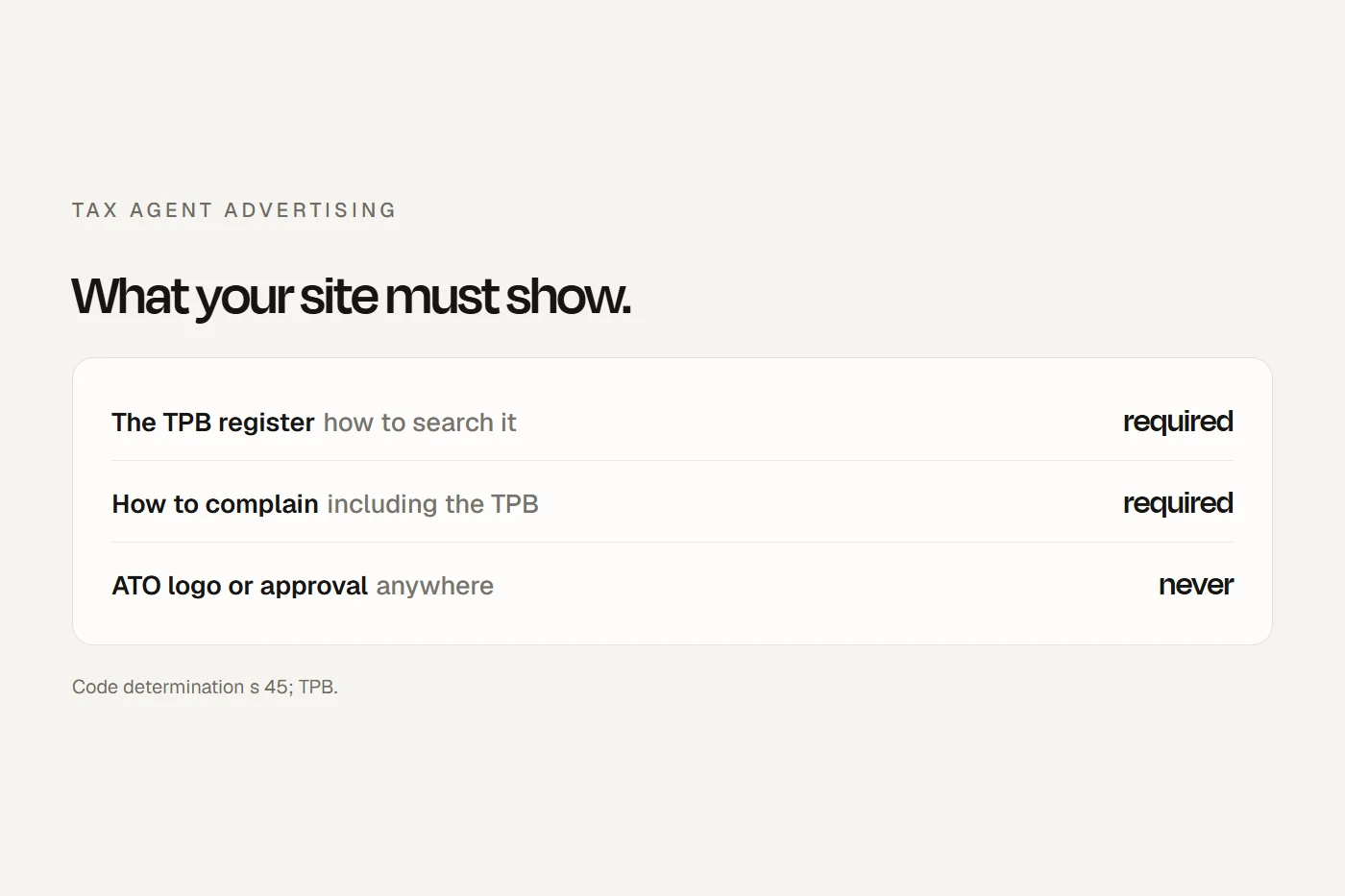
The Code determination requires you to tell all current and prospective clients, "in a prominent, clear and unambiguous way":
- that the TPB keeps a register of tax and BAS agents, and how to search it;
- how to complain about your service, including the TPB's complaints process;
- general information about your obligations and theirs;
- certain events in the last five years, such as a suspension or termination, bankruptcy, or relevant convictions or penalties; and
- anything that applies now, such as conditions on your registration or a current suspension.
The determination's own example of complying is publishing the information on the website you use to promote your services, putting it in your engagement letters, and giving clients the TPB's "Information for clients" factsheet. The TPB recommends a direct link to your register entry and, at a minimum, a link to its online complaint form. Any disclosure should stay up for as long as it could matter to a client, and at least as long as it shows on the register. This duty is now one of the few Code obligations that can be enforced by infringement notice.
A footer line on every page does most of it: "[Name] is a registered [tax agent or BAS agent], number [number]. Check our registration on the Tax Practitioners Board register. How to make a complaint." Link the register text to your entry and the complaint text to a "Your rights and how to complain" page with the rest and the TPB factsheet. Partnerships and companies meet the duty as the entity.
The registered practitioner symbol
The TPB licenses a registered tax practitioner symbol you can use in advertising. The rules: request your own symbol from the TPB, use only the original file, always show your registration number and type with it, don't recolour or redesign it or put it on a busy background, don't co-brand it with the TPB's or other logos, and stop using it if you're suspended, terminated or don't renew. A company or partnership uses the entity's number, not a director's or partner's. A stock "registered tax agent" badge is outside the licence. Your web designer may hold the file to put it on your site. The number itself isn't compulsory without the symbol, but it's the simplest proof you can show.
Refund claims, fees and comparisons
Refunds. "Get the maximum refund, guaranteed" and "we'll save you $2,000" are claims about a future result, so you need reasonable grounds before you make them, and a guarantee you can't keep is misleading. The TPB warns the public about agents who promise "unrealistically large tax refunds", so a registered agent who advertises that way sounds like the people the regulator warns about. "We'll find every deduction you're entitled to" describes your process; an "average refund" figure needs real, current data and a fair basis.
Fees. APES 110 says quoting a lower fee than another accountant isn't unethical in itself, as long as you can do the work properly for it. Show consumer prices including GST, as a single price where you can. "Free first tax return" is fine if it's true and the conditions are clear.
Fees from refunds. "No upfront fee, we take it from your refund" is lawful if you have the client's written agreement, hold the refund on trust and pass the rest on promptly. APES 220 requires that written agreement for members.
Tax time loans and refund advances. The TPB is reviewing these and says they "may not be fair or in their clients' best interests". Its concerns include fees that aren't transparent, percentage fees on refund estimates, sharing client information with lenders, and staff incentives for selling them. If you promote one, the TPB says clients must understand the risks, including what happens if the refund is late or smaller than estimated, and any financial incentive you receive must be disclosed in writing. An ad for a refund advance is a loan ad, which brings extra verification on Meta.
Offshoring. The TPB suggests you don't imply all your work is done in Australia if it isn't, so "100% Australian-based team" has to be true.
The ATO's name and logo
The ATO's copyright notice lets people reuse its material, but "not in any way that suggests the ATO or the Commonwealth endorses you or any of your services". The consumer law bans false claims of affiliation, and Google Ads suspends advertisers who imply a government affiliation they don't have. So no ATO logo, no myGov look-alike, and never "ATO approved" or "ATO registered". The true line is "registered with the Tax Practitioners Board", and "lodges directly with the ATO" is fine if it's so. The TPB is a separate board, not part of the ATO.
Testimonials, reviews and confidentiality
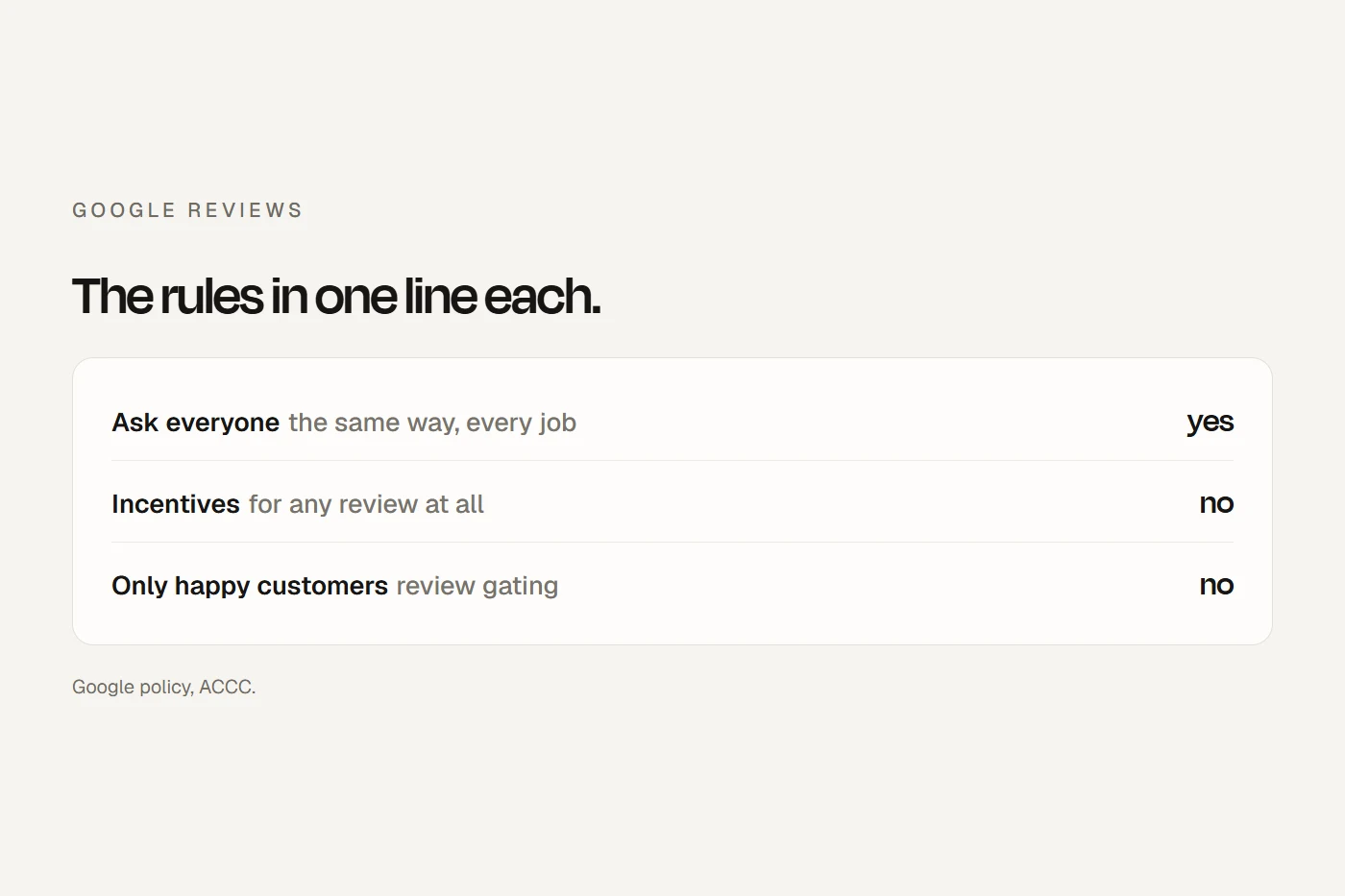
No TPB or accounting body rule bans testimonials. The constraint is confidentiality: you must not disclose anything about a client's affairs without their permission, and the TPB says that permission should be a positive opt-in. So get written consent before naming a client or quoting their result. Ask every client for a Google review after lodgment, offer nothing for it, and never mention their tax affairs or confirm they're a client when you reply. Uploading client lists to an ad platform for targeting is also a disclosure, so it needs the same permission.
Designations and memberships
"CTA", "FTI" and "ATI" are for current members of the Tax Institute at those grades. "Chartered Accountants" as a firm descriptor follows CA ANZ's rules, and CPA Australia and the IPA have their own logo rules. Your register entry can show your recognised professional association if you add it, which costs nothing and reassures the clients who do check.
Channels
Your website. The footer line and rights page above, the symbol if you use it, services that match your registration, prices including GST, and the liability limited line if you're in a professional standards scheme. General tax articles aren't a tax agent service, so blogs are fine; a chatbot that answers personal tax questions is closer to one, and the TPB's guidance on AI says to review AI output and get client permission before putting their information into AI tools.
The TPB register. It's a free local directory clients can search by suburb. Publish your address, add your association, and keep your name and phone identical to your website and Google profile.
Google Business Profile. "Accountant" or a tax preparation category, whichever completes "this business is a", and a BAS-only practice shouldn't pick wording that implies tax returns. My guide to marketing an accounting firm covers the profile and referrals in more depth.
Google Ads. Service plus suburb, "registered" not "ATO", and no refund promises. Plan the tax time push around the 31 October lodgment deadline without year-specific dates on evergreen pages.
Can I say this?
Tap a card to see the verdict.
Website checklist
Tick these off as you check your site; the list remembers your progress on this device.
- Your name matches the TPB register Legal or business name.
- Registration type and number shown With the symbol, if you use it, from the TPB's original file.
- The entity's number for a company or partnership Not a person's.
- A line about the TPB register How to search it, with a direct link to your entry.
- How to complain Including a link to the TPB's complaint form.
- Rights and obligations information Or the TPB's "Information for clients" factsheet linked.
- Any conditions, suspension or prescribed event disclosed And kept up while it shows on the register.
- Services match your registration type BAS agents: no tax returns.
- No ATO logo, Coat of Arms or "ATO approved"
- No refund-size promises or guarantees
- Members: no "best", "leading" or "most trusted" And any comparison substantiated.
- Written consent behind every testimonial and case study
- "Fee from refund" explained With written agreement in the engagement letter.
- Offshoring described honestly
- GST-inclusive consumer prices And the liability limited line if you're in a scheme.
- AI content and chatbots reviewed No client data into AI tools without permission.
Your first 90 days
Month 1: get the basics right. Look yourself up on the TPB register and fix your business name, contact details and map pin, and add your association. Request your symbol. Publish the footer line and rights page, and put the same text in your engagement letter. Run the checklist over your site, Google profile, Facebook page and directory listings, and rewrite any refund-size, "guaranteed", "ATO" or superlative lines.
Month 2: reviews, consent and offers. Add a marketing consent line to the engagement letter, covering testimonials, case studies, ad audiences and AI tools. Ask every client for a Google review after lodgment. If you offer fees from refunds or work with a refund-advance lender, put written agreements, trust handling and written disclosure in place.
Month 3: campaigns. Run Google Ads on service plus suburb, saying "registered", never "ATO". Plan the tax time push. Publish a couple of general guides, like what to bring to your tax appointment. Write a one-page marketing sign-off step into your quality management system.
Questions I get asked
Does the TPB have advertising rules?
Not as a separate rule or guidance statement. The standard comes from the Code's honesty item, the duty to uphold the profession's integrity, the Australian Consumer Law and, for CA ANZ, CPA Australia and IPA members, APES 110.
What must a tax agent's website show?
That the TPB keeps a register and how to search it, how to complain including the TPB's process, general rights and obligations, and any conditions, suspension or prescribed events. A footer line with links to your register entry and a rights page covers it.
Do I have to show my TPB registration number?
Only if you use the TPB symbol, which must always carry your number and registration type. Showing it anyway is the simplest proof of registration.
Can a BAS agent advertise tax returns?
No. Only a registered tax agent may advertise tax agent services that aren't BAS services.
Can I advertise a maximum refund?
Not as a promise. A claim about a future refund needs reasonable grounds, and the TPB warns the public about agents who promise unrealistically large refunds. Describe how you work instead.
Is the TPB part of the ATO?
No. The Tax Practitioners Board is a separate board set up under the Tax Agent Services Act. Say you're registered with the TPB, and never imply the ATO endorses you.
About this guide
Written by Joseph Alzein, founder of bdog. I build websites for accountants, tax agents and bookkeepers. Sources were checked on 12 October 2026. This is general information, not legal advice. I've left out penalties.
Main sources:
- Tax Agent Services Act 2009
- Tax Agent Services (Code of Professional Conduct) Determination 2024
- TPB: keeping your clients informed
- TPB(GS) 54/2024: keeping your clients informed
- TPB: registered tax practitioner symbol guidelines
- TPB: reforms to sanctions powers
- TPB: reviewing tax time loans
- TPB(GS) 44/2023: what is a tax agent service?
- TPB(GS) 31/2018: outsourcing and offshoring
- TPB(GS) 55/2026: artificial intelligence
- TPB: help using the register
- ACCC: false or misleading claims
- APES 220 Taxation Services
- ATO: copyright