Practice management software for psychologists, compared
What each system costs at your headcount once text messages, video and claims are added, which score the K10 and DASS-21 for you, and which can take a GP referral by secure message. From the vendors’ own pages and the Psychology Board.
On This Page
- What a psychology practice needs that others don’t
- The six systems, side by side
- What it costs at your size
- K10 and DASS-21 inside the system
- GP referrals by secure message
- Records, privacy and the Code of conduct
- Which should you trial?
- Before you switch
- Online booking on your website
- My view
- Questions I get asked
Search for psychology practice management software and page one is vendors, a directory, APS member offers and blog posts from software companies. None of them shows what a psychology practice needs to compare: what each system costs at your headcount once text messages, telehealth and claims are added, which ones score the K10 and DASS-21 for you, and which can receive a GP referral by secure message. That's what this page does. I build psychology practice websites and have no relationship with any of these vendors. Everything below comes from their own pages and from the Psychology Board, read on 12 October 2026. For the general allied health comparison, see Cliniko vs Halaxy vs Nookal vs Zanda; this one is only about what's different for psychologists.
- Free isn't always cheapestHalaxy's core costs nothing, but text messages, video and Medicare claims are paid in credits. For a busy solo practice with a lot of telehealth, that can come to more than a subscription.
- Two score the K10 and DASS-21 out of the boxHalaxy and Zanda. Elsewhere you build the questionnaire yourself or add a connected app.
- Two name their secure messaging networkscoreplus (Argus and HealthLink, included on its Plus plan) and Halaxy (HealthLink and Medical-Objects, per message). I found nothing for Cliniko, Zanda or splose.
What a psychology practice needs that others don't
Every system here books appointments, sends reminders, takes notes and invoices. For a psychology practice, five things separate them:
- Referral tracking. Medicare sessions run off a GP's mental health treatment plan and referral. The software should hold the referral, count the sessions used against the limit on it, and warn you before it runs out. Halaxy sends alerts before plans expire and reminders when a referral nears its limit; Cliniko's claim form asks for the referral date and period; coreplus runs Medicare's online patient checks.
- Outcome measures. If you use the K10 or DASS-21 every few sessions, scoring them by hand adds up.
- GP referrals by secure message. Some GPs refer through secure messaging networks rather than fax or email. If yours do, you want those messages landing in the system.
- Telehealth. Built-in video keeps sessions, notes and billing in one place. Bolt-on Zoom works but is another login and another privacy check.
- Records. The Psychology Board's own Code of conduct sets how long you keep records and how securely, which affects what you need from a cloud vendor and how you leave one.
The six systems, side by side
| Halaxy | Cliniko | Zanda | coreplus | Nookal | splose | |
|---|---|---|---|---|---|---|
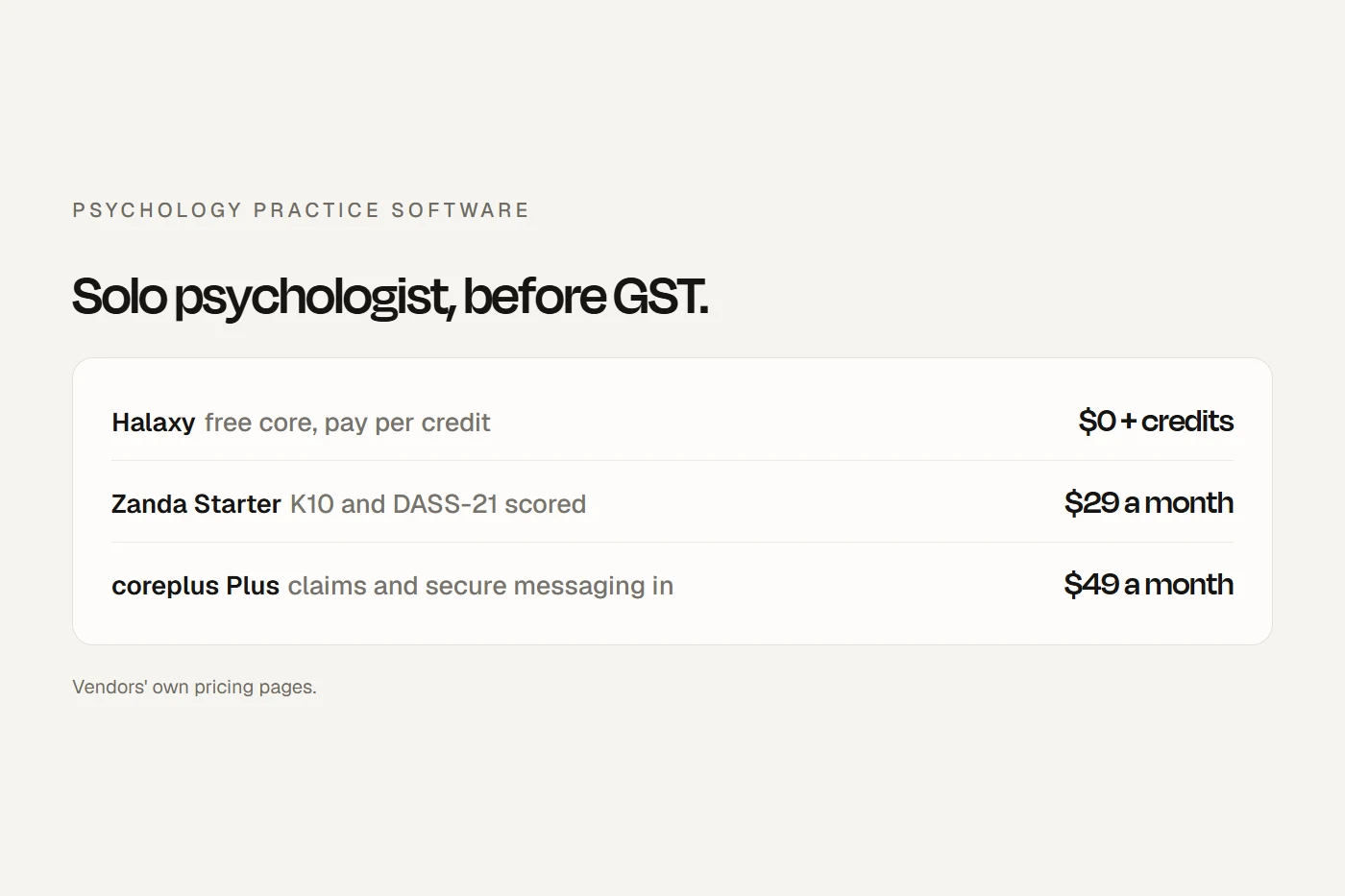
| Solo price a month, before GST | $0 plus credits | $45 | $29 | $35 (Core), $49 (Plus) | $49 (Essentials), $59 (Professional) | $27 |
| Medicare and bulk billing | Yes, a credit per claim | Through Tyro Health | Direct, no claim fee | Free on Plus | From 10c a claim | Through Tyro Health |
| DVA | Yes | Through Tyro Health | Yes | Free on Plus | Yes | Listed |
| Built-in video | Yes, in credits | Yes, included | Yes, four free sessions a month, then $9 | Yes, by the minute | No, Zoom, Coviu or Doxy.me | No, Meet, Teams or Zoom |
| K10 and DASS-21, scored | Yes | Through a connected app | Yes | Build your own scored form | Not named | Not found |
| Secure messaging | HealthLink, Medical-Objects | Not found | Not found | Argus, HealthLink | Add-on, network not named | Not found |
| Text message | 1 credit | 10c | 15c | 15c (Core), 10c (Plus) | From 7c | 10c |
| Data held in Australia | Yes | Yes | Yes, Sydney | Yes, Sydney and Melbourne | Yes, Sydney | Yes |
| Website booking | Embed or button | Embed or button | Embed or link | Portal on your site | Link | Embed or button |
Scroll the table sideways to see every column.
As each vendor describes it on its own pages. "Not found" means I couldn't find it, not that it can't be done; ask on the demo. Halaxy credits cost 15c to 22c each including GST, depending on the pack.
Halaxy
The core is free with no credit card: bookings, notes, invoicing, email reminders and a library of clinical tools that includes the K10 and DASS-21 with automatic scoring into the client's notes. You pay in credits for the rest: one per text message, two per 15 minutes of video, one per successful Medicare, DVA or private health claim, and one per secure message through HealthLink or Medical-Objects. Data is stored in Australia on Amazon Web Services. A full review is in my Halaxy guide.
Cliniko
One flat price covers every feature, priced by bands of practitioners: $45 for one, $95 for two to five, $145 for six to eight, before GST. Video is built in and included. Medicare and DVA claims go through a separate Tyro Health account, whose online plan charges 14c a claim including GST, up to a cap. There are no built-in scored measures; connected apps such as ClientForms write scored results back into Cliniko as a note. I found no secure messaging. More in my Cliniko pricing guide.
Zanda (formerly Power Diary)
Starter is $29 a month for one practitioner; Growth is $59 plus $29 for each extra practitioner, all before GST. Zanda connects to Medicare and DVA directly with no claim fee. Its scored forms library includes the K10+, DASS-21, DASS-42, GAD-7, PHQ-9 and PCL-5, scored automatically when a client submits the form, with progress reports over time. Telehealth gives each practitioner four free sessions a month, then $9 a month for unlimited, or you can use Zoom. Data is hosted in Sydney.
coreplus
Core is $35 a user a month and Plus $49, before GST. Plus is the one psychologists usually need: it adds free Medicare and DVA claiming and free secure messaging through Argus and HealthLink, which puts your practice in both directories so GPs can find you. Video is built in at a cent a minute per participant. Questionnaires are templates you build and score yourself. Data stays in Australia, and by default only the treating practitioner and supervisor can open a client's case notes. Eight or more practitioners moves to a quoted Group plan.
Nookal and splose
Nookal's Professional plan, $59 a practitioner, adds custom forms, plans and outcome graphing, and sells secure messaging as an add-on without naming the network. Video is through Zoom, Coviu or Doxy.me. splose is $27 a practitioner with admin roles free, claims through Tyro Health and video through Meet, Teams or Zoom. It has announced a new Australian price but hadn't published it when I checked; my splose guide has the detail.
Two you'll see in searches: Jane prices in Canadian dollars and I found no Australian Medicare claiming, so it isn't built for an Australian psychology practice. PractaLuma is a newer psychology-only system with a free tier; I couldn't confirm its Medicare and hosting details on its own site, so check those directly.
What it costs at your size
The base price is only part of it. This adds text messages, video and claims at each vendor's published rates for a month of your practice. All before GST.
A few things this shows. Halaxy's credits grow with your caseload, so the free system gets more expensive the busier you are, mostly through video. Cliniko gets cheaper per head from two to five clinicians because the price is flat across that band. coreplus Plus looks dearest for a solo practice, but it's the only one where Medicare claims, DVA claims and secure messaging are all included. Cliniko and splose users pay Tyro Health's claim fee on top, and Nookal and splose users pay for their own video platform.
K10 and DASS-21 inside the system
If you measure every client at intake and review, this matters more than the price gap:
- Halaxy: the K10 and DASS-21 are in its clinical tool library, with scores recorded straight into the client's notes.
- Zanda: both are ready-made scored forms, along with GAD-7, PHQ-9, PCL-5 and others. Clients fill them in online and the score is calculated on submission, with a progress report across sessions.
- coreplus: you build the questionnaire and assign the points yourself, then clients complete it through Patient Plus or Snapforms.
- Cliniko: its own forms aren't scored. Connected apps such as ClientForms and Allied PROMs add scored measures and write the result back as a treatment note; check the exact measures you use are in their library.
- Nookal: outcome graphing on the Professional plan, but no named psychology measures on its pages.
GP referrals by secure message
General practices use secure messaging to send referrals without a fax machine. coreplus includes it on Plus through Argus and HealthLink, and you can create a client straight from a referral message. Halaxy charges a credit a message through HealthLink and Medical-Objects, and also sells a dedicated fax number. Nookal sells an add-on without naming the network. I found nothing for Cliniko, Zanda or splose.
If most of your referrals arrive as an emailed PDF, you don't need this on day one. If you're a group taking GP referrals at volume, weigh coreplus or Halaxy.
Records, privacy and the Code of conduct
The Psychology Board's Code of conduct took effect on 1 December 2025 and replaced the APS Code of Ethics as the profession's regulatory standard. Three parts touch your software:
- Keeping records. At least seven years from the last entry for adult clients, and for clients under 18 at the last entry, until after their 25th birthday. State laws can require longer. Plan how you'll keep old records readable when you leave a system.
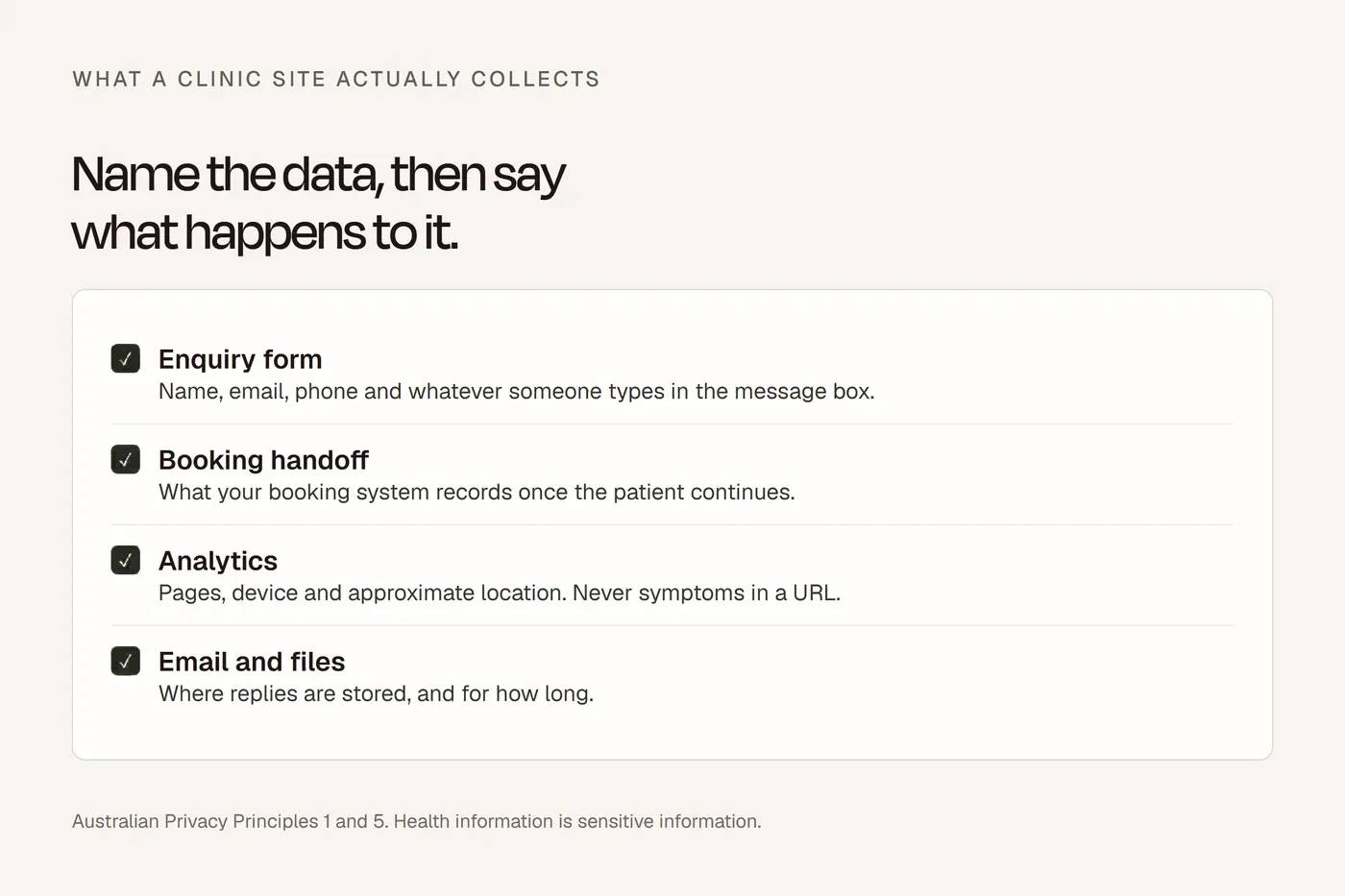
- Securing them. Records must be held securely and protected from unauthorised access, including electronic records, and clients told how their information is recorded and stored.
- Privacy law. The Board points to the Australian Privacy Principles. Every health service provider is covered by the Privacy Act whatever its turnover, including the data breach notification scheme.
Australian hosting helps, and all six systems say they keep Australian clients' data here. It isn't the whole job. The Information Commissioner is clear that using a cloud provider doesn't hand your security obligations to them, and its breach reports include a health provider whose staff member accidentally made a shared folder of referral letters public. Turn on two-step login, give each staff member their own login with only the access they need, and switch off accounts the day someone leaves. If you use an AI scribe or record a video session, Ahpra expects you to get the client's informed consent first.
Which should you trial?
Before you switch
Your ticks save in this browser.
- Export everything before you cancel: clients, notes, letters, scored measures, invoices and referral details. Ask what won't come across.
- Keep the old records readable for seven years from the last entry, or until after a young client's 25th birthday.
- Carry over each client's referral and the sessions already used against it.
- Check where the new system stores data, and whether any AI note-taking sends it overseas.
- Turn on two-step login and give each person their own account.
- Update your privacy policy to name the new system, any AI tools and how video sessions work.
- Re-register for secure messaging so GPs' referrals reach the new system.
- Set up Medicare claiming, or your Tyro Health account, before the first day.
- Update every booking link on cut-over day: website, Google profile, directory listings and email signatures.
- Tell clients if their reminders, forms or video links will look different.
Online booking on your website
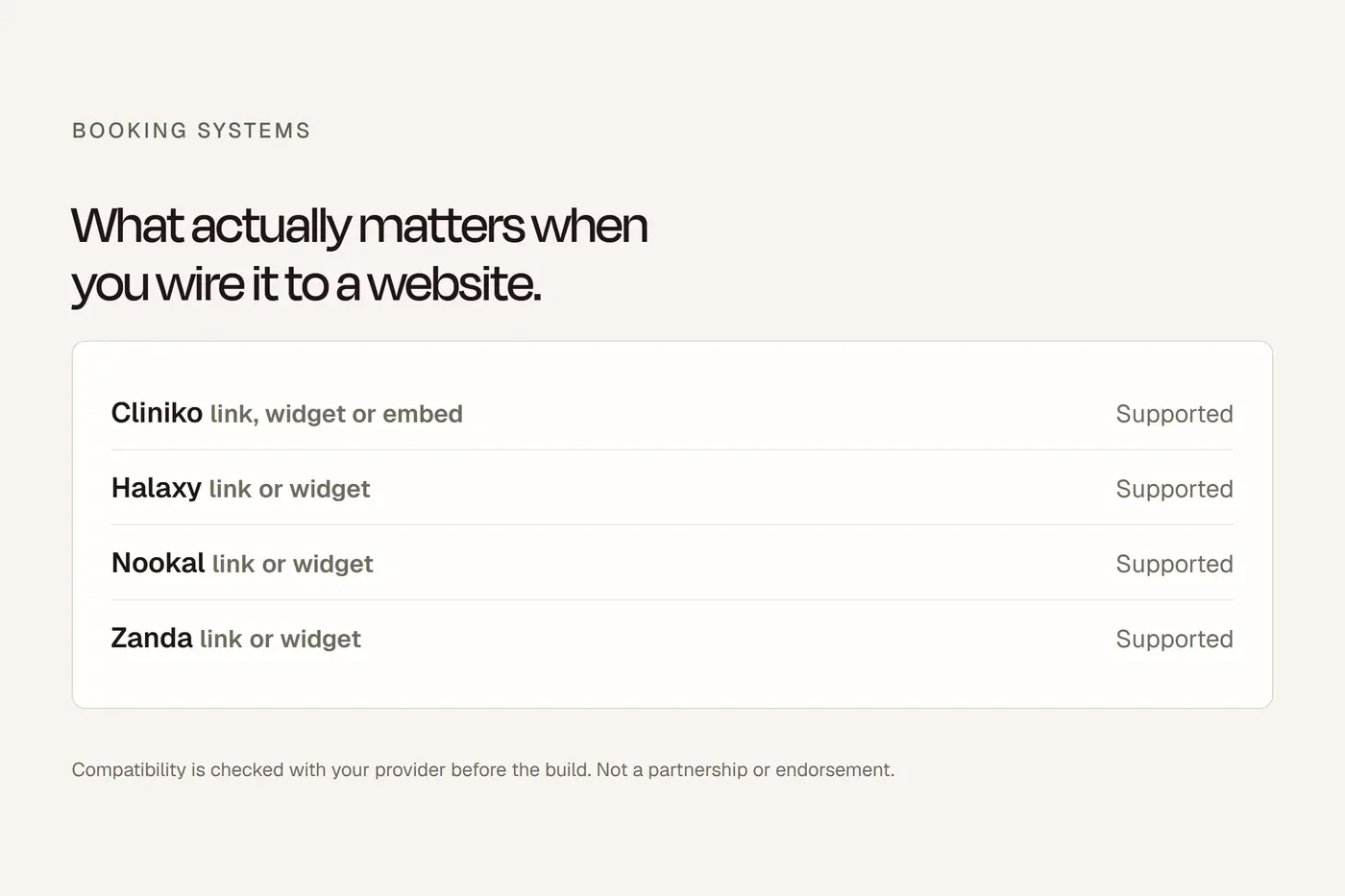
Every system here can put a book-now on your site. Halaxy, Cliniko, Zanda and splose give you an embed code or a button; coreplus puts its client portal on your site; Nookal gives you a booking link. Embedded booking keeps people on your site, which is better for counting how many bookings it brings in. Psychology booking has one extra wrinkle: many practices want new clients to enquire first and only existing clients to book online. On the demo, ask whether you can limit online booking to certain appointment types or clinicians. How to add online bookings to your clinic website walks through each system.
My view
Pick on referrals and measures first, price second. If your GPs send referrals by secure message, coreplus Plus or Halaxy. If you score the K10 or DASS-21 every few sessions, Halaxy or Zanda. If neither matters much and you're growing towards five clinicians, Cliniko's flat price is hard to beat. Then run the calculator with your real caseload, because Halaxy's free core and coreplus's per-minute video both cost more the busier you get.
Questions I get asked
What is the best practice management software for psychologists in Australia?
It depends on how you work. Halaxy and Zanda score the K10 and DASS-21 out of the box; coreplus Plus includes Medicare claiming and secure messaging; Cliniko has one flat price for two to five clinicians.
Is there free psychology practice software?
Halaxy's core is free. Text messages, video, claims and secure messages cost credits, 15c to 22c each including GST.
Which practice software connects to Medicare directly?
Zanda, with no claim fee, and coreplus on its Plus plan. Halaxy charges a credit per claim and Nookal from 10c. Cliniko and splose claim through Tyro Health.
How long do psychologists have to keep records?
Under the Psychology Board's Code of conduct, at least seven years from the last entry for adults, and until after the client's 25th birthday if they were under 18 at the last entry. State laws can require longer.
Does my practice software have to store data in Australia?
Not necessarily, but sending health information overseas brings extra obligations under the Privacy Act. Halaxy, Cliniko, Zanda, coreplus, Nookal and splose all say Australian clients' data stays here.
About this guide
Written by Joseph Alzein, founder of bdog. bdog builds psychology practice websites and has no relationship with any software vendor here. Prices and features were read from each vendor's own pages on 12 October 2026, and the records rules from the Psychology Board's Code of conduct. Prices change, so check before you sign. This is general information, not legal advice.
Main sources:
- Halaxy pricing
- Halaxy: guide to credits
- Cliniko pricing
- Cliniko: Medicare claiming
- Zanda pricing
- Zanda: scored forms
- coreplus pricing
- coreplus: secure messaging
- Nookal pricing
- splose pricing
- Tyro Health pricing
- Psychology Board of Australia: Code of conduct
- OAIC: guide to securing personal information
- Ahpra: virtual care