Marketing a tutoring business in Australia
How parents find and choose a tutor, what your website needs, results and ATAR claims, students’ names and consent, calling yourself a teacher, and the channels that work. With a family value calculator, a wording check, a tactics sorter and a 90-day plan.
On This Page
- How parents find and choose a tutor
- What a family is worth, and what finding one costs
- What your website needs
- Results claims: the biggest risk
- Check your wording
- Students’ names, schools and results
- Calling yourself a teacher
- Channels that work, and the rules for each
- Can I do this?
- A 90-day plan
- Questions I get asked
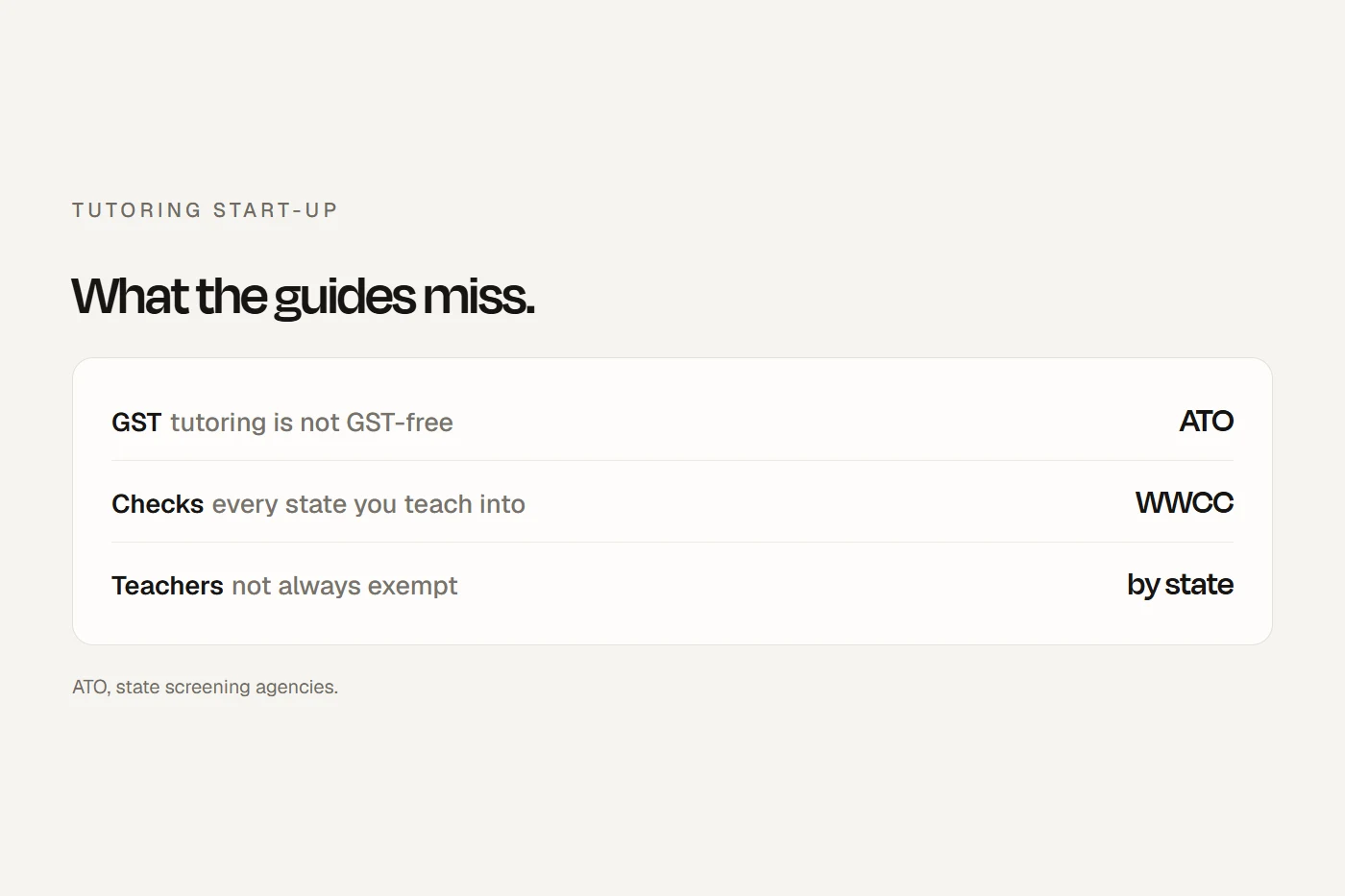
Most tutoring marketing advice is written for the US or the UK. In Australia the risks sit in a few specific places: promising marks, using students' names and results, calling yourself a teacher, and advertising selective school coaching. This guide covers how parents actually find a tutor, what to put on your website, which channels earn families and which cost you, and the claims to cut. It draws on the ACCC, the Australian Consumer Law, the NSW Department of Education, the Australian Tutoring Association, the teacher registration Acts, Google's policies and Australian research on tutoring advertising. It's general information, not legal advice. If you're just starting out, my guide to starting a tutoring business covers the setup first.
- Answer the parents' checklistSubjects and years, your qualifications stated exactly, Working With Children Check, where lessons happen, the total price and the cancellation rule. It's what the NSW Government and the ATA tell parents to check.
- Never promise a mark"Band 6 guaranteed" or "ATAR 90+" is a claim about the future, and you have to prove you had reasonable grounds. No tutor can.
- Families find tutors through other parentsReferrals, local Facebook groups and a Google Business Profile do most of the work. Keep the families you have and ask them to pass you on.
How parents find and choose a tutor
There's no Australian survey of how parents find a tutor. I looked. The best evidence is research. In a Queensland study, parents of Year 5 children mostly used tutoring "to fix what they saw as their children's academic problems", and they came across it on shop signage, near schools, in school newsletters, on Facebook parent groups and on community noticeboards. Most of all, they asked other parents.
A second study looked at 160 parent testimonials on 16 Australian tutoring websites. The testimonials sold tutoring as the answer to a "fateful moment", such as a child falling behind, a learning difficulty or a selective school test, and every improvement was credited to the tutor. Parents do read testimonials. The honest version is a specific story told with permission, not a rescue story.
What parents are told to check is better documented. The NSW Government's consumer page and the Australian Tutoring Association both publish lists: how long you've been running, whether you belong to an industry association, your qualifications and training in the subject, whether you follow the school syllabus, a Working With Children Check, the total cost, how much notice to cancel, progress reports, and whether a parent can watch. That list is the brief for your website. Answer each question before a parent has to ask.
What a family is worth, and what finding one costs
Before choosing channels, work out what a family is worth over the time they stay. Put in your own numbers; the figures below are examples only, because I found no Australian benchmark for tutoring.
On the example figures, a student brings in $665 a term, finding a family through ads costs about $142, and a family is worth about $2,394 over the time they stay. A 25% commission would take about $599 of that. A commission is a cost on every lesson for as long as the family stays; finding them yourself is a cost once. And the input that moves the result most is how many terms students stay, which is about your teaching and your reports, not your marketing.
What your website needs
- Subjects and year levels, with a page for each main subject that says what you cover, how lessons run, and which syllabus you follow (NSW, VCE, QCE and so on).
- Your qualifications, stated exactly. "Bachelor of Education (Secondary, Maths)" or "registered teacher in NSW". More on this below.
- Child safety. Say you hold a current Working With Children Check (don't publish the number), where lessons happen, and whether a parent can watch. The ATA's in-home guidance says lessons shouldn't happen in the student's bedroom and a parent should be present. Victoria, Queensland, SA, Tasmania and the ACT have child safe standards that reach tutoring businesses.
- Prices with term totals, including any compulsory fees, plus your cancellation and make-up rule in plain words.
- Progress reports. How often, and what's in them. Parents ask.
- Testimonials, with consent. Specific stories, such as "Year 9 maths, weekly for two terms", with the family's written permission and a record of where each came from.
- An enquiry form with a separate, unticked box for news and term offers.
On search, one well-written page per subject beats a page per suburb. Google's spam policy names "multiple domain names or pages targeted at specific regions or cities that funnel users to one page" as doorway abuse. One page listing the suburbs you travel to is enough.
Results claims: the biggest risk
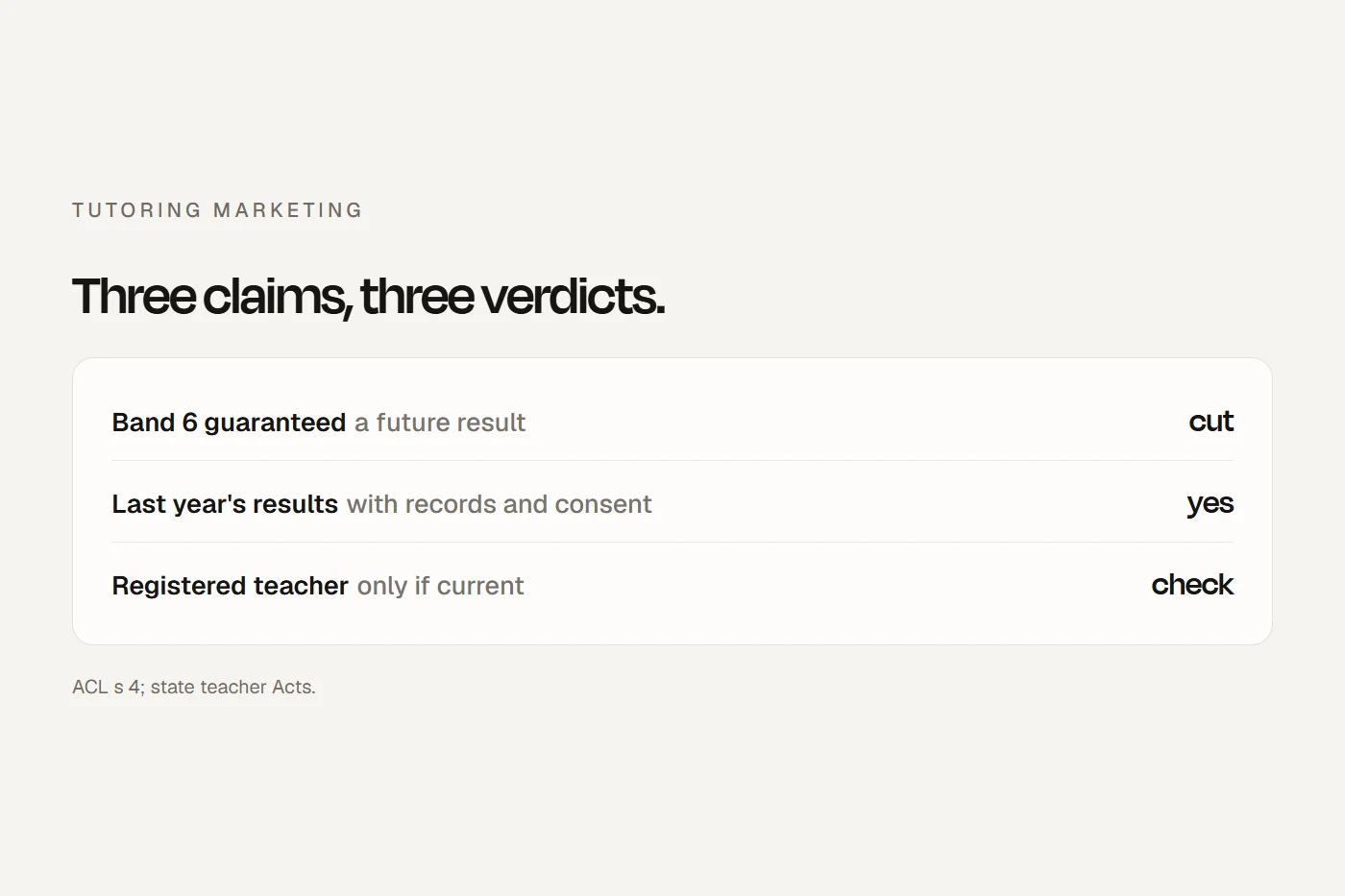
Under the Australian Consumer Law, a claim about the future made without reasonable grounds is taken to be misleading, and the business has to show it had those grounds. "Guaranteed ATAR", "Band 6 guaranteed", "pass guaranteed" and "improve by two grades" are all promises about the future. Nobody can have reasonable grounds for them, so cut them. NSW Fair Trading has told tutoring businesses directly that it can make them prove their claims, and the ATA's code for members says promotional material must not "encourage unrealistic expectations".
Past results are different. "Last year, 9 of our 21 HSC Maths Advanced students got a Band 6" is fine if it's true, complete and recorded, and every named student agreed. A percentage like "92% of students improved" needs a defined base (everyone who started, not just those who stayed), a stated measure and the records to back it. A money-back guarantee is fine if you honour it exactly as written.
Selective school and scholarship prep needs extra care. The NSW Department of Education says "coaching or tutoring for the placement test is not necessary", that "there is no credible research that shows coaching helps a child gain entry", and that "a child who is coached and gets in is likely to have got a place anyway". ACER has said the skills its scholarship tests measure are developed over a child's lifetime. You can honestly sell familiarity with question types, timed practice and feedback on writing. You can't sell entry. Avoid "official practice tests" unless they are the official material and you link to where they come from, and never say a department, NESA or ACER approved or endorsed you.
Check your wording
Paste your ad, homepage or post. It flags the phrases that most often get tutors into trouble. It checks wording, not facts: a line can pass here and still be untrue.
Students' names, schools and results
A student's results are theirs. UAC says "Schools do not receive ATAR information and students can keep their ATAR completely confidential if they wish", and NESA lets students ask for a privacy flag so their names stay off the HSC merit lists. A name on a public merit list isn't permission for you to use it in an ad. The OAIC says a business may assume someone over 15 can decide for themselves unless it's unsure, so for a Year 12 student, get the student's own written consent, and a parent's as well while they're under 18. For younger children, the parent decides.
A good consent form says what will be published (first name, year, subject, result, photo, quote), where (website, Google, social media, ads, flyers), for how long, and how to withdraw. Keep it with the testimonial. Leave school names off: "students from" a named school identifies children and can imply the school approves of you. "Students from 12 schools across the Inner West" does the same job. No school crests, and no uniforms or school names beside a child's face in photos.
Calling yourself a teacher
Say exactly what you hold. In Victoria, a person who isn't registered "must not claim to be, or hold himself or herself out as being, registered as a teacher", and it's also an offence to falsely claim to have been registered. In NSW, a person must not represent that they're accredited "unless the person is for the time being accredited at that level". In Queensland, the Act only stops registered teachers overstating their type of registration; for everyone else, consumer law does the job. If your registration lapses, update your website the same day.
South Australia is different. Its Teachers Registration and Standards Act says a person must not, for payment, "personally provide, or offer to provide, pre-school education, or primary or secondary education, unless the person is a registered teacher". It doesn't define primary or secondary education, and I found no guidance from the Teachers Registration Board on private tutoring. If you tutor school students in SA and aren't registered, ask the Board before you advertise. Western Australia's Board says the opposite for WA: people "providing home tutoring are not required to register".
If you teach in a school, check your employer's policy before you market at all. The NSW Department lists offering paid tutoring to your own students as a conflict of interest, and Victoria's guidance gives the example of a VCE teacher who tutors only students from other states, online. Don't market to your own students or their parents.
Channels that work, and the rules for each
Google Business Profile. Google only lists businesses that meet customers face to face, so online-only tutors aren't eligible. If you teach at home or travel to students and have no sign, list as a service-area business: your street address stays hidden and you can set up to 20 service areas. Use your real business name only, with no subjects or suburbs stuffed in. My guide to local SEO for small businesses covers the setup.
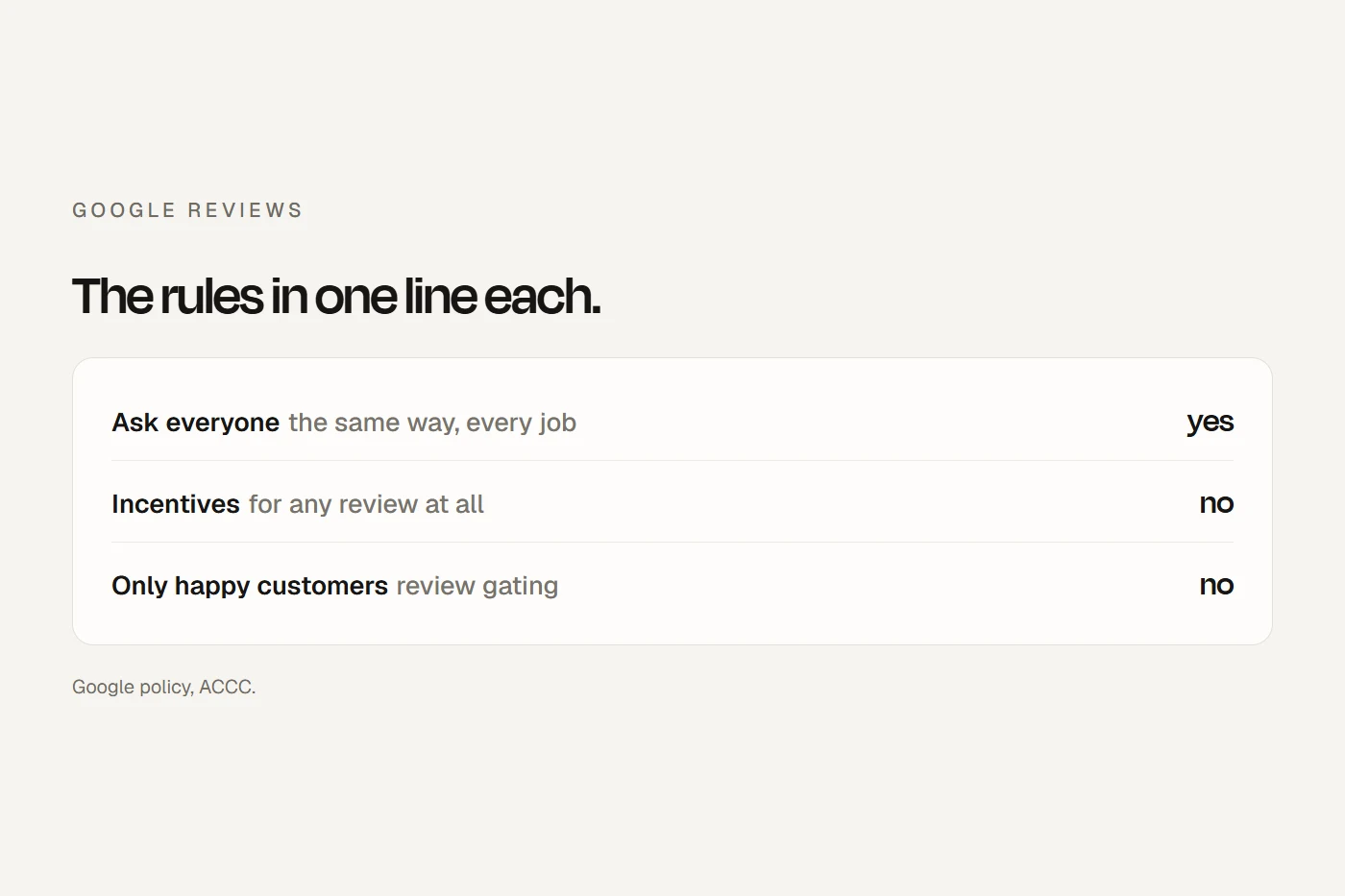
Referrals and reviews. Ask every family for a Google review at the same point, such as with the end-of-term report, not only the happy ones, and with nothing attached. A thank-you credit when a referred family enrols is fine if it's stated plainly and has nothing to do with reviews. My guide to getting more Google reviews has the wording.
Local Facebook groups. Answer "can anyone recommend a maths tutor" posts with a short, specific reply and a link, within each group's rules. Never post as a parent: a fake recommendation is a fake testimonial. The ACCC also holds you responsible for misleading comments others leave on your own page.
Meta ads. Target adults in the suburbs you serve and put the subject and year level in the ad itself. Don't target students; under-16s can't hold accounts on the main platforms anyway. A lead who asks you to call can be called about that enquiry; adding them to promotions needs their consent. My guide to Meta ads for small businesses covers the setup.
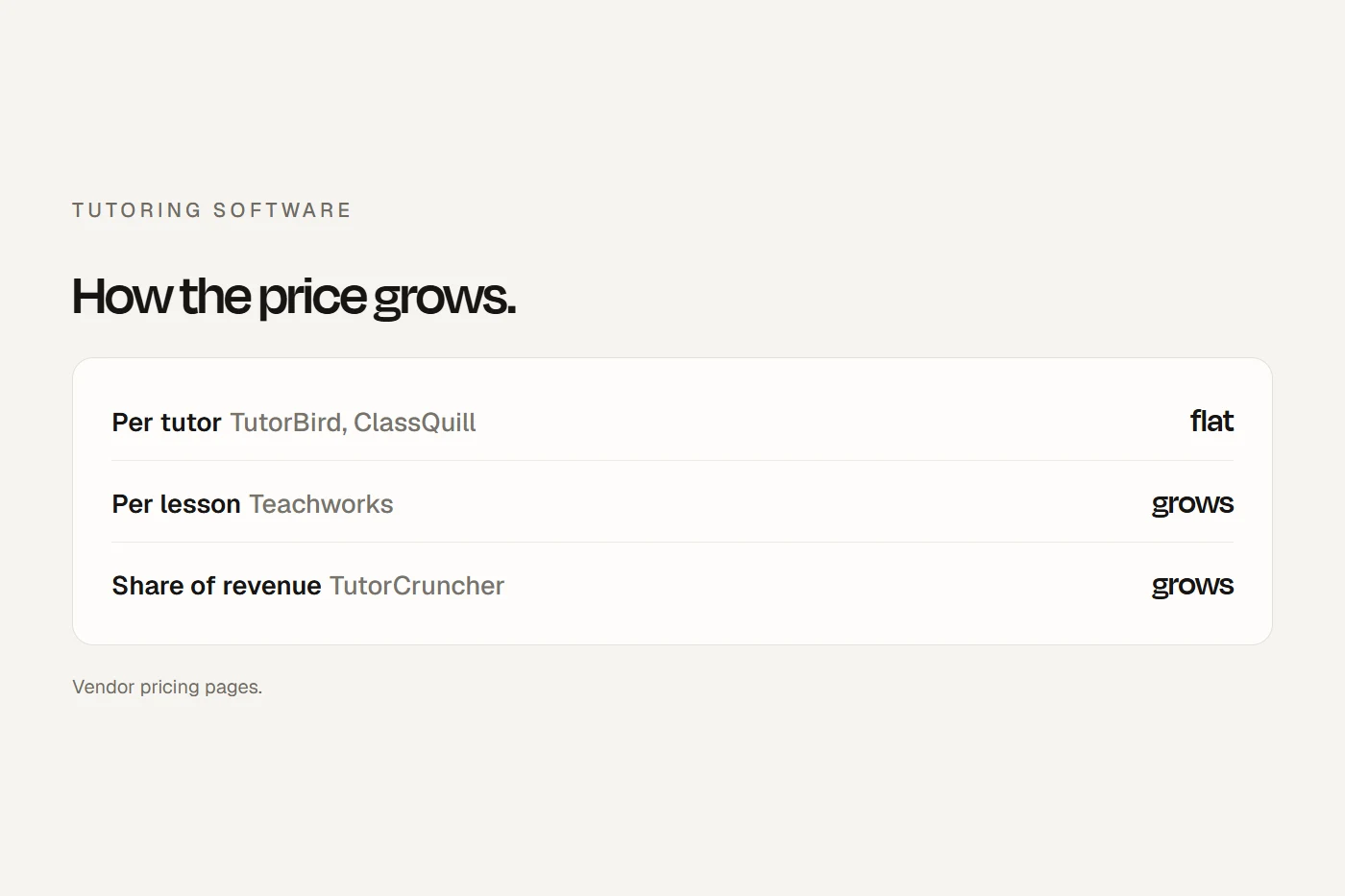
Marketplaces. Learnmate charges tutors a commission on each lesson, Superprof charges families a monthly pass, and Airtasker takes a service fee from each job. Oneflare has closed and now redirects to Airtasker. Run any commission through the calculator above, and read the platform's terms on whether you can later teach a family directly.
Flyers. In Queensland, the law says households with a "No Advertising Material" or "No Junk Mail" sign shouldn't get unaddressed advertising; elsewhere an industry code says the same, so skip those letterboxes everywhere. Councils treat posters on poles as illegal bill posting; use community noticeboards with permission. Many public schools won't run tutoring ads in their newsletters, so ask the office first, and if one does, the ad can't suggest the school recommends you.
Term emails and texts. A plain lesson reminder doesn't need consent. "Book Term 3 now" is marketing. ACMA says consent can be inferred where someone has a "provable, ongoing relationship" with you and the message is directly related to it, so a current family hearing about next term probably fits, but a family who had a single free lesson doesn't. A tick box at enrolment is safer. And let families opt in to the next term rather than billing them automatically.
Can I do this?
Tap a card to see the verdict.
A 90-day plan
Tick items off as you go; the list remembers your progress on this device.
- Weeks 1 and 2: write down exactly what you hold Degree, registration and regulator, Working With Children Check. In SA and not registered: ask the Teachers Registration Board.
- Weeks 1 and 2: check your employer's policy If you teach in a school. Never market to your own students.
- Weeks 1 and 2: run your copy through the wording check Remove guarantees, approval badges, crests and surcharges.
- Weeks 1 and 2: make a consent form For testimonials, names, results and photos, signed before you use anything.
- Weeks 1 and 2: set prices with term totals And a cancellation and make-up rule in plain words.
- Weeks 3 and 4: Google Business Profile Service-area business with your address hidden, real name, areas you'll actually travel to.
- Weeks 3 and 4: website Subjects and years, syllabus, qualifications, child safety, prices, policies, and an enquiry form with an unticked box for news.
- Month 2: local parent groups One post in two or three groups within their rules, then answer recommendation threads.
- Month 2: noticeboards and newsletters Ask the school office (not your own school) and community noticeboards for permission.
- Month 2: letterbox drop Skipping every "No Junk Mail" box. No poles.
- Month 2: a free first lesson that's truly free No card and no roll-over into a paid term.
- Month 3: end-of-term reports Then, separately, ask every family for a Google review with nothing attached.
- Month 3: re-enrolment message Next term's total price, to families who opted in.
- Month 3: track every enquiry's source Then put your own numbers in the calculator.
Questions I get asked
How do I get more tutoring clients?
Ask current families for referrals and Google reviews, set up a Google Business Profile if you teach face to face, answer recommendation posts in local Facebook groups, and make your website answer the questions parents are told to ask: qualifications, child safety, syllabus, price and cancellation terms.
Can I guarantee results in my tutoring ads?
No. A promise about a future result, like a Band 6 or an ATAR, is taken to be misleading unless you had reasonable grounds, and you have to prove them. Past results are fine if they're true, complete, recorded and shared with consent.
Can I use my students' ATARs or HSC results?
Only with written consent: from the student once they're old enough to decide, and from a parent while they're under 18. ATARs go only to students, and students can ask NESA to keep their names off the merit lists.
Can I call myself a teacher if I'm not registered?
Not "registered" or "accredited": in Victoria and NSW that's an offence if it isn't true. Say exactly what you hold, such as your degree. In South Australia, check with the Teachers Registration Board before tutoring for pay without registration.
Is tutoring for selective school tests worth advertising?
You can advertise practice and feedback, but not entry. The NSW Department of Education says coaching isn't necessary and there's no credible research that it helps a child get in, so any success rate needs a clear base and records.
Should I join a tutoring marketplace?
It can fill your first slots, but a commission comes out of every lesson for as long as a family stays. Compare it with what it costs to find a family yourself, and check whether the terms let you teach a family directly later.
About this guide
Written by Joseph Alzein, founder of bdog. I build websites for tutors and tutoring businesses. Sources were checked on 12 October 2026. This is general information, not legal advice. I've left out penalties, marketplace fees and other figures that change.
Main sources:
- ACCC: false or misleading claims
- ACCC: online product and service reviews
- ACCC: social media promotions
- NSW Department of Education: selective high school practice tests
- Australian Tutoring Association: choosing a tutor
- Australian Tutoring Association: in-home tutoring
- Australian Tutoring Association: member code of conduct
- UAC: confidentiality of ATARs
- Teacher Registration Board of WA: who needs to be registered
- Victorian Department of Education: identifying conflicts of interest
- AANA Children's Advertising Code
- ACMA: avoid sending spam
- Google: service-area businesses
- Google Search spam policies
- Queensland Government: junk mail
- The Conversation: parents say their children have tutors to fill gaps
- Briant, Doherty, Dooley and English: the appeal of parent testimonials when selling private tutoring